Making your own congee
You want to make a bowl of rice porridge regularly and are looking for a programme specifically designed for it, rather than just a standard rice programme.


If you make congee regularly, a small model with a dedicated congee programme is a better starting point than a basic rice cooker. Reishunger lists both CONGEE and a small rice quantity described by the manufacturer as suitable for one person on its Digital Mini. Before buying, check the instructions for the permitted quantity of porridge and liquid, how much cleaning is involved, and whether the specific appliance is labelled for the EU market.
You want to make a bowl of rice porridge regularly and are looking for a programme specifically designed for it, rather than just a standard rice programme.
You cook small quantities and are weighing up whether a particularly compact basic model will do, or whether a digital mini model with an extra porridge function would better suit your cooking routine.
You use your cooker frequently and want to know which parts need cleaning after making a porridge-like dish, and whether they can go in the dishwasher.
| Buying consideration | What to check | Who will find this especially important |
|---|---|---|
| Congee programme | Check the instructions for a specifically named CONGEE or rice porridge mode and its recipe guidance. | If I make congee regularly, I want a mode designed for it rather than just a function for ordinary rice. Around 36% of consumers prioritise a specifically named congee programme. |
| Single portions and capacity | Check the minimum quantity and maximum fill level for rice porridge; don’t confuse cups of uncooked rice with the finished porridge. | If I’m cooking for myself, I need a practical portion size and enough room for the liquid. Around 29% of consumers prioritise a suitable single portion. |
| Cleaning | Check the care instructions for the inner pot, inner lid and condensation collector; check dishwasher suitability for the specific model. | If I use the cooker frequently, I want to know how many parts need cleaning after cooking and whether they can go in the dishwasher. Around 21% of consumers prioritise easy cleaning. |
| Keeping food warm and leftovers | Don’t mistake the stated keep-warm duration for confirmation of the food’s temperature; follow the guidance on storing leftovers. | If I’m not eating straight after cooking, I need reliable guidance on keeping food warm and dealing with leftovers. Around 14% of consumers prioritise eating later and food storage. |
Portion and capacity figures may refer to ordinary or uncooked rice. On their own, they don’t tell you how much liquid the cooker can hold when making congee.
Check the instructions for the exact model for the minimum quantity and fill limit for the porridge mode you intend to use.
A model may make rice pudding or soup without having a specifically designated congee mode. The programme names alone don’t prove that the cooking process and recipe guidance are right for your rice porridge.
Choose a cooker with a programme and recipe guidance suited to the rice porridge you actually want to make.
A stated operating time doesn’t prove that the rice porridge reaches a particular temperature throughout. The German Federal Institute for Risk Assessment recommends keeping hot food at a temperature of at least 60 °C throughout.
Only plan to eat later if the food can be kept warm under suitable conditions. Otherwise, cool leftovers and refrigerate them until you reheat them.
The Digital and basic Mini models differ mainly in their documented programmes and appliance size.
The MRK 500 Risa is a larger multi-cooker for a range of rice dishes and other recipes.
The KÜCHENminis rice cooker with Lunch-to-go box is aimed at households looking for removable parts and easy cleaning.
According to its EU product page, the Panda Mini is designed for smaller kitchens and for individuals or couples.
This selection includes rice cookers and an electric cooking pot with a range of programmes and functions. Whether a model can make a single portion of rice porridge depends on the specific recipe guidance and fill limits in the instructions. Also check that the appliance on offer is labelled for the EU market.
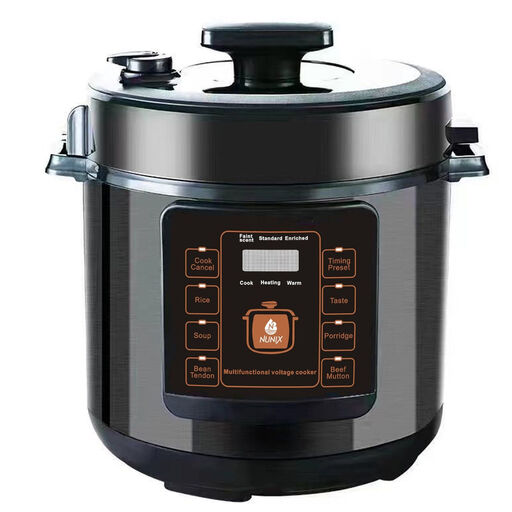 Image unavailable
A porridge programme is specifically listed; check whether its guidance is suitable for the rice porridge you want to make.
The inner pot is listed as 6 l. The description also mentions a timer and keep-warm function. Check the instructions for the right single portion and quantity of liquid for rice porridge.
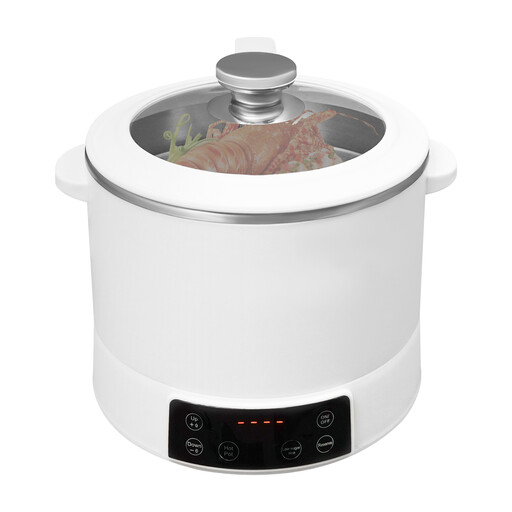 Image unavailable
The description mentions rice, soups and stews. Check the instructions for the right method and quantity for rice porridge.
Listed as 3 l and 1500 W. The features include a lift function, a 12-hour timer and a hot pot mode; none of these confirm a dedicated congee mode.
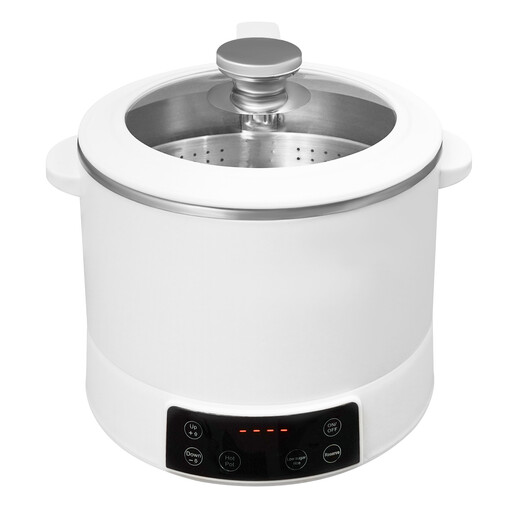 Image unavailable
The stated user group is 1–3 people; check separately whether the minimum quantity and fill limit are suitable for one portion of rice porridge.
The title lists 220 V and 1500 W. The description includes a lift function to separate rice and water, as well as a hot pot mode. This doesn’t confirm a congee programme.
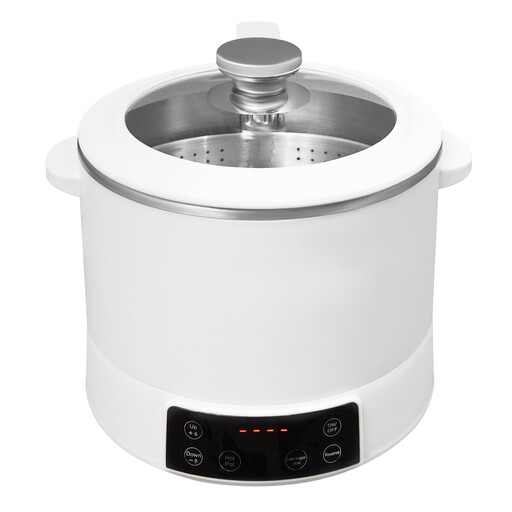 Image unavailable
The description lists 1–3 people as the intended user group; it doesn’t specify a suitable quantity for one portion of rice porridge.
Listed as 3 l and 1500 W. Features include a lift function to separate rice and water, a 12-hour timer and a hot pot mode. No congee programme is listed.
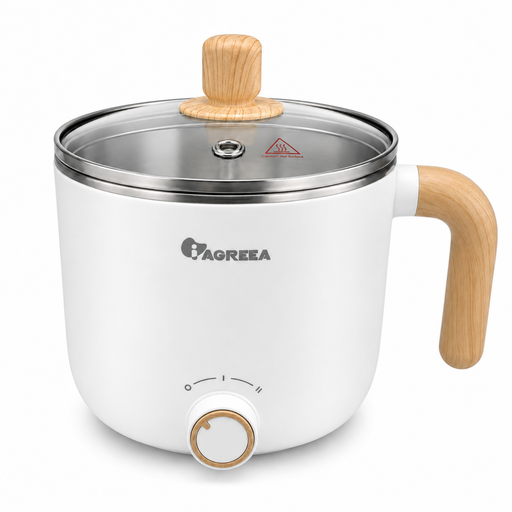 Image unavailable
According to the description, this electric cooking pot is designed for 1–2 people and can be used to cook rice. Check the instructions before planning to use it for rice porridge.
Listed with a capacity of 1.0 l and two power settings of 300 W and 600 W. The title specifies a stainless steel inner pot.
No, the programme names shouldn’t be treated as interchangeable. CONGEE is specifically listed for the Reishunger Digital Mini; the product description checked for the basic 0.3-l Mini mentions rice but no congee programme. Refer to the instructions for the permitted quantity of liquid for the specific model.
According to Reishunger, the inner pot, inner lid, steaming insert and condensation collector should be cleaned after each use. Once the appliance has cooled and been unplugged, the instructions recommend warm soapy water and a soft cloth or sponge. The manufacturer states that the appliance isn’t dishwasher-safe.
An advertised keep-warm duration alone doesn’t confirm that the food is at a safe temperature. The German Federal Institute for Risk Assessment recommends keeping hot food at a temperature of at least 60 °C throughout; leftovers that aren’t kept hot should be cooled and refrigerated until they’re reheated. This recommendation doesn’t confirm the keep-warm performance of any particular model.
The statutory legal guarantee is the seller’s responsibility and generally lasts for two years from delivery; it’s separate from any voluntary manufacturer’s guarantee. The Verbraucherzentrale (German consumer advice centre) explains that contracts from 31 July 2026 are subject to additional information requirements about choosing between repair and replacement, as well as a one-off 12-month extension if you choose a repair.
An appliance newly marketed in the EU and covered by the Low Voltage Directive must meet the relevant conformity requirements, including CE marking. The directive covers the appliances specified in it that operate at 50 to 1000 V AC. The marking indicates compliance with applicable EU requirements; it isn’t an independent quality mark for cooking results. Check the marking on the specific appliance being offered.