
Lieferung heute & morgen

Qualitätsgarantie

Willkommens-Angebote freischalten: KOSTENLOSE Lieferung | Bis zu 80 % RABATT | Kostenlose 30-Tage-JoyPlus-Testphase
App herunterladen
The journey to a flavourful cup of coffee doesn't start at the coffee machine, but with the bean itself. Freshly ground coffee unlocks a significantly more intense aroma than pre-ground powder. The type of grinder plays a crucial role in this process. Anyone upgrading from a simple blade grinder to a model with a conical burr often notices a substantial improvement in quality. The grounds are more uniform, and the beans are processed more gently.
However, the selection of coffee grinders is vast, and the technical details can be overwhelming. This article serves as a guide. As a Joybuy Product Recommendation Officer, I will provide you with objective information and a selection of models to make your decision easier when purchasing a conical burr coffee grinder.
Before you buy a coffee grinder, you should consider a few fundamental features. These criteria will help you find a model that fits your habits and your equipment.
The most important function of a coffee grinder is control over the grind size. Different brewing methods require different particle sizes. A rich espresso from a portafilter requires a very fine, powder-like grind, while a French press is best with a coarse grind to prevent over-extraction.
Look for a grinder with a precisely adjustable grind size. Models with many settings offer more flexibility. A coffee grinder for espresso or a coffee grinder for a portafilter should allow for particularly fine and consistent settings, as even minor deviations can strongly influence the taste. A conical burr grinder is advantageous here because it grinds the beans instead of shattering them, which leads to a more homogenous result.
Conical burrs are typically made of stainless steel or ceramic. Both materials have their merits. A stainless steel coffee grinder is robust and durable. Ceramic burrs are considered especially heat-neutral, which can preserve the coffee's aromas, but they are potentially more prone to breaking.
Another practical aspect is the operating noise level. A loud grinder can be disruptive, especially in the morning. If you value a quiet environment, you should look for a model explicitly described as a quiet coffee grinder. Slow-rotating burrs are often quieter and generate less heat.
The choice between an electric and a manual grinder depends on your priorities.
Here is a selection of models that cater to different needs and applications. The descriptions are based on product data provided by the manufacturer.
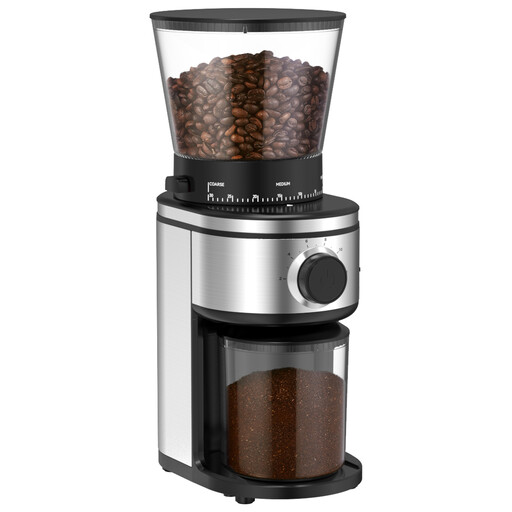
What makes it stand out: The Ollygrin BG702 is an electric coffee grinder designed for versatility and ease of use. With 30 grind settings, it covers a wide spectrum from very fine to coarse. It features one-touch control, allowing you to set the desired amount of coffee for 2 to 12 cups. A convenient memory function saves the last used setting.
Advantages:
Who it's for: This model is a great choice for beginners and advanced users looking for a straightforward and versatile electric grinder for daily use. It is suitable for users who prepare different types of coffee, such as filter coffee, French press, or Moka pot.

What makes it stand out: The HiBREW G7 is aimed at demanding home baristas, especially owners of portafilter machines. It features a digital touchscreen interface and a timed grinding function with 0.1-second precision. A special feature is its three modes, which are optimised for grinding directly into 51mm, 54mm, and 58mm portafilters.
Advantages:
Who it's for: The HiBREW G7 is ideal for espresso lovers and users of portafilter machines who require precise and repeatable grinding. The direct compatibility with portafilters makes the workflow clean and efficient.
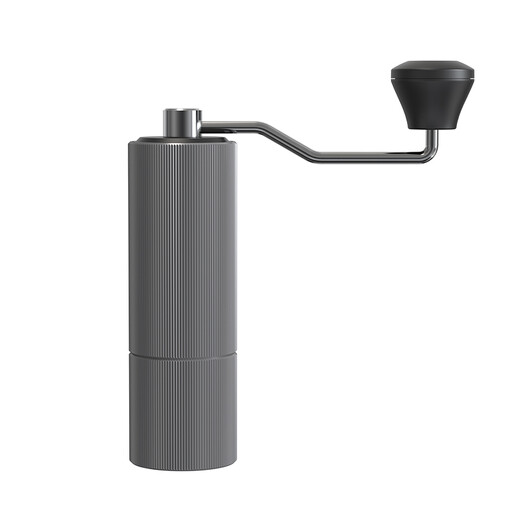
What makes it stand out: This manual coffee grinder from Cuisync combines high-quality materials with precision mechanics. The aluminium alloy body and CNC-machined 420 stainless steel burrs ensure durability and a uniform grind. The dual-bearing central axis stabilises the grinding process. The grind size is adjusted internally via a click mechanism.
Advantages:
Who it's for: The Cuisync KMDJ-A4 is perfect for coffee connoisseurs who want to take the grinding process into their own hands. It is an excellent choice for travel, the office, or for home use when quiet operation and a compact size are priorities.
If you haven't found the right model in our selection or wish to compare more conical burr grinders, you'll find a broader selection in our Conical burr grinder category.
A blade grinder shatters coffee beans with rotating blades, similar to a blender. This results in an uneven grind with fine dust and coarse chunks, which makes consistent extraction difficult. A conical burr grinder, on the other hand, grinds the beans between two conical burrs. This process is gentler, generates less heat, and results in a significantly more homogenous particle size, which is the foundation for a balanced coffee flavour.
Regular cleaning is important to remove old coffee oils and residues that can affect the taste. Most grinders should be cleaned dry. Use a small brush to remove coffee powder from the burrs and the chute. Some models allow the upper burr to be removed for a more thorough cleaning. Avoid using water unless the manufacturer explicitly states it is safe, as it can cause rust.
As a general guideline, you can use the following:
Sincerely,
Your Joybuy Product Recommendation Officer