
Lieferung heute & morgen

Qualitätsgarantie

Willkommens-Angebote freischalten: KOSTENLOSE Lieferung | Bis zu 80 % RABATT | Kostenlose 30-Tage-JoyPlus-Testphase
App herunterladen
Freshly ground beans are an important part of the brewing process for many coffee drinkers. However, the term conical burr coffee grinder alone reveals little about operation, grind size or everyday practicality. There are clear differences between an electric coffee grinder for several cups, a compact manual coffee grinder and an espresso grinder with stepless adjustment.
If you focus only on the number of grind settings or a high wattage, you can quickly end up buying an unsuitable appliance. The following points will help you assess marketing claims and choose a coffee grinder that suits espresso, filter coffee, moka or French press.
A coffee grinder with an adjustable grind size might offer 14, 30 or 48 settings, for example. However, this number alone does not indicate how precisely you can adjust it for espresso or pour-over coffee. What matters is whether the range actually starts fine enough and ends coarse enough for French press.
Small adjustments are often important for espresso, while larger steps may be sufficient for filter coffee and French press. Stepless adjustment offers more flexibility, but requires more careful calibration and may be less straightforward for beginners.
A conical burr set guides the beans between two cone-shaped grinding surfaces. This can enable a compact design and is common in both electric and manual models. Nevertheless, burr material, shaft bearings, cleaning and retained coffee remain important factors.
Stainless-steel burrs in many appliances are designed for durability and dry coffee beans. However, they should not be cleaned with water if the manufacturer specifies dry brushing. Very oily or flavoured beans can also cause more residue to build up in the grind chute.
A hopper with a capacity of 200 or 220 g is useful if you regularly grind several portions. For a two-person household, however, a smaller hopper may be better suited to grinding fresh coffee each day. Larger quantities stored in the hopper may also be exposed to light and air for longer.
You should also consider dosing. An electric coffee grinder with a burr set and quantity selection for 2 to 12 cups is suitable for several people. For individual espresso doses or use on the go, a compact grinder with a capacity of around 20 to 30 g is often sufficient.
Before buying, check which brewing methods the model is intended for according to the product information:
A manual coffee grinder with an external adjustment ring can be quickly adapted when switching between brewing methods. With an internal adjustment mechanism, you often need to open the bean hopper or burr set.
An electric coffee grinder is convenient if you need several portions or larger quantities every day. Models such as the Ariete 3023 offer automatic quantity selection and stop after the selected number of cups. With electric appliances, you should check the mains voltage, stability, noise level and permitted operating time.
A manual coffee grinder does not require electricity, making it suitable for travel, camping, the office or small kitchens. It is generally more compact, but does require physical effort when grinding. Double or multiple bearings can help keep the shaft stable. Capacity and cleaning information are more important for everyday use than purely aesthetic design claims.
Coffee grounds accumulate particularly in the outlet, collection container and upper burr set. Removable parts and an included cleaning brush make maintenance easier. Electric appliances must not be immersed in water. Unplug the appliance before opening or cleaning it.
You should also look for:
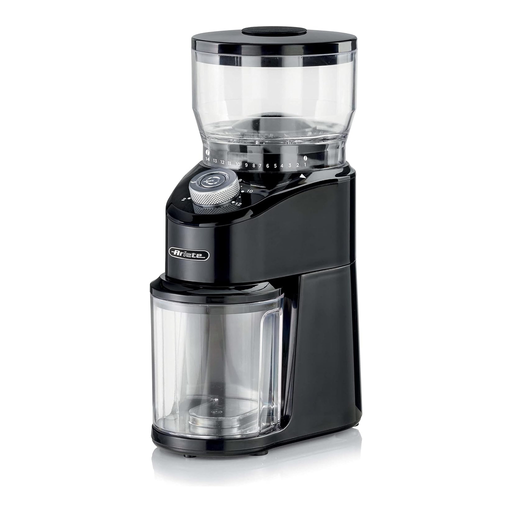
Why this product suits this profile: The electric grinder offers 14 grind settings, a 200 g capacity and quantity selection for 2 to 12 cups. This makes it suitable for regular household use.
The clearly specified number of settings and automatic quantity selection avoid vague dosing information.
200 W motor, 14 grind settings, removable burr components and cleaning brush.
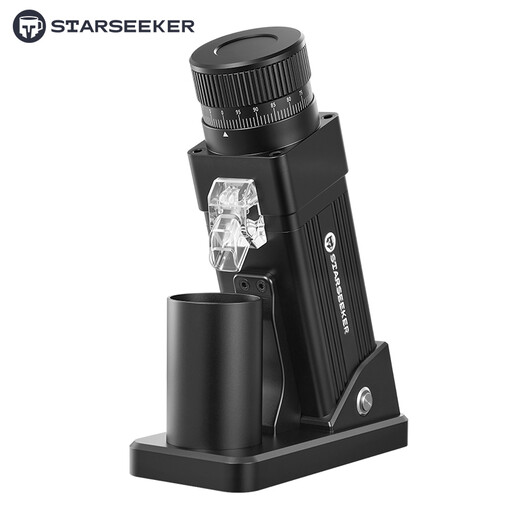
Why this product suits this profile: The grinder features a 55 mm titanium-alloy conical burr set and stepless fine adjustment. This appeals to users who want to fine-tune espresso and pour-over coffee.
Stepless adjustment is more meaningful than simply offering a high number of grind settings and allows small refinements.
55 mm conical burr set, metal housing, stepless adjustment and removable grounds inlet.
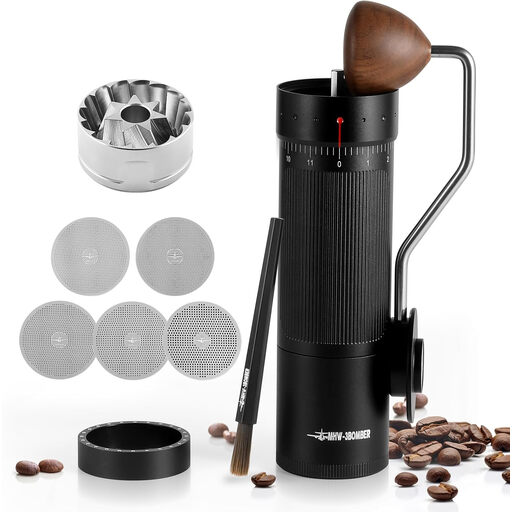
Why this product suits this profile: The manual coffee grinder requires no electricity and offers 60 clicks per rotation, as well as a collection container with a capacity of around 20 g. It is suitable for travel, camping and individual brewing portions.
The adjustment mechanism is located on the outside, making it accessible when switching between espresso and French press.
CNC-machined conical burrs made from 420 stainless steel, 60 clicks and magnetic collection container.
We have put together a complete, regularly updated list of products that fully meet these strict selection criteria and the safety regulations applicable in the EU.
For espresso, you need a sufficiently fine grind range and the smallest possible adjustment steps. An electric coffee grinder with stepless adjustment may be suitable for this purpose. A high-quality manual coffee grinder with finely graduated adjustment is also an option if you only grind a few portions.
Its lifespan depends on the burr material, quantity of beans, cleaning intervals and intended operating time. Use the grinder exclusively for dry coffee beans, keep foreign objects out and follow the manufacturer's guidance on operating breaks. Regular dry cleaning reduces residue in the grind chute.
The electricity costs for individual grinding sessions are generally low, but depend on motor power, grinding time and frequency of use. For purchasing decisions, the initial price, availability of spare parts and maintenance requirements are often more important. If you want to grind without relying on power sockets, choose a manual coffee grinder or a rechargeable model.