If you can keep your conservatory mostly closed while using it, compare the air purifier’s filter and CADR with the actual room volume and the fan speed you plan to use. If doors or windows are often open, or there is significant heat or humidity, you’ll also need to consider ventilation, pollen entering the room and the operating conditions of the specific device. An air purifier is an addition to your routine, not a replacement for ventilation, as the German Environment Agency explains in its guidance on portable air purifiers.
Who might benefit from an air purifier in a conservatory?
People with pollen sensitivities who use a conservatory
If you spend time in your conservatory during pollen season, a filter may be worth considering as an additional measure against airborne pollen. It won’t treat symptoms and doesn’t replace avoiding triggers where possible. The Allergy Information Service at Helmholtz Munich explains how treatment depends on your symptoms and the options available for avoiding allergens.
People with large conservatories
In a tall or open-plan conservatory, the floor area alone tells you little about how much air needs to be cleaned. Factor in the ceiling height and the air output of the specific device when choosing a model.
People who often leave their conservatory open
If doors or windows are often open because of heat or humidity, consider pollen entering the room, ventilation options and a suitable position for the device together.
What should you look for when buying?
For a conservatory that’s mostly kept closed, assess the filter and air output alongside the room height and the fan speed you can realistically use. If you ventilate regularly, you’ll also need to consider the unit’s position and operating conditions.
| What matters |
What to check when buying |
Who is this important for? |
| Filtering pollen |
The filter design and the specific model’s CADR; a HEPA label alone doesn’t tell you how well air is circulated throughout the room. |
If I want to reduce exposure to airborne pollen while I’m in the room, the filter is my main priority. Around 28 % of consumers have this as their primary concern. |
| Covering the room volume |
Factor in the floor area and average height; compare the CADR in m³/h at the fan speed you’re actually considering. |
In a large or tall conservatory, I want to circulate enough air rather than relying only on a square-metre rating. Around 22 % of consumers focus primarily on room coverage. |
| Ventilation and placement |
Check when doors and windows can stay closed, and find out the permitted temperature and humidity conditions, as well as the required distance from water and heat sources. |
If I need to ventilate regularly because of heat or humidity, I want to know whether the device is suitable for the space and how to limit pollen entering the room. Around 22 % of consumers prioritise this. |
| Noise where you spend time |
Compare noise levels and air output at the same fan speed; don’t assume that sleep mode offers the same performance as maximum output. |
When I’m sitting in the conservatory for a while, I want the device to run comfortably at a setting that still provides enough performance. Around 17 % of consumers prioritise quiet operation. |
| Filter maintenance |
Check the correct replacement filter code, replacement guidance and power consumption for the specific model. |
If I plan to use the device regularly, I want to be able to plan for filter changes and ongoing maintenance. Around 11 % of consumers have this as their primary concern. |
Manufacturers’ CADR and room-size figures apply to specific models and conditions. For example, Bosch quotes 300 m³/h for the Air 4000, while Philips quotes 520 m³/h for the AC3033/10. These figures don’t indicate a particular pollen level in your own conservatory. The German Environment Agency also points out that portable air purifiers don’t fully replace ventilation.
Common buying and usage mistakes
-
Comparing square-metre ratings without considering air changes
A stated floor area may be based on a specific number of air changes per hour. Levoit quotes up to 147 m² for the Core 600S at two air changes per hour. Figures like these can’t be compared directly unless the conditions are like for like.
Calculate the room volume using the floor area and average height, then compare the CADR and the air-change rate it’s based on at the fan speed you plan to use.
-
Assuming a room with doors permanently open is like a closed room
Regular inflows of outside air can make it harder to reduce airborne pollen. The German Environment Agency describes portable air purifiers as an addition to ventilation, not a complete replacement.
First work out when and how you need to ventilate, then assess the device as an additional measure for the way you use the space.
-
Mistaking a replacement filter for a complete device
An offer for a compatible filter isn’t an air purifier and may not meet your actual purchase needs.
Before placing your order, check whether the offer includes the complete air purifier or just an accessory.
A simple mistake could mean receiving a spare part instead of a working device.
Relevant brands at a glance
Bosch
The Air 4000 and Air 4000i cater for different control preferences; the Air 4000i also offers app control.
- Bosch Home Comfort quotes a CADR of 300 m³/h for the Air 4000 and says it has a quiet mode.
- The figure doesn’t specify the Air 4000’s cleaning performance in quiet mode when used in a conservatory.
Philips
The AC3033/10 from the 3000i Series is a model with a stated CADR and app features.
- Philips quotes a CADR of 520 m³/h for the AC3033/10 and lists the FY3430/30 as its replacement filter.
- The manufacturer’s stated filter life of up to three years isn’t a fixed replacement schedule for every level of use.
Levoit
The Core 600S is designed for larger rooms and app control.
- Levoit quotes coverage of up to 147 m² at two air changes per hour.
- This floor-area figure depends on the stated cleaning rate and can’t readily be compared with figures from other manufacturers.
Blueair
The Blue Pure 511i Max is a more compact model for smaller living spaces.
- CHIP lists low noise and power consumption as advantages of the model it tested.
- CHIP notes that the sensor in the tested model doesn’t measure PM1, and considers its filter life rather short.
Shark
The HP300EU is worth considering if you’re looking for a model with a filter designed to last longer.
- Joybuy lists a filter life of up to five years for the HP300EU as a product specification.
- This isn’t a confirmed filter life for a conservatory exposed to pollen. CHIP criticised the noise and power consumption of the model it tested.
Air purifiers for conservatories on Joybuy
The devices below are listed as air purifiers for airborne pollen and indoor use. For a conservatory, pay particular attention to the room volume, ventilation and the temperature and humidity conditions permitted for each model.
 No image available
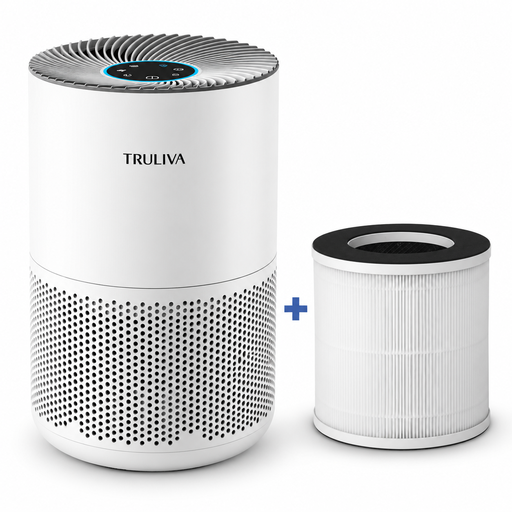
TRULIVA air purifier with extra H13 True HEPA replacement filter, 260 m³/h CADR
The product information lists pollen as a target particle; check that the air output is suitable for the size and height of your conservatory.
Specifications include a CADR of 260 m³/h and an extra H13 True HEPA replacement filter.
The product information excludes rooms with high humidity, such as bathrooms.
View on Joybuy
 No image available
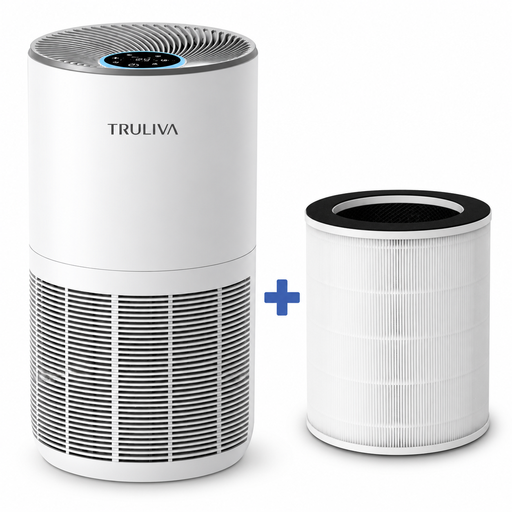
TRULIVA air purifier with extra H13 True HEPA replacement filter, 450 m³/h CADR
The product information lists pollen as a target particle; the stated CADR can only be compared with other models under like-for-like conditions.
Specifications include a CADR of 450 m³/h, 360° air circulation, an extra H13 True HEPA replacement filter and a child lock.
View on Joybuy
 No image available
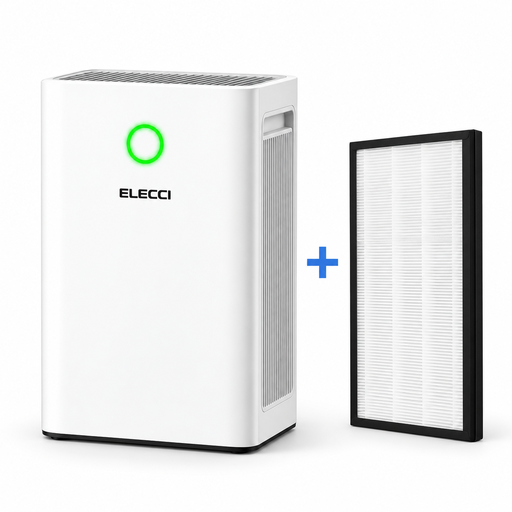
ELECCI air purifier with 550 m³/h CADR and dual HEPA filtration
The product description lists pollen as a target particle; a meaningful comparison between models requires the same CADR conditions and usage conditions.
Specifications include a CADR of 550 m³/h, dual HEPA filtration and a washable pre-filter.
The product information excludes rooms with high humidity, such as bathrooms.
View on Joybuy
 No image available
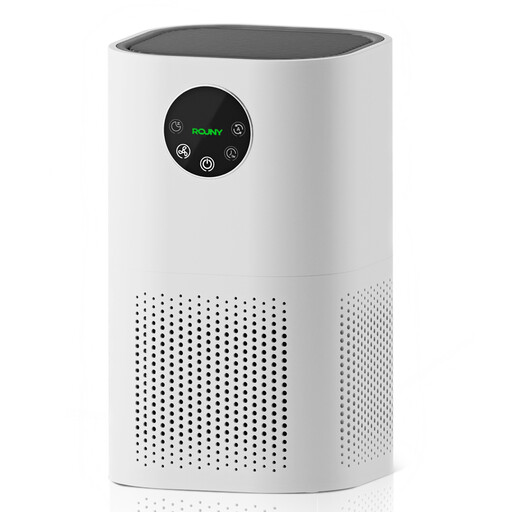
ROUNY AP-T1 air purifier with H13 True HEPA filter, 150 m³/h CADR
The product information lists pollen as a target particle; when comparing models, make sure the stated room coverage is based on a suitable usage scenario.
Specifications include a CADR of 150 m³/h, room coverage of 20–50 m² and a sleep mode of no more than 25 dB.
The product information advises keeping the device away from water and heat sources.
View on Joybuy
 No image available
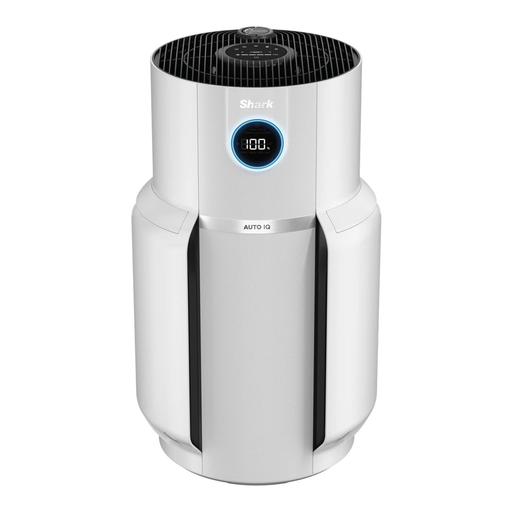
Shark NeverChange Max HP300EU air purifier
The product information lists pollen as a target particle and large rooms as a suitable setting; matching air-change rates are important when comparing it with other models.
The product description gives a room size of up to 130 m² and lists a HEPA filter. Joybuy states a filter life of up to five years; this isn’t a fixed replacement schedule for every type of use.
View on Joybuy
Frequently asked questions
Can an air purifier replace ventilation in a conservatory?
No. Portable recirculating air purifiers remove neither carbon dioxide nor water vapour. The German Environment Agency describes them as an addition to ventilation, not a complete replacement. Its guidance relates to schools and the question of aerosols there, rather than testing air purifiers in conservatories.
What should I consider when positioning and maintaining the device?
Keep the air intake and outlet clear, and follow the positioning and filter replacement guidance for the specific model. In a conservatory, also check the permitted temperature and humidity conditions and keep the device at a suitable distance from water and heat sources.
What else should I consider when using the device?
Check which replacement filter you need, when it should be changed and how much power the device uses. The Philips AC3033/10 uses the FY3430/30 filter; the manufacturer’s stated filter life of up to three years isn’t a fixed replacement schedule or cost estimate for every type of use.
Which marking is important for a mains-powered device in Germany?
If a device is covered by EU rules that require CE marking, it must meet this applicable product requirement; the mark isn’t an independent seal of approval. The Federal Network Agency also lists product identification, manufacturer details and German-language instructions with the necessary warnings among the points to check. This doesn’t confirm that any individual product listing is compliant.


