Who is a convector heater suitable for?

Occasional conservatory users

If you only want to add heat to an enclosed conservatory when needed, you can weigh up a portable heater against a wall-mounted convector. Electrical Safety First advises that portable heaters need plenty of clearance around them.

Those with cold walls

If you can feel the cold coming from walls or glazing, consider heat loss and damp as well as the room temperature. The Consumers’ Association and the Federal Environment Agency offer guidance on dealing with damp and cold surfaces.

Year-round conservatory users

If you expect to heat the space for long periods or every day, factor in how long the heater will run and your electricity tariff. The ADAC highlights the electricity costs involved in running electric heaters. As Wintergarten Experte explains, a conservatory’s heating demand depends on factors including its glazing, size and orientation.

What should you consider when choosing one?

Electric convector heater

Suitable if: you want to warm the air in an enclosed conservatory that you only use occasionally.

Things to weigh up: A convector mainly heats the air rather than targeting cold surfaces. A thermostat does not automatically make an electric resistance heater economical to use as a main source of heating. The ADAC explains the running costs of electric heaters.

Infrared or radiant heater

Suitable if: you want to heat a particular seating area directly for short periods, and the location and clearances are suitable.

Things to weigh up: People and surfaces in the path of the heat are warmed more directly, but this does not mean you will always save electricity compared with a convector. Cold areas outside the heater’s range and damp still need to be considered.

Structural improvements or planned permanent heating

Suitable if: you want to use the conservatory as a living space all year round, or cold surfaces and heat loss remain a problem despite using an additional heater.

Things to weigh up: Glazing, insulation and heating demand all need to be planned for; a portable supplementary heater is no substitute.

Concern What to check before buying Who should pay particular attention
Staying warm despite cold surfaces Check the heating demand, glazing and how you use the space. The wattage alone does not show whether a heater is suitable for a poorly insulated conservatory. If my main aim is to warm the air, I check that the output and controls suit the way I use the space. Around 33% of consumers put having a warm room first.
Electricity use with frequent heating Consider the output in kW, the actual number of hours the heater runs and your electricity tariff together. The ADAC explains the link between electricity use and the running costs of electric heaters. If I heat the space regularly or for long periods, I want to estimate the running time and avoid heating it unnecessarily. Around 27% of consumers prioritise ongoing running costs.
Damp on cold walls Monitor humidity, ventilate as needed and investigate any persistently cold or damp patches. The Consumers’ Association and the Federal Environment Agency offer guidance on this. If I have areas of wall at risk of damp, I want to find out what is causing it rather than relying on a higher air temperature alone. Around 20% of consumers put damp prevention first.
Safe positioning Check whether a freestanding or wall-mounted model is suitable, along with clearances, the location and electrical connection, using the instructions for the specific model. A stated IP rating does not replace these checks. If there is little floor space available in my conservatory, I need to make sure the heater and its connection can be positioned safely. Around 20% of consumers prioritise suitable and safe positioning.

Common buying mistakes

  • Assuming a higher wattage will fix cold walls

    A convector mainly warms the air in the room. You need to assess heat loss and damp on cold surfaces separately.

    Check the heating demand, glazing and humidity before choosing a more powerful heater. Electricity use can rise if you heat the space for longer periods.

  • Planning to use an electric supplementary heater as your main source of heating without checking first

    Simple installation does not tell you how electricity costs will add up over long running times.

    Estimate how many hours the heater will run. If you plan to use the conservatory all year round, also consider heating solutions designed for permanent use.

  • Choosing a type of heater without checking where it will stand or be mounted

    Curtains, furniture or blocked air vents can affect heat output and safe operation.

    Check the instructions, required clearances, electrical connection and suitability of the intended location.

Brands to consider

STIEBEL ELTRON

For buyers considering a wall-mounted convector with documented controls. The product page describes the CNS 2000 Plus LCD as a supplementary or transitional heater.

  • According to STIEBEL ELTRON, the model offers 2000 W, IP24, a weekly timer, frost protection, open-window detection and overheat protection.
  • It is a wall-mounted heater; the specifications do not show that it is suitable for every conservatory. The location and heating demand must suit your specific space.

Bosch

For buyers looking to choose between different output options in the Heat Convector 4000 range for a convector they plan to install permanently.

  • Bosch lists models in the range from 500 to 2500 W, with adjustable temperature, frost protection and an open-window function.
  • Range specifications do not give the technical details for every individual model. Check the output and installation type of the specific model.

De’Longhi

For buyers considering a portable heater for occasional supplementary warmth; the SlimStyle HCX9120E is described as a portable model.

  • According to De’Longhi, the HCX9120E has a maximum output of 2000 W, a thermostat, a 24-hour timer, a fan and automatic tip-over shut-off.
  • The fan sets this model apart from a purely passive convector, but does not prove that it heats more effectively or costs less to run.

Convector heaters at Joybuy

These electric convector heaters provide extra warmth in a conservatory. Before choosing one, check that its output, design and location suit the way you use the space. Convector heaters mainly warm the air and do not directly solve problems with cold walls or glazing.
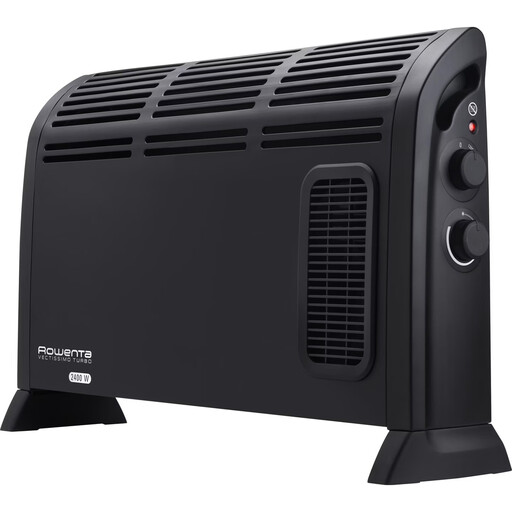
Rowenta Vectissimo II CO3035 convector heater

Rowenta Vectissimo II CO3035

The freestanding design and carry handle may suit you if you want to use a convector heater in different locations from time to time.

Heat settings: 1.200 W and 2.400 W; thermostat; frost protection; turbo function; overheat shut-off; IP20.

According to the product description, do not use in a bathroom, near water or outdoors. Convection mainly warms the air rather than targeting cold walls.

Joybuy
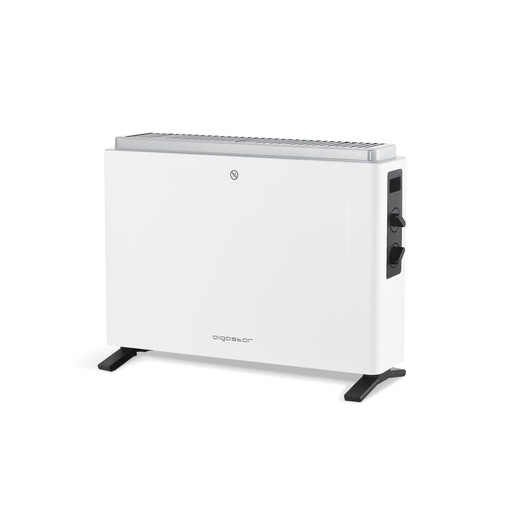
Aigostar convector heater with three heat settings

Aigostar 2000 W convector heater

The freestanding design and handle may be useful for occasional supplementary heating in different locations.

Heat settings: 800 W, 1.200 W and 2.000 W; thermostat; frost protection; overheat protection.

According to the product description, do not use near a bath, shower or swimming pool, or outdoors. The heater mainly warms the air in the room.

Joybuy
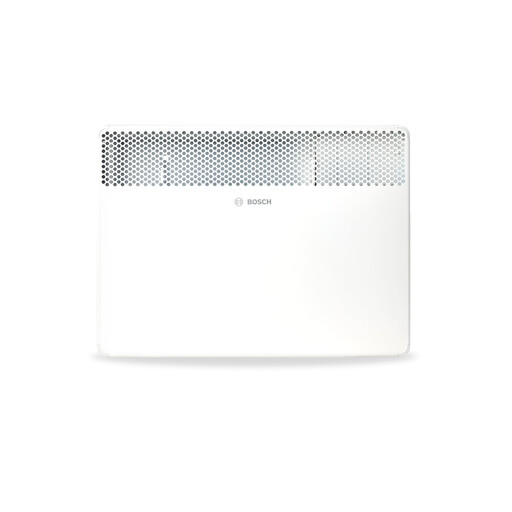
Bosch HC 4000-15 convector heater with weekly programme

Bosch HC 4000-15

The weekly programme and temperature controls may be useful if you want to plan your heating times. Wall-mounted or freestanding use is described.

Output: 1.500 W; temperature range: 12–28 °C; weekly programme; Eco mode; open-window detection; frost protection; overheat protection; IP24.

According to the product description, feet for freestanding use are sold separately. Check the location and connection; convection mainly warms the air in the room.

Joybuy
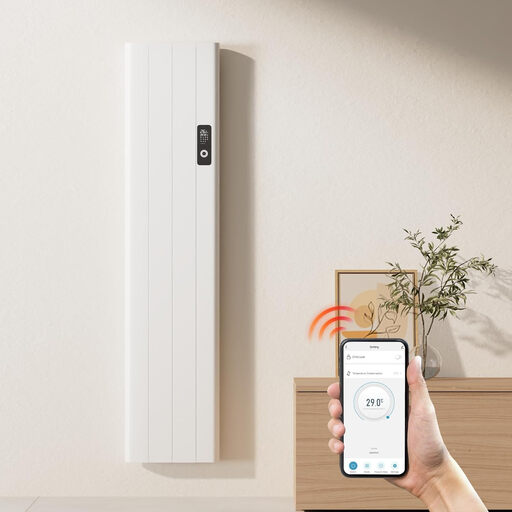
EMKE 1000 W wall-mounted convector heater with app control

EMKE 1000 W wall-mounted convector heater

This wall-mounted model may be suitable if you want to keep the floor clear and have a suitable location for installation.

Output: 1.000 W; LCD; app control; thermostat; weekly timer; frost protection; overheat protection.

Check the intended location and electrical connection before installation. Convection mainly warms the air in the room.

Joybuy
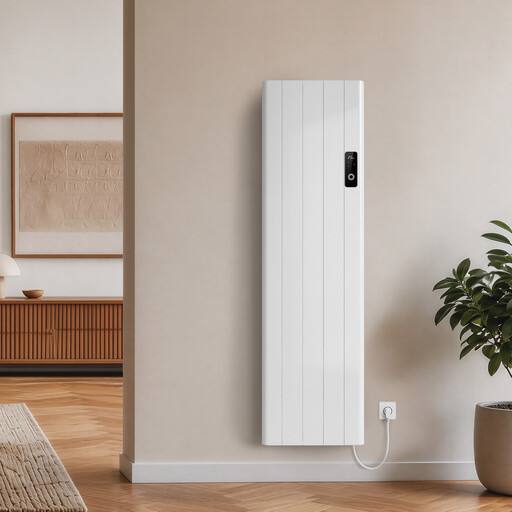
EMKE 1500 W wall-mounted convector heater with app control

EMKE 1500 W wall-mounted convector heater

This wall-mounted model may be suitable if you want to keep the floor clear and have a suitable location for installation.

Output: 1.500 W; LCD; app control; thermostat; weekly timer; frost protection; overheat protection.

Check the intended location and electrical connection before installation. Convection mainly warms the air in the room.

Joybuy

Frequently asked questions

Is 2000 W enough for my conservatory?

You cannot decide based on the wattage alone. Heating demand depends on factors including the glazing, heat loss, the temperature you want and how long you use the space. Do not assume that room-size recommendations apply to a conservatory.

How much does it cost to run a convector heater?

Work out the electricity use based on the actual running time and your own electricity tariff. A heater with a 2 kW input uses 6 kWh if it runs continuously at full power for three hours. With a thermostat switching it on and off, actual consumption may differ. Multiply the kWh by your price per kWh to calculate the electricity cost.

What should I consider when positioning and maintaining the heater?

Keep the air inlets and outlets clear, leave space around the heater and keep it away from flammable materials. Follow the clearance and cleaning instructions for the specific model. For a wall-mounted heater, the location and electrical connection must also be suitable.

Will a more powerful convector stop condensation on cold walls?

Not necessarily: a more powerful convector will not automatically identify or resolve the cause of cold or damp patches. Monitor humidity, ventilate as needed and have persistent thermal bridges or sources of damp assessed. The Consumers’ Association and the Federal Environment Agency offer advice on heating and preventing mould.

Does a new electric single-room heater sold in Germany need to carry an energy label?

The European Commission excludes electric single-room heaters from the scope of the energy labelling rules it describes. However, relevant Ecodesign requirements still apply to products covered by them. Regulation (EU) 2024/1103 has applied since 1 July 2025, but the scope and exemptions for the specific type of appliance must be considered. The absence of such an energy label does not, in itself, prove that the law has been broken.