Before buying a dehumidifier, measure the temperature and humidity, and check whether condensation could be explained by ventilation, a source of moisture or a structural issue. For a conservatory that stays cool, a desiccant dehumidifier may be suitable, provided it is rated for the temperature you’ve measured. In a conservatory that’s warm enough, a suitable compressor dehumidifier could also be an option. Compare drainage, noise and energy consumption, rather than focusing solely on the maximum litres-per-day figure.
Who should consider this decision?
Conservatory owners with regularly wet windows
If your windows are repeatedly wet, you’ll want to find out whether room humidity, cold surfaces, plants or another source of moisture could be contributing before choosing a device. The German Environment Agency recommends identifying and addressing the cause of high humidity, while the Verbraucherzentrale advises checking humidity with a thermo-hygrometer.
People with unheated conservatories
The key is whether the chosen device is suitable for use at the actual winter temperature. The manufacturer’s stated operating temperature range and dehumidification performance should match the conditions in which you plan to use it.
People who need to dehumidify regularly
If you use a dehumidifier frequently, easy tank emptying or a suitable hose drain matters, as do energy consumption and noise. Check what type of drainage is actually possible at the intended location.
What should you look for when buying?
First, measure the temperature and humidity where you’ll use the dehumidifier. Then identify the source of moisture, and only after that compare the type of device, performance conditions and drainage options.
| Consideration |
What to check before buying |
Who is most affected? |
| Cause and room humidity |
Measure humidity where you’ll use the dehumidifier; check the windows, damp patches and possible sources of moisture. |
If you want to find out before buying whether condensation is linked to room humidity or another source of moisture, identifying the cause is your priority. Around 31 % of consumers put this consideration first. |
| Suitability for cold conditions |
Compare the permitted operating temperature range with the minimum temperature you’ve measured; only compare performance figures under like-for-like conditions. |
If your conservatory is unheated, the device needs to suit the temperatures it will actually experience. Around 25 % of consumers prioritise suitability for low temperatures. |
| Drainage |
Check the tank capacity and whether the device switches off when the tank is full; if using a hose, make sure there’s a suitable drain where you plan to place it. |
If you use the device regularly, you’ll want to avoid frequent emptying or be able to plan for it reliably. Around 19 % of consumers pay particular attention to the effort involved in emptying the tank. |
| Energy consumption |
Compare the power consumption in watts for the operating mode you plan to use and the number of hours you expect to run it. |
If you plan to run the device often, you’ll want to include its energy consumption in your own calculations. Around 13 % of consumers put ongoing electricity costs first. |
| Operating noise |
Check the noise rating and the mode it applies to; consider whether a quieter mode will still meet your dehumidification needs. |
If you spend time in the conservatory while the device is running, noise is particularly relevant to how you’ll use it. Around 12 % of consumers prioritise quiet operation. |
Common buying mistakes
-
Choosing the highest litres-per-day figure
A manufacturer’s maximum rating isn’t a measure of performance in your conservatory. Temperature and humidity affect how useful a comparison is.
Measure the room temperature, then compare the approved operating range and performance figures only under conditions you can verify.
An overlooked leak or another persistent source of moisture can cause further damage.
-
Assuming a larger tank means you can leave the device running unattended
Some devices stop running when the tank is full. Having a hose connection doesn’t necessarily mean the water can drain properly at your chosen location.
Check the tank, automatic shut-off, accessories and the hose set-up described in the instructions.
Depending on the device and where it’s placed, you may need to empty the tank regularly or set up a suitable hose connection.
-
Assuming the warm air from a desiccant dehumidifier provides free heating
Desiccant dehumidifiers use electricity to regenerate the desiccant. Trotec describes the TTR 57 E as producing warmer exhaust air, but that doesn’t mean it provides free heating.
Compare power consumption and the planned running time for the season in which you want to use the device.
Regeneration uses additional electricity.
Brands and models to consider
Trotec
The TTR 57 E is a desiccant option that Trotec also describes as suitable for use in a conservatory.
- Trotec says it can be used from 1 °C; it has a 5-l tank and can drain continuously.
- The manufacturer’s rating of up to 9 l/24 h isn’t a guaranteed performance figure at 1 °C or in every conservatory. Check the room size and the power consumption of the mode you plan to use.
Meaco
Meaco offers desiccant models in the DD8L range for cooler locations, as well as compressor models in the Arete range. These types and models aren’t interchangeable.
- For the DD8L Zambezi and DD8L Pro, Meaco states a capacity of up to 8 l/day and operation from 0 °C.
- For the Arete One 12L compressor dehumidifier, Meaco states a minimum temperature of 10 °C. Check that the exact model variant and operating conditions match before buying.
Bosch
The Dry 4000 is one option to compare for a conservatory that’s warm enough.
- Bosch states a capacity of up to 16 l/day, coverage of up to 33 m², a 2.5-l tank and the option of hose drainage.
- The room-size and maximum performance ratings don’t confirm how well it dehumidifies at low conservatory temperatures.
Comedes
Comedes describes the Demecto 16 eco WiFi as suitable for living rooms and heated cellars, so it’s more likely to suit a heated conservatory.
- The manufacturer states a capacity of up to 16 l/day, a maximum of 20 m² for optimum dehumidification, automatic defrosting, tank shut-off and a hose connection.
- These details don’t confirm that it’s suitable for an unheated conservatory.
Beurer
The LE 250 is a domestic option that Beurer describes as suitable for larger rooms.
- Beurer states a capacity of up to 20 l/day, coverage of up to 60 m², a 4-l tank, and automatic and night modes.
- These figures don’t confirm that the device is suitable for the actual winter temperature in your conservatory.
Dehumidifiers at Joybuy
These product options include dehumidifiers designed to reduce room humidity. Before choosing one, check that its operating temperature, drainage and operating mode suit your conservatory.
 No image available
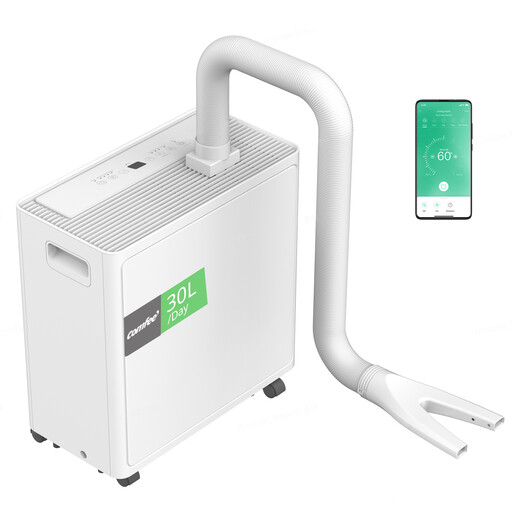
Comfee' MDDA-30DEN7-SD
An option if you need a stated operating temperature range of 5–32 °C; according to the product details, operating it below 5 °C is outside this range.
Up to 30 l/day; 3.2-l tank; hose drainage; 640 W rated power.
Joybuy
 No image available
Comfee' MDDO-10DEN7
An option if you want to consider an adjustable humidity setting and automatic shut-off when the tank is full.
Up to 10 l/24 h; 2.5-l tank with full-tank warning and automatic shut-off; night mode at 36 dB(A).
Joybuy
 No image available
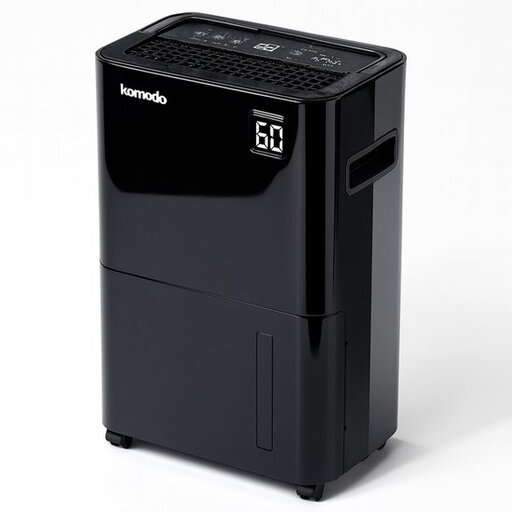
Komodo dehumidifier, 20 l/day
An option if you want to compare a tank and hose drainage as different ways to remove water.
Up to 20 l/day; 2.5-l tank with automatic shut-off when full; hose drainage; adjustable humidity and automatic defrosting.
Joybuy
 No image available
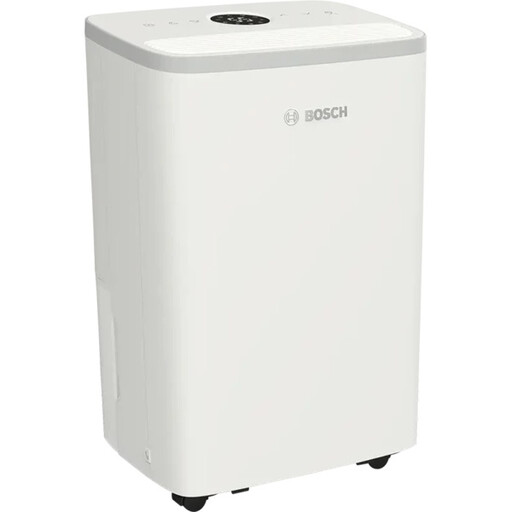
Bosch Dry 2000
An option if you want to consider automatic, night and laundry modes.
Up to 12 l/day; stated as suitable for rooms up to 55 m³; 2.5-l tank; 38 dB; automatic shut-off when the tank is full.
Joybuy
 No image available
Bosch Dry 4000
An option if you want to consider hose drainage for regular use; check separately that the operating temperature is suitable for where you plan to place it.
Up to 16 l/day; stated as suitable for rooms up to 75 m³; 2.5-l tank; 40 dB; optional hose drainage.
Joybuy
Frequently asked questions
Is a dehumidifier enough if there’s water on the windows and frames?
Not necessarily. A dehumidifier reduces humidity in the air, but it won’t automatically identify what’s causing the water. Measure the temperature and humidity, wipe away any standing condensation, and check the ventilation and possible sources of moisture. If there’s mould or you suspect water is getting in, identify and address the cause.
Can I place the device next to wet glass or in a puddle?
Follow the set-up and safety instructions for the specific model. The German instructions for the Meaco DD8L Zambezi prohibit using it in a puddle or standing water and require a stable, level surface. This guidance applies to that model and isn’t a general statement about every device.
What should I maintain or check if I use it regularly?
Check the tank and filter according to the instructions for your chosen model. If using a hose, check that the device has a connection and that water can drain where you plan to place it; a full tank may cause the device to switch off.
How can I estimate the electricity needed for my use?
Base your calculation on the power consumption of the operating mode you actually need, the planned running hours and your own electricity tariff. Also factor in emptying the tank or setting up the hose, as well as the model’s care instructions.
What should I check for compliance when buying an electric dehumidifier in Germany?
Check whether EU rules apply to the device that require CE marking; it’s only compulsory when the applicable rules specifically say so. The German Federal Network Agency also lists identifiable manufacturer details and German-language instructions with the required warnings as points to check. CE marking is the manufacturer’s declaration, not independent safety approval.


