Start by measuring the temperature and humidity in your conservatory, then check whether regular ventilation is enough to remove the extra moisture. If the room stays cool for long periods, a desiccant dehumidifier may be suitable, provided its stated temperature range is a match. In a conservatory that’s usually heated, you can compare compressor models with a suitable operating range, room capacity and laundry mode. The rated capacity in litres per day won’t guarantee the same level of dehumidification in your conservatory, so also consider energy use, water drainage and safe positioning.
Who could benefit from a dehumidifier?
Drying laundry in a cool conservatory
If you dry laundry in your conservatory during the colder months, the appliance’s stated temperature range should suit the actual room temperature. Trotec describes its TTR 57 E desiccant dehumidifier as suitable for use in cool conservatories.
Laundry drying and misted windows
If condensation forms while your laundry is drying, it may be worth keeping an eye on the extra moisture. Regular ventilation and checking for possible structural causes are still important. The German Environment Agency and the Verbraucherzentrale offer guidance on ventilation and monitoring humidity.
Regularly drying large loads
If you often dry large amounts of laundry, consider room capacity, dehumidification performance and the effort involved in emptying the tank or using a drain. Trotec and Bosch provide room size or volume information for some of their models.
What should you look for when buying?
First, measure the temperature while your laundry is drying. Then compare the specific appliance’s operating range with that temperature and check how the water is drained.
| Buying consideration |
What to look for |
Who it matters most to |
| Temperature range |
Measure the room temperature while laundry is drying and compare it with the operating range of the specific model. |
If my conservatory stays cool for a long time while laundry is drying, I want an appliance designed to work at that temperature. Around 36% of consumers are likely to prioritise suitability for low temperatures. |
| Moisture on windows |
Monitor humidity with a thermo-hygrometer and keep an eye on window fittings and nearby surfaces. |
If my windows mist up, I want to control the extra moisture without overlooking ventilation or possible structural causes. Around 29% of consumers are likely to have this priority. |
| Laundry load and room |
Check the room volume, laundry mode, tank capacity and drainage options for the specific model. |
If I regularly dry a lot of laundry in my conservatory, room size and dealing with the water are especially important. Around 21% of consumers are likely to prioritise laundry loads. |
| Energy use and operation |
Compare power consumption, expected running time, noise levels in the mode you’ll use and water drainage. |
If the appliance will be running frequently, I want to understand its energy use and the day-to-day effort involved. Around 14% of consumers are likely to prioritise these ongoing considerations. |
Common buying mistakes
-
Choosing the highest litres-per-day rating without considering room temperature
The amount of water actually removed depends on temperature and humidity. Compressor dehumidifiers may become less effective as temperatures fall, as Trotec explains.
First, measure the temperature while laundry is drying, then compare it with the operating range and the conditions used for the performance rating.
-
Expecting a mini dehumidifier to handle a full load of washing
Trotec describes mini Peltier dehumidifiers as suitable for small areas with limited moisture. This doesn’t mean they’ll be powerful enough to handle a full load of washing in an entire conservatory.
Compare the room volume and intended use with the specific appliance’s specifications, rather than choosing on size or noise alone.
-
Assuming misted windows mean you simply need an appliance
Wet laundry increases the humidity in a room. The German Environment Agency recommends regular ventilation when there are additional sources of moisture. Persistent damp may also mean nearby building structures need checking.
Monitor the moisture and affected surfaces, and investigate any persistent damp rather than relying on an appliance alone.
-
Assuming laundry mode means quiet operation and low energy costs
A laundry mode doesn’t automatically mean the appliance will be quiet or use less energy. These features can vary depending on the operating mode.
Check the power consumption, noise level and water drainage for the exact model and the mode you intend to use.
Brands to consider
Trotec
Trotec offers desiccant and compressor dehumidifiers, including models with a laundry mode.
- Trotec states that its TTR 57 E desiccant dehumidifier operates from 1 °C and is suitable for rooms up to 20 m². Its TTK 66 E compressor model is specified for 5–32 °C and rooms up to 50 m². These figures apply to the respective models.
- During regeneration, a desiccant dehumidifier may release warmer air. So compare power consumption and actual running time, not just the daily capacity.
Bosch
The Bosch Dry 4000 is a compressor dehumidifier with a laundry mode.
- Bosch lists a 2,5-l tank and continuous condensate drainage for the Dry 4000. The brand gives the model a room volume of around 75 m³.
- Before using it in a cool conservatory, check the permitted temperature range for the specific version.
De'Longhi
The Tasciugo AriaDry Multi DEXD216RF is a compressor dehumidifier with a laundry care function and continuous drainage.
- For this model, De'Longhi states a capacity of 16 l/24 h at 30 °C and 80 % relative humidity, with a power input of 285 W.
- The stated daily capacity isn’t a guarantee of performance in a cooler conservatory. The laundry function and other features are model-specific details provided by the manufacturer.
Meaco
Meaco offers compressor and desiccant dehumidifiers. The DD8L Junior is a desiccant model with a laundry mode.
- The DD8L Junior manual gives an operating range of 1–37 °C.
- The manual warns against allowing water from the laundry to drip onto the appliance. This model’s operating range and safety advice don’t automatically apply to other Meaco appliances.
Midea
The Midea DF-20DEN7-WF is a compressor dehumidifier with app control.
- Midea lists a capacity of 20 l/24 h at 30 °C and 80 % relative humidity, an operating range of 5–32 °C and a 3-l tank.
- Don’t assume this model has a dedicated laundry mode; check the features of the specific version.
Joybuy products for drying laundry in a conservatory
The Joybuy products below list a laundry or drying mode. Check whether the permitted temperature range suits a cool conservatory for the specific model.
 No image available
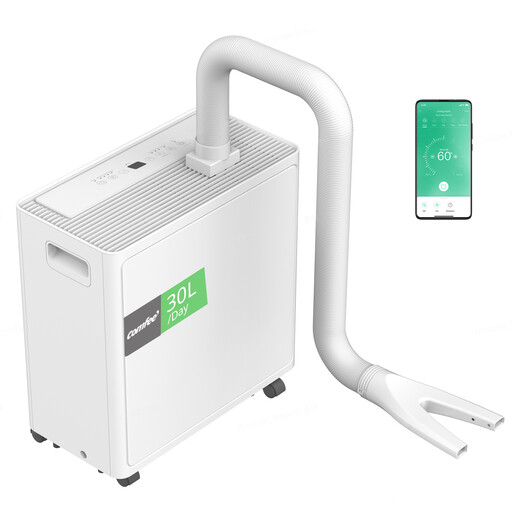
Comfee MDDA-30DEN7-SD, 30 l/day
The listed laundry drying mode makes this model worth considering if you regularly dry laundry indoors.
The 30 l/24 h rating is based on 30 °C and 80 % relative humidity; it doesn’t guarantee the same performance in a cooler conservatory.
The product name also lists a 3,2-l tank, continuous drainage, app control and suitability for rooms up to around 130 m³ (73 m²).
Joybuy
 No image available
Comfee MDDO-10DEN7, 10 l/day
The listed laundry drying mode may be an important feature if you’re looking for a dehumidifier for a smaller room.
The product name lists a 2,5-l tank and suitability for rooms of around 40 m³ (16 m²).
Joybuy
 No image available
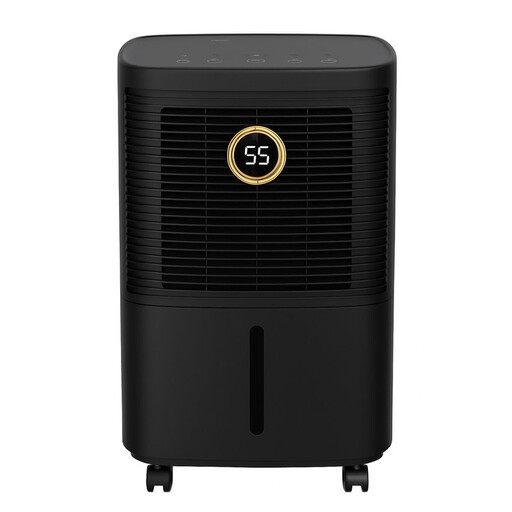
Komodo dehumidifier, 16 l/day
The listed laundry drying function may appeal if you want to dry laundry indoors.
The product name states a dehumidification capacity of 16 litres per day.
Joybuy
 No image available
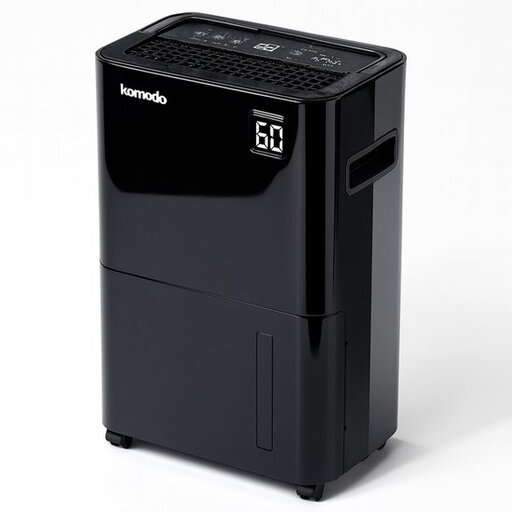
Komodo dehumidifier, 20 l/day
The listed laundry drying function may appeal if you want to dry laundry indoors.
The product name states a dehumidification capacity of 20 litres per day.
Joybuy
 No image available
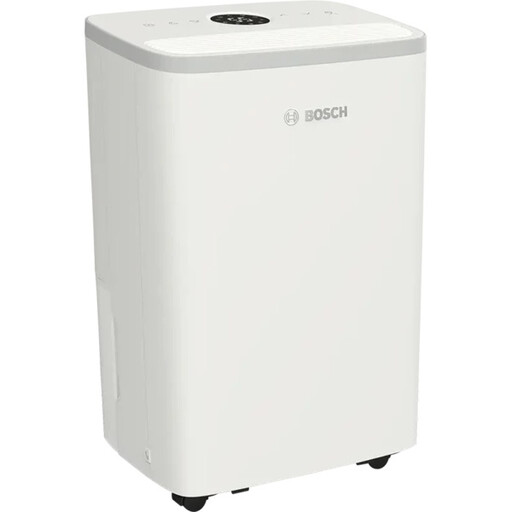
Bosch Dry 2000, 12 l/day
The listed laundry mode makes this model worth considering if you want to use a dehumidifier while drying laundry.
The product name states that it’s suitable for rooms up to 55 m³ and has a 2,5-l tank.
According to the product information, the drain hose isn’t included.
Joybuy
Frequently asked questions
Do I have to buy a dehumidifier for my conservatory?
No, not necessarily. First, use a thermo-hygrometer to check whether suitable ventilation removes enough of the extra moisture. A dehumidifier is no substitute for ventilation or for investigating persistent damp or possible structural damage.
Where should I position the appliance next to wet laundry?
Place the appliance on a level surface, keep the air inlets and outlets clear, and follow the safety and clearance guidance for the specific model. The Meaco DD8L Junior manual warns against water from laundry dripping onto the appliance. Its specific guidance isn’t a general clearance recommendation for other models.
What does a dehumidification rating of 16 or 24 litres per day mean?
These are model-specific rated or maximum figures, not a guarantee of how much water the appliance will remove from your conservatory. For example, De'Longhi lists 16 l/24 h for the DEXD216RF at 30 °C and 80 % relative humidity. So compare the conditions behind each manufacturer’s rating with the actual conditions in your room.
How can I estimate energy costs and ongoing effort?
For the same operating mode, use this calculation: power consumption in watts × operating hours ÷ 1,000 = energy used in kWh. Multiply this figure by your own price per kWh. You should also consider the actual running time, the power consumption of the mode you use, and the effort involved in emptying the tank or using accessories.
What labelling and disposal rules apply in Germany?
Mains-powered appliances covered by the relevant low-voltage rules must meet the corresponding conformity requirements and carry the CE marking. The European Union and the Bundesnetzagentur explain that manufacturers apply the CE marking under their own responsibility; it isn’t an independent quality mark. The crossed-out wheelie bin symbol indicates that waste electrical equipment must be collected separately. Check the labelling and documentation for the specific product.


