If your adjoining room stays cool
Check the actual room temperature and choose a model with a specified operating range that covers it. Trotec says the TTR 57 E can operate from 1 °C.


If the adjoining room stays cool throughout winter, a desiccant dehumidifier specifically rated for low temperatures is a natural choice. In mostly heated rooms, a refrigerant model may be suitable. Trotec specifies that its TTR 57 E desiccant dehumidifier can operate from 1 °C, while its TTK 66 E refrigerant dehumidifier is rated for 5–32 °C. Compare extraction rates only alongside their test conditions, and investigate the cause if building surfaces stay wet: a dehumidifier won’t fix water ingress or structural damage. The German Environment Agency recommends identifying and addressing the causes of excess moisture.
Check the actual room temperature and choose a model with a specified operating range that covers it. Trotec says the TTR 57 E can operate from 1 °C.
If the moisture keeps coming back, consider cold surfaces and possible sources of damp as well as the room air. The German Environment Agency recommends identifying and addressing the causes of excess moisture.
Check whether the unit switches off when the tank is full and whether you can use a drain at the intended location. Bosch says the Dry 4000 has a full-tank shut-off and can be connected for continuous drainage.
A good fit if: the adjoining room stays cool and the specific model is rated for that temperature. Trotec says the TTR 57 E can operate from 1 °C and is suitable for rooms up to 20 m².
Things to weigh up: Check the power consumption, noise level and actual water extraction under the conditions in your room. The daily extraction rate alone isn’t enough to compare running costs.
A good fit if: the room is mostly heated, or the model you choose is rated for the temperatures there. Trotec specifies an operating range of 5–32 °C for the TTK 66 E.
Things to weigh up: Don’t assume a stated maximum extraction rate will apply in a cold adjoining room off a conservatory.
A good fit if: you’re dealing with a very small area with only a light moisture problem. Trotec rates the Peltier TTP 1 E for areas of up to 5 m².
Things to weigh up: Its stated maximum extraction rate of 0.22 l/24 h is an important consideration if the whole adjoining room is damp.
| What you need | What to check before buying | Who it matters to |
|---|---|---|
| Dehumidifying in cold conditions | Check the operating range and extraction rate, including the test conditions, against the actual room temperature. | If my adjoining room gets cold in winter, a suitable temperature range matters more to me than the highest daily extraction rate; around 36% of consumers put dehumidifying at low room temperatures first. |
| Condensation and the cause of damp | Monitor humidity and consider cold surfaces as well as possible causes of damp. | If my windows regularly mist up, I want to know whether it’s down to high humidity, cold surfaces or a damp problem; around 29% of consumers prioritise condensation and finding the cause. |
| Water drainage | Check the tank capacity, full-tank shut-off and whether a drain can be used at the intended location. | If I only check the adjoining room occasionally, I want to avoid having to empty the tank and be able to use a drain; around 21% of consumers focus above all on low-maintenance operation. |
| Noise and power consumption | Consider the noise level for the mode you plan to use, as well as power consumption and expected running time. | If guests sleep in the room or the unit runs for longer periods, quiet operation and power consumption matter to me; around 14% of consumers put these two aspects first. |
A stated daily extraction rate is based on specific temperature and humidity conditions. It doesn’t automatically tell you how much water a unit will remove in a cool adjoining room.
Compare extraction rates alongside the test conditions and the specified operating range.
If the damp persists, its underlying cause may still be there. The German Environment Agency recommends identifying and addressing the causes of excess moisture.
If building surfaces stay wet or you can see mould, investigate the cause and have it fixed rather than relying on ventilation or dehumidifying alone.
Trotec rates the Peltier TTP 1 E for areas of up to 5 m², with a maximum extraction rate of 0.22 l/24 h. Check that these figures suit the area affected by damp.
If the whole adjoining room is affected, check the room size and extraction rate specified for the particular model.
The TTR 57 E and TTK 66 E illustrate how different models are suited to cooler and warmer adjoining rooms.
The DD8L Junior is a desiccant option to consider when choosing a model for a cool adjoining room.
The Dry 4000 is a refrigerant dehumidifier that can serve as a point of comparison for a mostly heated adjoining room.
The DEX210SF and DNS65 are models whose extraction rates can be compared under the same stated test conditions.
This selection includes dehumidifiers for adjoining rooms, where temperature range, humidity control and water drainage are important factors.
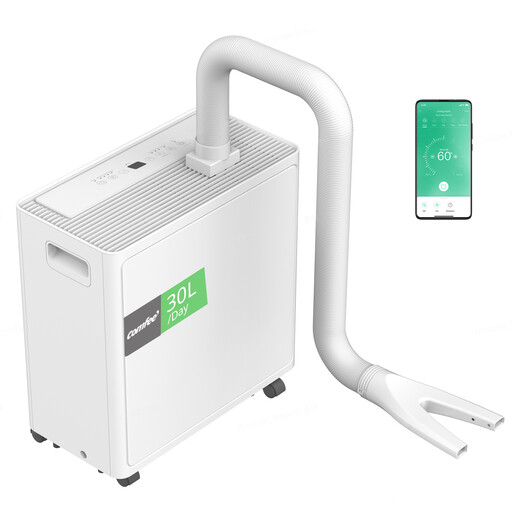 No image available
For a larger adjoining room where humidity control and the option of hose drainage are important.
Specifications include up to 30 l/24 h, coverage for rooms up to 73 m² and an operating range of 5–32 °C. The tank holds 3.2 l, and four operating modes and continuous drainage are listed.
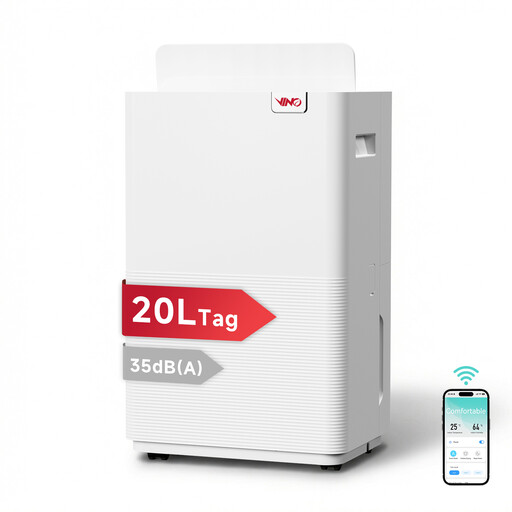 No image available
For an adjoining room where humidity control, sleep mode and the option of continuous drainage are useful.
Specifications include up to 20 l/day, coverage for rooms up to 40 m² and an operating range of 5–32 °C. The tank holds 2.5 l, and sleep mode, hose drainage and a noise level of 35 dB are listed.
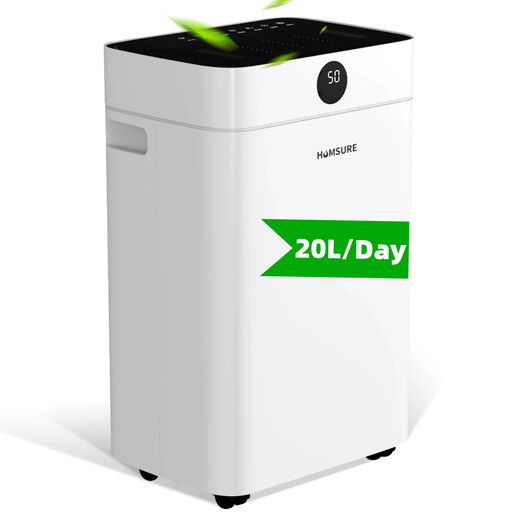 No image available
For a larger adjoining room where a full-tank shut-off and the option of hose drainage are useful.
Specifications include up to 20 l/day and coverage for rooms up to 50 m². The tank holds 2.8 l, and a full-tank shut-off, automatic defrost function and continuous drainage are listed.
 No image available
For an adjoining room where automatic and night modes, as well as a full-tank shut-off, could come in handy.
Specifications include up to 16 l/day, a 2.5-l tank and coverage for rooms up to 75 m³. The model has two fan speeds and a night mode. Continuous drainage requires a hose, which the product information says isn’t included.
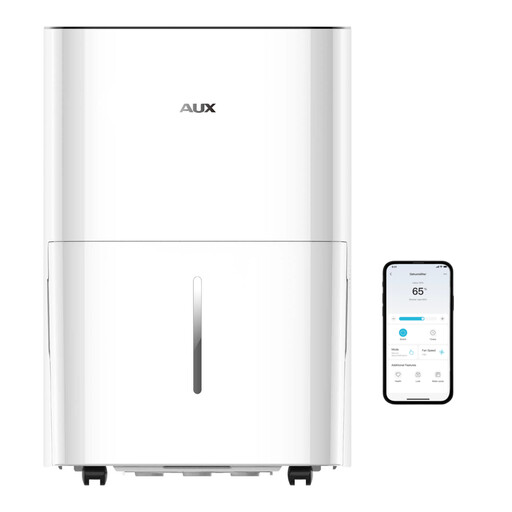 No image available
For an adjoining room where Wi-Fi control and an adjustable target humidity are useful.
Specifications include up to 20 l/day, coverage for rooms up to 25 m² and an operating range of 5–35 °C. Self-evaporating mode is limited to up to 8 hours, and the unit stops when the tank is full.
To reduce the risk of mould, the German Environment Agency recommends keeping relative indoor humidity between 40–60 % and suggests using a hygrometer to monitor it. Keep an eye on cold surfaces too: a single reading taken in the middle of the room won’t fully explain condensation on a window.
No, a dehumidifier doesn’t replace ventilation. The German Environment Agency notes that ventilation needs depend on the room and how it’s used. Keep doors to cooler rooms closed to prevent warm, moist air from condensing there.
Check whether the specific model switches off when its tank is full and whether you can connect a drain at the intended location. Bosch says the Dry 4000 has a 2.5-l tank and can be connected for continuous drainage. Check the product listing to see whether the required hose is included.
To estimate your costs, you’ll need the power consumption or measured energy use, the actual running time and your electricity tariff. The German consumer advice centre lists these as inputs for calculating the cost of running household appliances.
When monitoring electrical and electronic products, the German Federal Network Agency checks details including the CE marking, manufacturer information and a German-language instruction manual. The CE mark isn’t an endorsement of dehumidifying performance, so check the information against the specific unit.