People who work at a fixed desk
If you spend most of your time at the same desk, you may only need targeted warmth there, rather than throughout the conservatory. It’s important to position the heat source so it’s directed where you need it.


If you mainly need warmth at a fixed desk, an adjustable infrared heater could be a good fit. If you want to warm the air in the room, consider a fan heater instead. For longer-lasting heat with as little fan noise as possible, a convector or oil-filled radiator may be an alternative. Your decision should come down to how long you’ll use it, your electricity tariff and whether you have a safe place to position it.
If you spend most of your time at the same desk, you may only need targeted warmth there, rather than throughout the conservatory. It’s important to position the heat source so it’s directed where you need it.
If you only work in the conservatory now and then, you may prefer warm air at the start of your session. Remember to consider the airflow and operating noise, too.
If you’ll be using it for longer periods, fan-free heat, adjustable settings and running costs may matter more.
First, decide whether you mainly want to warm your seating area or the air in the room. Then consider how long you’ll use the heater, where you’ll place it and what the electrical connection requires.
| Consideration | What to check before buying | Who it matters most to |
|---|---|---|
| Warmth at your desk | Whether it can be directed towards your seating position; approved mounting options or suitable feet. | If you work at the same desk every day, you may want warmth focused on your seat rather than spread throughout the room. Around 29% of consumers prioritise targeted warmth at their seat. |
| Quick heat | Controls and airflow direction; unobstructed air intake and outlet. | If you only use your workspace briefly, you may want warm air quickly at the start of your session. Around 23% of consumers put quick heat first. |
| Minimal airflow and noise | Specific noise levels and operating modes; don’t assume all fan heaters work like fan-free appliances. | If you need to concentrate at your desk, you may be particularly concerned about minimising airflow and operating noise. Around 18% of consumers prioritise an undisturbed working environment. |
| Safe positioning | Clearances and unobstructed openings as specified in the instructions; socket and electrical load. | If you want to heat your existing workspace, you’ll need a solution that can be positioned and connected safely there. Around 18% of consumers put safe positioning first. |
| Running costs | Power in kW, actual heating time and your electricity price per kWh. | If you heat regularly, you may want to calculate the cost for the time you plan to use it. Around 12% of consumers prioritise predictable running costs. |
For a rough cost estimate, multiply the power in kW by the actual hours of operation and your electricity price per kWh. Thermostat breaks can affect the actual heating time, so you can’t work out monthly costs from the maximum power alone.
The North Rhine-Westphalia Consumer Advice Centre advises that small plug-in fan heaters are not suitable as a replacement for room heating. Warming your desk and keeping the air in the whole room warm are two different requirements.
Think about whether you only want to warm your seat or the entire enclosed conservatory. Calculate the cost using the power, running time and your tariff.
If you use it for longer periods, an unsuitable heat distribution may mean you need to heat for longer or use an additional heat source.
Infrared panels, fan heaters and radiators give off heat in different ways. An oil-filled radiator continuing to give off heat after it has been switched off does not, by itself, prove that it uses less electricity to deliver the same amount of heat.
Choose according to your seating position, how warm you want the room to be and how long you’ll use the heater, rather than relying on broad claims about savings.
Paper, fabrics, blocked air vents and overloaded sockets remain potential hazards, even with appliances that have safety features. The German Fire Service Association warns against drying clothes on heaters and overloading sockets by plugging in too many heaters.
Before you buy, check that you can follow the instructions on clearances, positioning and electrical connections at your intended location.
Infrared panels can provide targeted supplementary warmth at a fixed seat.
Compact fan heaters such as the Heizlüfter 316 are an option when you want warm air at your workspace.
The CX3120/01 ceramic fan heater is a specific option for warming the air in a room.
Portable oil-filled radiators such as the Radia S TRRS0920 give off heat without the airflow of a fan heater.
Wall-mounted supplementary heaters such as the CK 20 Trend LCD may suit you if you need a fixed installation and warmth for the room.
This selection includes infrared panels for targeted warmth, fan heaters, convectors and oil-filled radiators to suit different heating needs at your desk.
 No image available
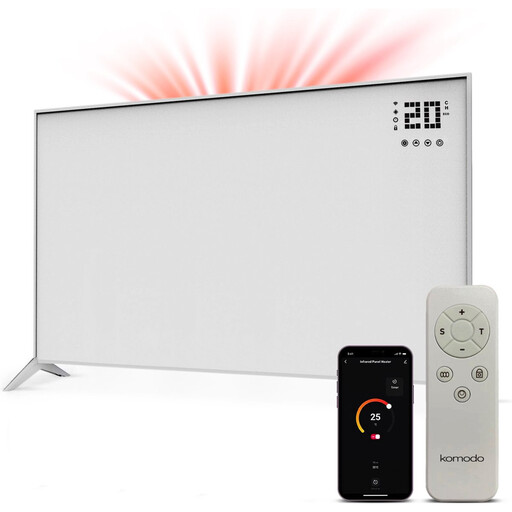
As an infrared panel, it’s an option for targeted warmth at a fixed seat. Make sure its position and distance are suitable for your chosen location.
800 W; 100 × 80 cm; WiFi control. The product name states that it’s designed for wall mounting or freestanding use.
Rated IP24 and specified for rooms up to 20 m². Don’t cover it while it’s operating, and keep it away from flammable materials.
 No image available
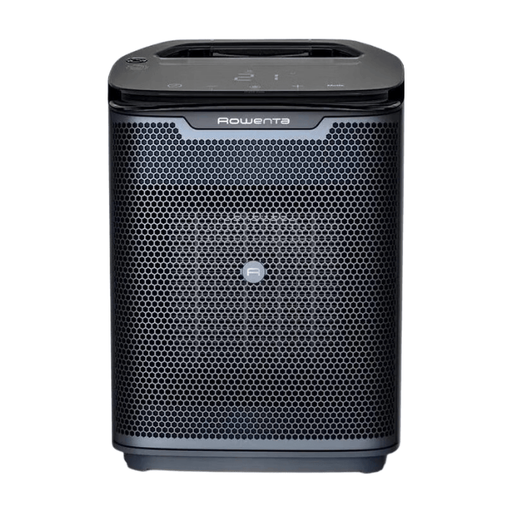
A fan heater is worth considering if you want warm air at your workspace. Bear the airflow and positioning instructions in mind.
Ceramic fan heater for indoor use, described as suitable for a table or console; IP21.
According to the product information, keep it at least one metre away from flammable objects and plug it into an earthed socket.
 No image available
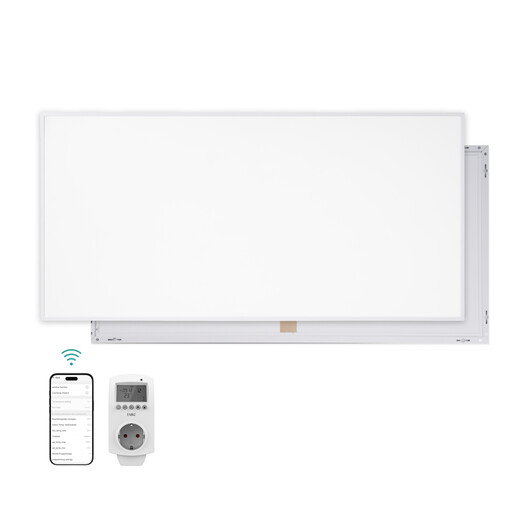
This wall heater may suit a fixed workspace if you can position and mount the panel safely, in line with the instructions.
1,000 W; 1,195 × 595 mm; listed with a plug-in thermostat and app control.
The product description gives a surface temperature of 85–125 °C. Mount it out of children’s reach and away from flammable materials; do not cover it.
 No image available
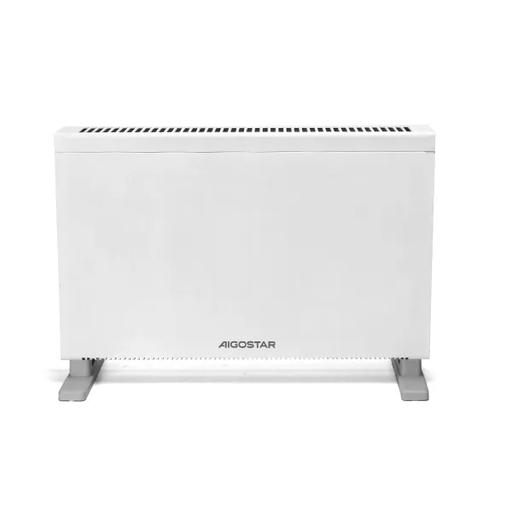
A convector is an option if you want to warm the air in the room, rather than just your seat.
2,000 W; thermostat. The product description says to use it on a flat, stable and dry surface.
According to the product information, use indoors only and not in wet areas. Keep it at least one metre away from furniture, curtains and other objects.
 No image available
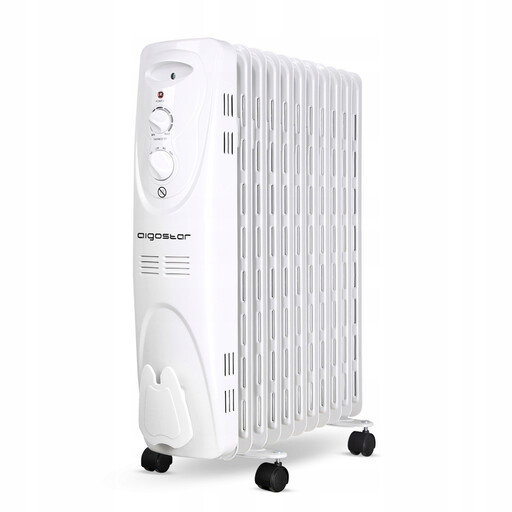
An oil-filled radiator may suit you if you prefer fan-free heat and the flexibility to move it around.
2,300 W; three heat settings; adjustable thermostat; four castors.
The product description says it’s intended for well-insulated, enclosed rooms or occasional short periods of heating. Don’t cover it while it’s operating, and keep it away from flammable materials.
Multiply the electrical power in kW by the number of hours the appliance is actually heating, then by your electricity price per kWh. 2,000 W is equivalent to 2 kW; one hour of continuous operation uses 2 kWh. Thermostat breaks will affect actual consumption.
No. The German Fire Service Association advises keeping heaters a safe distance from flammable objects, warns against overloading sockets and says not to dry clothes on a heater. Check the instructions for your specific model to find the minimum clearance and approved positioning.
Think about heating and ventilation together, rather than treating a local heat source as a solution to damp. The Consumer Advice Centre recommends monitoring humidity and replacing damp air by ventilating the room. If your intended location may be damp, also check whether the specific electrical appliance is suitable for it.
No. According to the European Commission, the CE marking is the manufacturer’s declaration that the product meets the relevant EU requirements; there is no central EU body that routinely issues a CE certificate. For the specific appliance, check its marking, the manufacturer’s information and the instructions.