For an enclosed conservatory used occasionally, a thermostatically controlled convector or radiator may be suitable for supplementary whole-room warmth. For a single seating area, targeted radiant heat is more likely to do the job. The key factors are how long you use the space, its heating demand and the conditions where the appliance will be placed. A stated wattage alone does not prove that the whole room will get warm enough or that an appliance is suitable for every location.
Which heating option is right for you?
If you use your conservatory as a living space
If you spend longer periods in an enclosed glass room, consider its size, glazing, how long you want to use it and how the heating is controlled. The ADAC classes electric direct heaters such as convectors as supplementary heating. You can’t determine the right heat output from a wattage figure alone.
If you mainly want to warm one seating area
If you only use one area, targeted radiant heat may be a better fit than trying to bring the air throughout the whole room to a uniform temperature. Stiebel Eltron describes the IW 120 as an appliance for short-term, targeted warmth.
If the installation area may be damp
If the intended location may be exposed to splashing water or significant damp, check the IP rating and instructions for the exact model and location. Manufacturers’ IP rating information varies by model and shouldn’t be assumed to apply to other appliances.
What should you consider when choosing?
Convector for heating the air
Suitable if: you want to heat an enclosed conservatory as a whole room for limited periods, and the appliance is suitable for its heating demand and installation location.
The trade-off: Longer running times increase electricity use, and the rated output alone can’t guarantee a particular room temperature.
Oil-filled radiator for portable supplementary warmth
Suitable if: you want occasional room heating without wall mounting, and lingering warmth after the appliance is switched off suits how you use the space.
The trade-off: You’ll need to check separately whether the specific model is suitable for a damp installation location.
Infrared panel or heater for one seating area
Suitable if: you mainly want warmth where you sit, rather than warming the air throughout the conservatory.
The trade-off: Positioning and possible mounting requirements matter; you may need an external thermostat system to control the temperature.
Fan heater for short periods of use
Suitable if: you need warm air for limited periods in a dry area that’s suitable for the appliance.
The trade-off: Fan noise, moving air and electricity use may make it less suitable as a regular heater.
| What you need |
What to check before buying |
Who is this important to? |
| Heating the whole room |
The heating demand of the glazed room and the controls; the rated output doesn’t guarantee suitability for a particular floor area. |
If I use the conservatory as a living space for longer periods, the heating needs to be suitable for the whole room. Around 31% of consumers put whole-room warmth first. |
| Electricity use with frequent operation |
Power settings and expected running time; thermostat cycles affect actual consumption. |
If the appliance runs regularly, I want to match its power and running time to how I use it. Around 25% of consumers mainly consider electricity use. |
| Warmth at a seating area |
Positioning and a clear path for the radiant heat; with panels, also check what controls are needed. |
If I only sit in one place, I want warmth there without necessarily heating the whole room. Around 25% of consumers prioritise targeted warmth at a seating area. |
| Suitability for damp conditions |
The IP rating for the exact model and the instructions for the appliance and connection location. |
If the planned location may be exposed to splashing water or damp, I want to be able to confirm that the appliance is suitable for that exact spot. Around 19% of consumers primarily consider safety at the installation location. |
Common selection mistakes
-
Assuming a low wattage or ‘infrared’ means lower electricity use
Electricity use depends on the power at which an appliance actually runs and for how long. A particular type of heater or a single wattage figure doesn’t, by itself, prove that it uses less electricity.
Compare the expected time in use and the power settings. Don’t assume electric direct heaters will save energy based on the product name alone.
-
Applying a manufacturer’s room coverage claim to your conservatory without checking
A heavily glazed room may lose heat differently from the type of space covered by a general floor-area claim. Choosing an output that’s too low may mean you don’t reach your desired room temperature.
Decide whether you want to heat the whole room or just one seating area, and take the glazing, how you’ll use the space and its heating demand into account.
-
Assuming one model’s IP rating applies to other appliances or locations
The manufacturers’ stated ratings for the models considered range from IP20 to IP44. An IP rating alone doesn’t confirm that an appliance is suitable for every installation or every damp or splash-prone location.
Check the rating for the exact model and follow the instructions for the actual installation and connection location. Don’t use an appliance with a damaged cable.
Key brands at a glance
Stiebel Eltron
The documented range includes convectors for controlled supplementary warmth and a heater for targeted heat.
- For the CNS 2000 Plus LCD Move, the manufacturer lists 2000 W, a weekly programme, IP24, tip-over protection and overheat protection. For the IW 120, it lists three heat settings of 0.4, 0.8 and 1.2 kW.
- These details relate to different models and don’t replace a heating-demand assessment or a check of the intended installation location.
De’Longhi
The Radia S TRRS0920 is an option for portable supplementary room heating without wall mounting.
- According to the manufacturer, this model has wheels, a room thermostat, frost protection and a maximum input of 2000 W. The heated oil continues to give off warmth after the appliance is switched off.
- These product details don’t establish that it has a protection rating suitable for wet locations; check the instructions for the intended location.
Rowenta
The Mini Excel Safe SO9266F0 is a ceramic fan heater for occasional warm-air heating.
- Rowenta lists two power settings of 1000 and 2000 W, an electronic thermostat, overheat protection and IP20.
- IP20 doesn’t indicate splash protection for this model. A manufacturer’s claim about saving energy isn’t a guarantee of lower electricity use.
VASNER
The Citara-M panels are aimed at buyers looking for radiant heat with wall or ceiling mounting.
- VASNER lists several power options in the range, IP44, a mounting bracket included and the option of external thermostat control.
- For temperature-controlled use, check which thermostat system is compatible with your chosen model. Claims about particularly efficient heat don’t prove lower electricity use compared with other direct heaters.
Joybuy products for supplementary whole-room warmth
The following Joybuy selection includes electric convectors and an oil-filled radiator for supplementary whole-room warmth. Choose an appliance to suit the heating demand and intended installation location. Before buying, check the documentation for the exact model to confirm that it meets the relevant EU ecodesign requirements and carries the required CE marking. The CE marking is a manufacturer’s declaration, not an independent safety certificate; the European Commission and Your Europe explain the relevant requirements.
 No image available
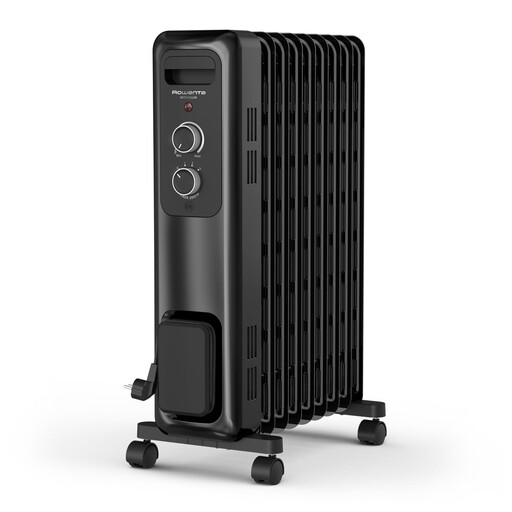
Rowenta Intensium Ultra BU2420 oil-filled radiator
Wheels and the oil’s gradual release of heat make it suitable for occasional portable room heating.
2000 W; three power settings; adjustable thermostat. According to the product description, don’t use in bathrooms, near water sources or outdoors.
Joybuy
 No image available
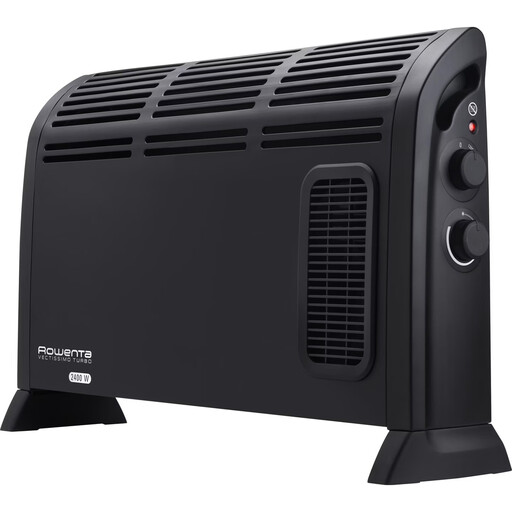
Rowenta Vectissimo II CO3035 convector fan heater
The combination of convection and a fan is designed to distribute warmth around the room; the description also mentions a turbo function.
Power settings of 1200 and 2400 W; thermostat; IP20. According to the product description, don’t use in bathrooms, near water sources or outdoors.
Joybuy
 No image available
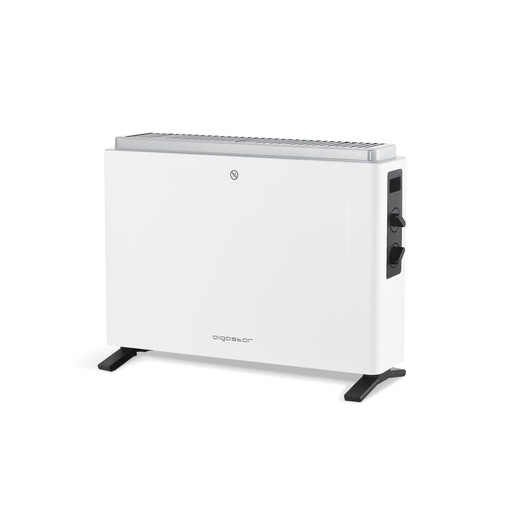
Aigostar convection heater, 2000 W
This convection heater is designed to provide electric room heating and, according to the description, can be controlled using a thermostat.
2000 W; three heat settings; overheat protection. According to the product description, don’t use near a bath, shower or swimming pool.
Joybuy
 No image available
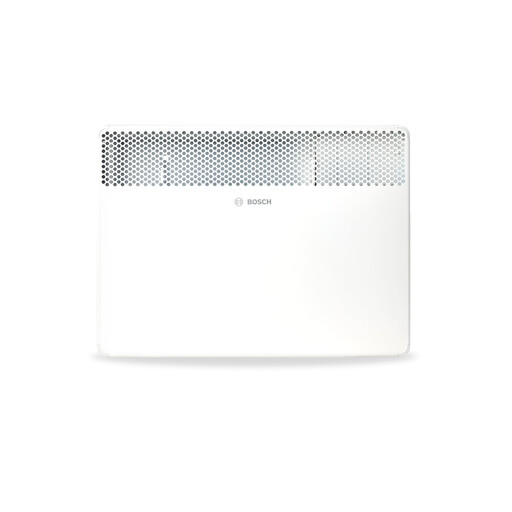
Bosch HC 4000-15 convector, 1500 W
Temperature control and a weekly programme are designed for scheduled room heating; the stated room size doesn’t guarantee suitability for a conservatory.
1500 W; IP24; according to the product description, suitable for rooms up to around 15 m². Wall-mounted or freestanding; feet for freestanding use are available separately.
Joybuy
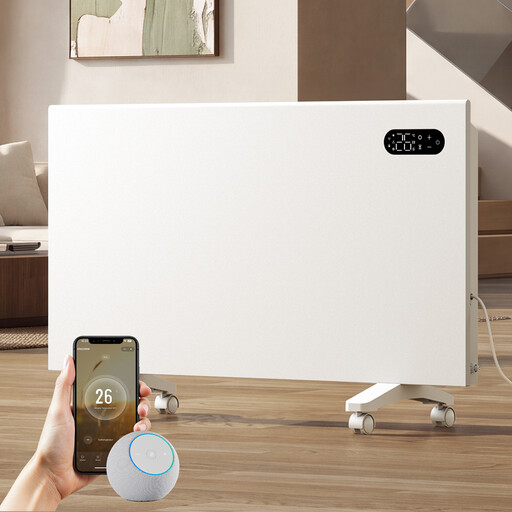 No image available
EMKE Smart Electric Heater, 2000 W
The thermostat and timer let you schedule heating; the stated room size isn’t automatically applicable to a conservatory.
2000 W; IP24; according to the product description, suitable for rooms up to 20 m². App and voice control; freestanding with wheels or wall-mounted.
Joybuy
Frequently asked questions
How can I estimate electricity use before buying?
Multiply the power in kilowatts by the expected running time in hours. A 2 kW appliance running at full power for two hours a day would use 120 kWh over 30 days; thermostat cycles will affect the actual figure.
Will frost protection prevent condensation on the windows and mould?
No. Frost protection controls heating for its intended purpose. Depending on how you use the room, you’ll also need to manage moisture by ventilating appropriately and monitoring humidity. The Verbraucherzentrale recommends, among other things, using a thermo-hygrometer.
What should I consider when positioning or mounting the appliance?
Follow the clearance and connection instructions for the exact model, check the cable and plug for damage, and keep heaters away from easily flammable materials. If the intended location may get wet, also check whether the specific model is suitable for that spot.
Do electric local space heaters need an EU energy label from A++ to G?
No. Electric local space heaters are excluded from the scope of the energy-labelling rules for local space heaters described by the European Commission. This doesn’t mean that no other product requirements apply to them.
Does a CE mark prove that the product has been independently safety-tested?
No. According to EU information about CE marking, the manufacturer declares that the product meets the relevant requirements; the mark isn’t an independent safety certificate. Check the marking and product documentation for the specific product you’re considering.


