Which type of warmth is right for you?

For those who want warmth where they sit

If you mainly want to warm the area around your desk, a tabletop heater that you can angle towards you could be a good option. De’Longhi describes the HFX10B03.LB as a tabletop heater with an adjustable air grille.

For those with limited space for a suitable heater

If you work close to paper, furniture or curtains, first check whether you can maintain the clearances and unobstructed airflow specified in the instructions. The German Fire Service Association warns against placing fan heaters near easily flammable materials.

For those planning to use a heater for longer periods

To estimate potential energy use over repeated sessions, consider the power consumption, running time and your electricity tariff. The North Rhine-Westphalia Consumer Advice Centre points out that low-output fan heaters aren’t an adequate way to heat entire rooms, and that using one for longer can increase your electricity consumption.

What should you look for when buying?

What matters to you What to check before buying Who it matters most to
Warmth where you sit Check whether you can direct the airflow towards your desk and whether the heater can stand there safely. If I mainly sit at my desk, I want targeted warmth rather than a heater that’s supposedly suitable for the whole conservatory; around 33% of consumers put warmth where they sit first.
A safe place to put it Follow the instructions, keep the required distance from flammable objects and leave the air inlet and outlet clear. If there’s any risk of damp or condensation, check whether the specific model is suitable. If I work near paper, furniture or curtains, I need a spot where I can maintain the required clearance and airflow; around 27% of consumers prioritise a safe place to put their heater.
Electricity use For a rough estimate, multiply the power in kW by the planned hours at full power and your electricity price per kWh. If I work for regular or lengthy periods, I want to estimate potential running costs based on the power, duration and tariff; around 20% of consumers put electricity use first.
A quiet working environment Only compare decibel ratings if the operating mode and measurement conditions are comparable; check whether the noise is acceptable where you’ll actually sit. If I need to concentrate at my desk, the noise on the setting I’ll actually use matters to me; around 20% of consumers prioritise a quiet working environment.

Buying and usage pitfalls

  • Confusing low heat output with a room heater

    Warming the area where you sit and heating an entire conservatory are two different jobs. A small tabletop heater isn’t automatically suitable for heating a whole room.

    Before you buy, decide whether you mainly want warmth at your desk or want to warm more of the room from time to time.

  • Assuming ceramic technology or ECO mode always means lower energy use

    The type of heater or the name of a mode doesn’t tell you how much energy it will use in practice.

    Estimate potential energy use at full power, and check when the thermostat, heat settings or timer change the actual running time or power output.

  • Relying on safety features instead of choosing a suitable spot

    Even a heater with safety features needs to be placed with the required clearances and unobstructed airflow. The German Fire Service Association warns against using fan heaters near easily flammable materials.

    Check the instructions for the specific model before deciding whether to place it on a desk or on the floor.

  • Overlooking conflicting information about suitability for damp conditions

    For Rowenta’s SO9350F0, the product information gives conflicting details about the protection rating and automatic shut-off. This doesn’t establish that it’s suitable for a damp location.

    Check the details for the exact model before using a heater where it may be exposed to damp or condensation.

Brands and model ranges at a glance

De’Longhi

The Capsule Desk HFX10B03.LB and Capsule HFX30C18.IW ranges offer different approaches to warming your seat or adding extra warmth to a room.

  • De’Longhi lists the HFX10B03.LB at 360 W, with an adjustable air grille. For the HFX30C18.IW, the manufacturer lists 900 and 1800 W.
  • These model specifications don’t guarantee a particular temperature in a conservatory or describe all heaters from the brand.

DREO

The 316 fan heater is one model to consider when comparing heat settings, thermostat controls and timers.

  • DREO lists this model at 1500 W, with three heat settings and a 12-hour timer.
  • Advertised coverage, noise levels and safety features are manufacturer claims and don’t guarantee the same performance at your particular workstation.

Rowenta

The Intense Comfort + Aqua SO9350F0 is a ceramic model range to consider when comparing power specifications and placement requirements.

  • Rowenta lists this model at up to 2000 W and advertises a quiet mode.
  • The SO9350F0 product information gives conflicting details about the protection rating and automatic shut-off. You shouldn’t assume that it’s suitable for damp locations.

Joybuy products for extra warmth

The Joybuy heaters below include compact tabletop models and adjustable ceramic fan heaters for occasional extra warmth. Choose one to suit the area you want to heat, and before using it, check that the specific location is dry and allows you to maintain the required clearances.
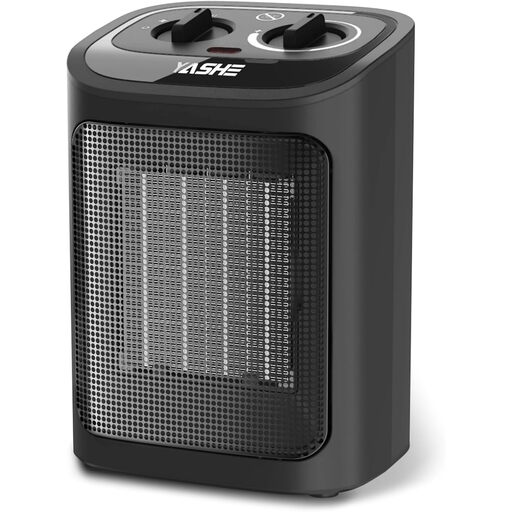
YASHE PTC-919 ceramic tabletop heater

YASHE PTC-919 ceramic tabletop heater, 1500 W

Its tabletop design may be a good option for targeted warmth at your desk, provided you can position it safely.

The product description lists three heat settings, a thermostat range of 5–35 °C, plus overheat and tip-over protection. It needs a stable, dry surface and must be kept away from flammable objects.

View at Joybuy
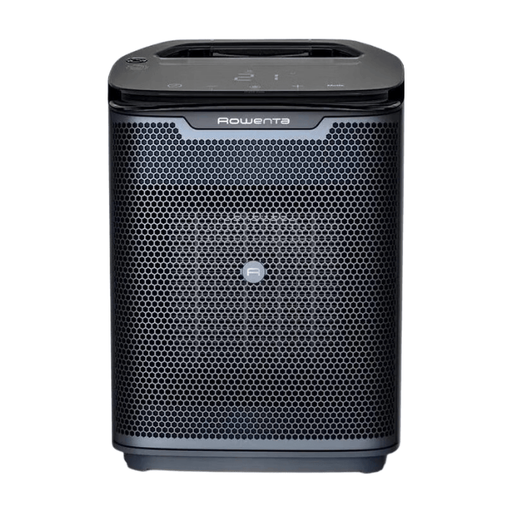
Rowenta Intense Comfort Aqua SO9380F0 ceramic fan heater

Rowenta Intense Comfort Aqua SO9380F0, IP21

The product description says it can be placed on a table or console; check that it can be positioned safely in the spot you have in mind.

Specifications include 2000 W, four power settings and a timer. The product information requires at least 1 m of clearance and advises against use near water sources or outdoors. The IP21 rating alone doesn’t establish that the heater is suitable for use where condensation may occur.

View at Joybuy
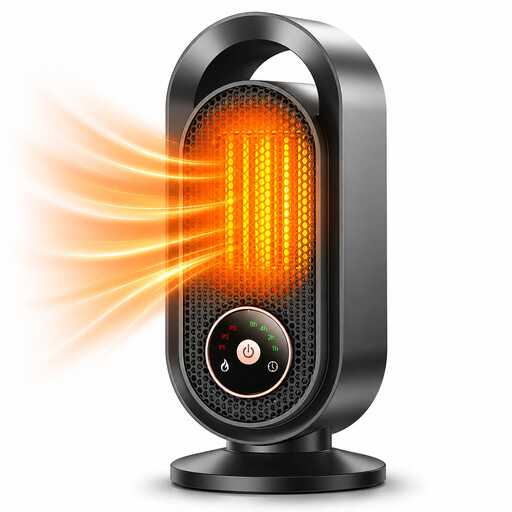
Rosnek E08 ceramic tabletop heater

Rosnek E08 ceramic tabletop heater, 1500 W

Described as a tabletop heater in the product name, this model may suit a workspace if there’s enough room and you can maintain the required clearances.

The title lists three heat settings at 800, 1200 and 1500 W, a timer with 1/2/4/8-hour settings, and overheat and tip-over protection.

View at Joybuy
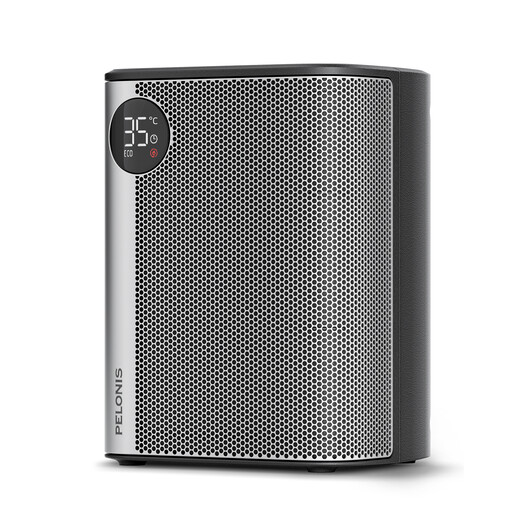
PELONIS ceramic fan heater, 2000 W

PELONIS ceramic fan heater, 2000 W

The product description lists offices and studios as possible places to use this heater; check whether you can position it there with enough clearance.

Features include five modes, an adjustable thermostat and a 24-hour timer. The safety instructions require at least 1 m between the air outlet and textiles or other flammable materials.

View at Joybuy

DREO Atom 416 ceramic fan heater, 1500 W

DREO Atom 416 ceramic fan heater, 1500 W

The product description lists offices and studies as possible places to use this heater; for desk use, it’s also worth checking whether the noise is acceptable.

Specifications include three heat settings, thermostat control from 5–35 °C and a 12-hour timer. The stated noise range is 25–42 dB; when comparing models, check the operating setting and measurement conditions.

View at Joybuy

Frequently asked questions

Can a small tabletop heater warm an entire conservatory?

Think of a small tabletop heater as a way to warm the area where you sit, rather than the whole conservatory. One specific tabletop model is rated at 360 W; the North Rhine-Westphalia Consumer Advice Centre warns more generally against assuming that low heat output is enough to warm an entire room.

How should I position and clean a fan heater beside my desk?

Follow the clearance requirements and keep the air openings clear, as set out in the instructions for your specific model. Don’t place it near easily flammable materials. Follow the model instructions when cleaning it, too, and don’t use it somewhere that may be damp if you haven’t confirmed it’s suitable.

How can I estimate a heater’s electricity use for one hour?

Multiply the power in kW by the actual running time and your price per kWh. If it runs continuously at full power, 360 W uses 0.36 kWh in an hour, while 1800 W uses 1.8 kWh. Lower settings and thermostat cycles will change the actual consumption.

Does a mains-powered fan heater in Germany need a CE mark?

A mains-powered fan heater covered by the EU Low Voltage Directive must meet the relevant conformity requirements, including CE marking. EUR-Lex describes the directive’s scope as covering electrical equipment rated between 50 and 1,000 V AC. According to the European Union’s Your Europe website, there’s no central EU body that issues a certificate for this in general. A CE mark doesn’t confirm that an individual heater is suitable for a damp location.