For people using a cold conservatory as a living space
If you want to use your conservatory despite cold glass surfaces, consider ventilation and humidity as well as room temperature.


If you want to use your enclosed conservatory as a whole room, compare an adjustable room heater with the heating needs of that specific space. For short stays in one spot, targeted radiant heat may be a good fit. Neither option on its own addresses the causes of cold, damp surfaces: glazing, ventilation, where you place the heater and how long you run it all matter too.
If you want to use your conservatory despite cold glass surfaces, consider ventilation and humidity as well as room temperature.
If you only spend time in one spot now and then, consider whether targeted radiant heat suits the way you use the space, rather than keeping the whole room warm all the time.
If the location may be damp, check the instructions, the permitted positioning and the connection and installation requirements for the specific heater.
First, decide whether you want to heat the whole room or just one seat from time to time. Then take heat loss, damp and safe positioning into account.
A good fit if: you want to heat an enclosed conservatory as a whole room from time to time, and the heater's output matches the space's heating needs.
Consider: A high rated output does not guarantee your desired room temperature when there are large areas of glazing, and longer running times increase electricity use. ADAC and the Verbraucherzentrale describe electric direct heaters as an option for particular uses, not a one-size-fits-all solution for every room.
A good fit if: you spend short periods in one spot and, according to the installation instructions, the heater can safely direct heat towards that area.
Consider: Targeted heat is no substitute for keeping the whole room warm enough, and it will not address heat loss or damp around cold surfaces.
A good fit if: you have a suitable wall or ceiling and can direct the radiant heat towards the area where you spend time.
Consider: The mounting position, controls and model variant all need to be right for your needs. The Verbraucherzentrale points out that the heating principle alone does not prove lower electricity use than other electric direct heaters.
A good fit if: you want to use your conservatory regularly as a living space for longer periods, or heat loss makes a supplementary spot heater unsuitable.
Consider: A different heating solution will need its own planning. Electric direct heaters generally use electricity in proportion to the amount of heat they produce.
| Priority | What to check before buying | Who is this important to? |
|---|---|---|
| Cold surfaces and damp | Assess cold surfaces, ventilation and humidity separately from how warm your seat feels. | If I need to keep an eye on damp as well as cold walls, I want to assess the surfaces and room temperature separately. Around 28% of consumers put cold surfaces and damp first. |
| Heat throughout the room | Match how long you use the room, the glazing and its heating needs to the output of the specific model. | If I want to use the conservatory as a whole room, I need heating that meets its needs. Around 22% of consumers prioritise keeping the air in the room warm enough. |
| Heat where you sit | Check the direction, mounting position and whether the path of the radiant heat is unobstructed. | When I spend short periods in one spot, I want to feel the heat there without having to keep the whole room warm. Around 17% of consumers focus on heating where they sit. |
| Safe positioning | Check the instructions, connection, stated ingress protection rating and required clearances for the heater and its location. | If the place where I plan to put the heater may be damp, the instructions for that specific model must allow it to be positioned there. Around 17% of consumers prioritise whether the heater, connection and location are suitable. |
| Ongoing electricity costs | Consider the power consumption, actual hours of use and your electricity tariff together. | If I plan to use the heater regularly or for long periods, I want to estimate the running costs in advance rather than look only at the purchase price. Around 16% of consumers put ongoing electricity costs first. |
A comfortably warm seating area does not tell you whether cold surfaces are warm enough or whether damp is still a problem. The Verbraucherzentrale notes that mould can grow on a wall when relative humidity is around 70 to 80%.
Assess cold surfaces and humidity separately from how warm your seat feels, and make sure you take ventilation into account.
Infrared panels, convectors and fan heaters are all electric direct heaters. The Verbraucherzentrale Energieberatung explains that, as a general rule, one kilowatt-hour of electricity is needed for each kilowatt-hour of heat produced.
Compare the actual power consumption and planned running time with your electricity tariff. Controls can affect how long the heater runs, but cannot guarantee a fixed level of consumption.
Protection ratings and control compatibility apply to specific variants. For example, Könighaus states that the M series is not compatible with the M-Serie-Smart room thermostat.
Check the full model name, compatible accessories and the instructions for your intended location. You may also need suitable controls.
The models mentioned here include a convector for heating the air in a room and an infrared quartz heater for targeted warmth.
The SlimStyle HCX9120E convector is an option for buyers looking to warm the air in a room.
The M series includes panels for wall or ceiling mounting, provided you have a suitable location and compatible controls.
The Heat Infrared 4000 P is a range of panels for supplementary radiant heating, designed for suitable wall or ceiling mounting.
This selection features electric convectors that warm the air in a room, making them relevant if you want to heat your whole conservatory from time to time. Whether a model will be powerful enough depends on the heating needs and heat loss of your particular room.
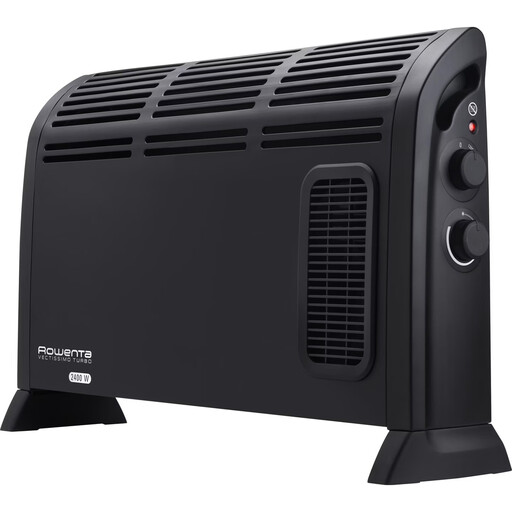 No image available
This model is an indoor convector that may suit you if you want to warm the air in a room. Compare its output with the heating needs of your conservatory.
The product name specifies IP20. According to the product description, the heater is not intended for bathrooms, use near water sources or outdoor use. It needs to be placed on a stable, level surface.
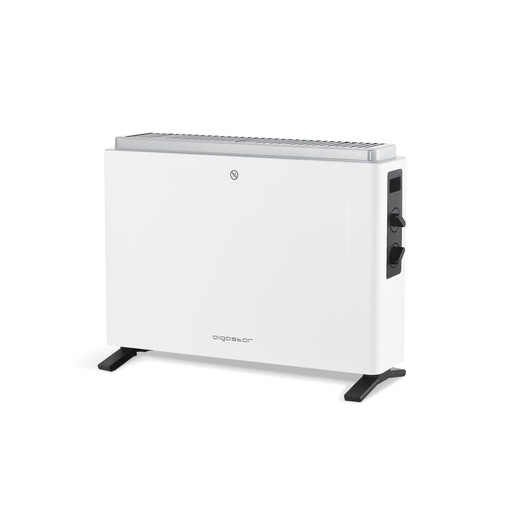 No image available
This convector heater may suit you if you want to warm the air in a room and choose between several heat settings.
The product name specifies 2000 W, three heat settings and adjustable temperature control. According to the product description, use the heater upright, do not cover it and do not use it outdoors or near a bath, shower or swimming pool.
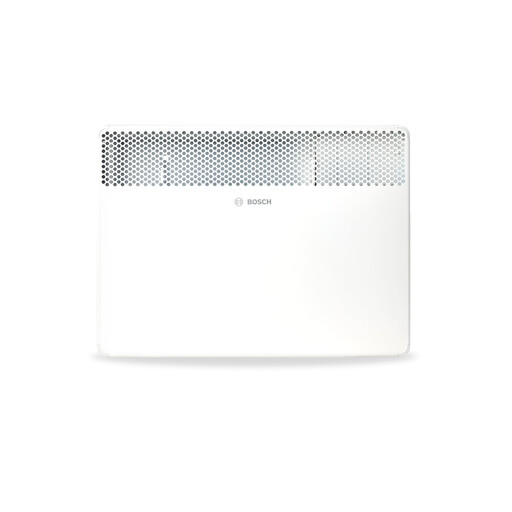 No image available
This convector may be suitable for adjustable room heating. The stated coverage area does not guarantee a particular temperature in a conservatory.
The product name specifies 1500 W, up to 15 m² and IP24. It also lists an LED display, weekly programme, Eco mode and open-window detection. According to the product description, feet are available separately. Check the protection requirements for your specific location.
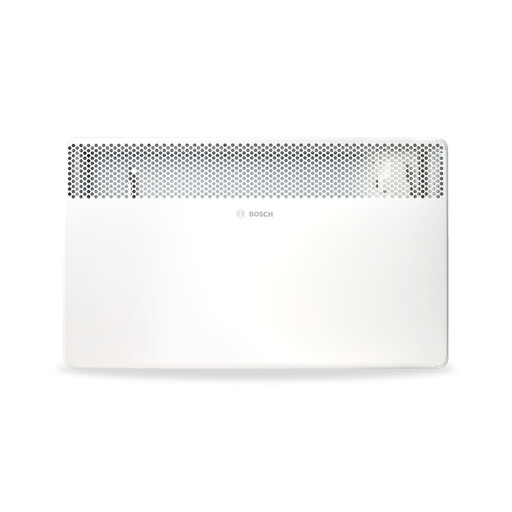 No image available
This model may be suitable for adjustable room heating. Check the heating needs of your conservatory rather than treating the stated coverage area as a performance guarantee.
The product name specifies 2000 W, up to 20 m² and IP24. A weekly programme, Eco mode, open-window detection and child lock are also listed. According to the product description, feet are available separately. The stated protection requirements apply to the specific place of use.
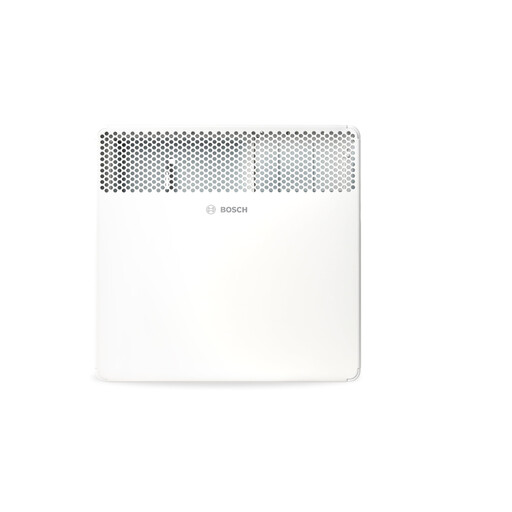 No image available
This convector is an option for adjustable room heating. Whether its output is sufficient depends on the heat loss in your particular conservatory.
The product name specifies 1000 W, up to 10 m² and IP24. An LED display, weekly programme, Eco mode and open-window detection are also listed. According to the product description, feet are available separately. Check that the protection requirements are suitable for your intended location.
Not on its own as proof. Glazing, room size, the temperature you want and how long you use the space all affect its heating needs. Compare these with the output of the specific heater rather than treating a general coverage figure as a guarantee.
Before buying, check the instructions for the exact model, including where it can be placed, how it should be connected and the required clearances. Do not assume that another heater's protection rating or installation approval applies.
No, not just because of its heating principle. As the Verbraucherzentrale Energieberatung explains, electric direct heaters generally need one kilowatt-hour of electricity for each kilowatt-hour of heat produced. The actual output, running time and your electricity tariff determine the cost. Controls and how you use the heater can affect how long it runs.
According to the German Federal Government, the main provisions of the Building Modernisation Act have been in force since 29 July 2026, and the previous blanket requirement for at least 65% renewable energy has been removed. This does not automatically mean that every building installation is permitted: whether other requirements apply to a particular conservatory depends on the project.