A heating panel can warm a regularly used seating area in your conservatory, but that doesn’t automatically make it suitable for heating the whole room. If you use the space frequently, consider its heating requirements, glazing, controls and running costs together. A wattage figure or standard guideline for a living room won’t be enough on its own.
Who is a heating panel suitable for?
Occasional conservatory users
If you mainly want to warm your seating area for a while on chilly days, consider the direction the heat will reach and choose a suitable place to install the panel. The Bundesverband Wintergarten (German Conservatory Association) points out that the room’s specific conditions need to be taken into account when assessing its heating requirements.
Regular users of the room
If you use your conservatory more often, consider its heating requirements, controls and running costs together. The Verbraucherzentrale (German consumer advice centre) notes that you can’t assume you’ll qualify for a cheaper heating electricity tariff for infrared heaters.
Buyers facing installation challenges
If the wall or ceiling space, power connection or possible damp conditions make installation more difficult, check the installation method and the requirements for the specific panel model you’ve chosen.
What should you look for when buying?
First decide whether you want to warm a particular seating area for a while or use your conservatory as a room on a regular basis. This will affect the size of the heater you need, the controls and how long you can expect to run it.
| What you need |
What to check before buying |
Who should pay particular attention? |
| Enough warmth |
Ask someone to assess the heating requirements for your specific conservatory. If you have several seating areas, also consider how many panels you’ll need and where to place them. |
If you want to know whether the room will be warm enough, its heating requirements matter more than a general guideline for living rooms. Around 36% of consumers have this concern. |
| Electricity costs |
Consider the rated output, expected hours of use and your electricity tariff together. With thermostat-controlled operation, the actual time the heater is switched on is what matters. |
If you want to heat your conservatory regularly, factor in how long you’ll run the heater and your electricity tariff. Around 29% of consumers prioritise low running costs. |
| Seating area and installation |
Check that wall or ceiling installation is approved, and check the dimensions, connection and available space to direct the heat where you need it. |
If you only want to warm the seating area you use, the panel needs to be positioned and installed appropriately. Around 21% of consumers prioritise targeted warmth for a seating area. |
| Controls and installation location |
Check the thermostat model and compatibility. Follow the manufacturer’s instructions and check the connection and whether the appliance is suitable for the installation location. Also check for CE marking and instructions and safety warnings in German. |
If installation is challenging or the area may be damp, it’s important to check the requirements for the specific appliance. Around 14% of consumers prioritise controls and safe installation. |
The Bundesverband Wintergarten recommends taking the conservatory’s specific conditions into account when assessing its heating requirements. The Verbraucherzentrale points out that infrared heaters are usually powered by household electricity, and a cheaper heating electricity tariff isn’t guaranteed. The Bundesnetzagentur (German Federal Network Agency) explains that CE marking is the manufacturer’s responsibility and isn’t an independent quality mark.
Common buying mistakes
-
Applying living room guidelines without checking
A conservatory’s heating requirements may differ from standard assumptions for a living room. As a result, a single panel may not be powerful enough to reach your desired room temperature.
First, assess the heating requirements, taking the glazing and how you use the room into account. Choose the output only after that.
If your chosen solution isn’t powerful enough, you may need another heater or a different heating solution.
-
Assuming infrared means low-cost, continuous heating
If you run the heater for long periods, electricity consumption and your tariff will affect running costs. According to the Verbraucherzentrale, a cheaper heating electricity tariff isn’t guaranteed.
Factor in how long you expect to use the heater and your actual electricity tariff. Consider whether you need occasional extra warmth or regular heating.
-
Assuming a thermostat is included
Panels and their different models vary: some have a built-in thermostat, while others need separate controls. Individual controls aren’t necessarily compatible with one another either.
Before buying, check the exact model, what’s included and which controls it’s designed to work with.
-
Confusing a warm seating area with solving condensation
A pleasantly warm spot doesn’t necessarily mean that cold surfaces or condensation elsewhere in the conservatory have been dealt with.
If you can see condensation, have the room and affected parts assessed rather than simply choosing a larger panel.
Manufacturers and product ranges to consider
Könighaus
The P Series includes wall panels with different thermostat options, while the M Series also offers models for ceiling installation.
- According to the manufacturer, the P Series includes models without a thermostat, as well as options with basic or smart controls.
- Wireless control for the M Series depends on the accessories you choose. The thermostat for the M Series isn’t compatible with the one for the M Series Smart.
ETHERMA
LAVA BASIC 3.0 is an infrared panel for wall or ceiling installation, available in a basic or SMART version.
- According to the manufacturer, the basic version needs suitable external controls, while the SMART version has integrated wireless controls.
- Whichever version you choose, its suitability for a specific conservatory needs to be assessed separately, based on the room’s heating requirements.
VASNER
The Citara M Series includes metal infrared panels. The manufacturer lists conservatories as one possible place to use them.
- This product range is an option for buyers considering a metal infrared panel.
- The manufacturer’s description alone doesn’t prove that a particular model will suit the heating requirements or installation location of every conservatory.
STIEBEL ELTRON
The manufacturer describes the CK 20 Trend LCD as a wall-mounted convector for supplementary or transitional heating.
- A convector is a different type of electric heater to consider if you’re not looking exclusively at infrared panels.
- The product description doesn’t prove that it’s suitable for every conservatory or that it will cost less to run than an infrared panel.
Joybuy product selection
This selection includes electric infrared heating panels for targeted or thermostat-controlled supplementary warmth, plus a convector as an alternative type of heater.
 No image available
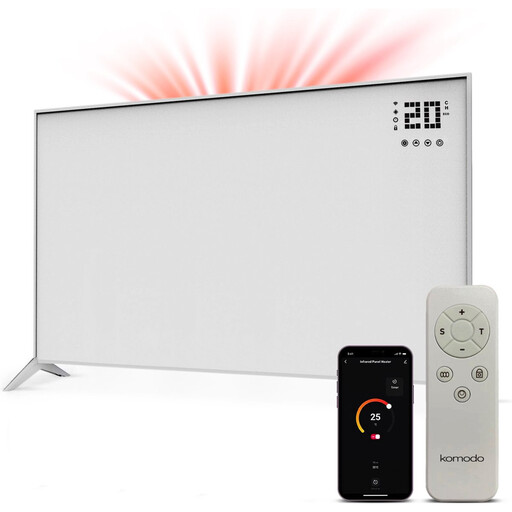
Komodo Blazi infrared heating panel, 800 W
For controllable supplementary warmth, with wall mounting or freestanding use as possible options.
800 W; 100 × 80 cm; adjustable thermostat, timer and Wi-Fi control are listed. The product description says it’s suitable for rooms up to 20 m²; this doesn’t replace an assessment of your conservatory’s heating requirements.
View at Joybuy
 No image available
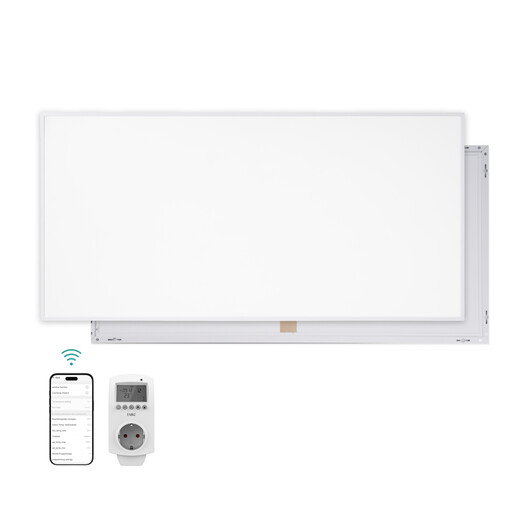
EMKE infrared wall heater, 1000 W, white
For buyers considering a wall panel with a thermostat and timer controls.
1000 W; 1195 × 595 mm; plug-in thermostat, app control and weekly programme are listed. According to the description, the panel and thermostat are sent separately. Don’t install or use the heater until both parts have arrived.
View at Joybuy
 No image available
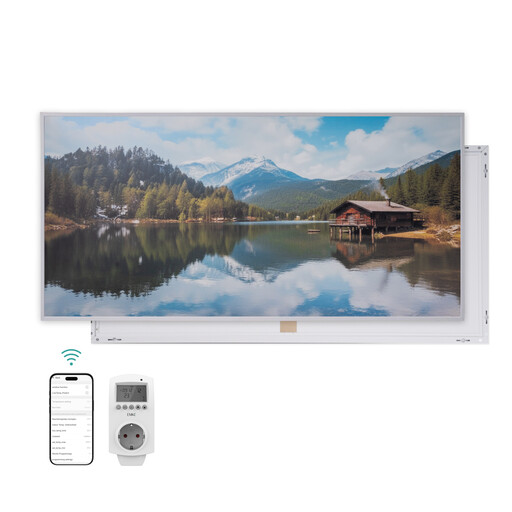
EMKE infrared wall heater, 1200 W, Mountain Hut, aluminium frame
For buyers looking for a wall panel with thermostat and app controls.
1200 W; 1195 × 595 mm; plug-in thermostat, app control and weekly programme are listed. According to the description, the panel must only be used with the thermostat supplied. Both packages should arrive before installation and use.
View at Joybuy
 No image available
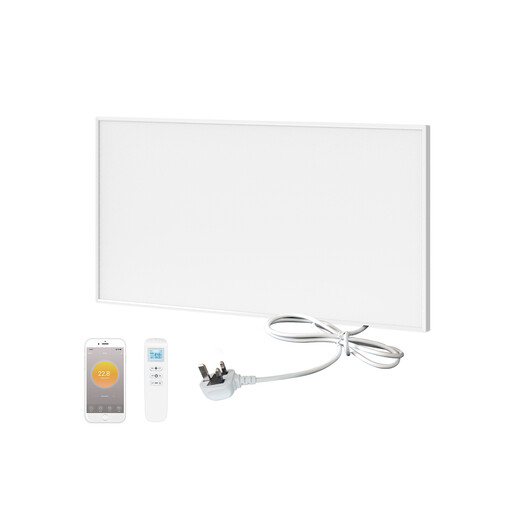
Welltin infrared heating panel with graphene heating element
For occasional supplementary warmth, if wall mounting or use with stand feet suits the intended location.
60,3 × 30,3 × 1,4 cm; remote control and overheat protection are listed. The surface temperature is stated as 80–100 °C. Keep the panel away from children and flammable materials.
View at Joybuy
 No image available
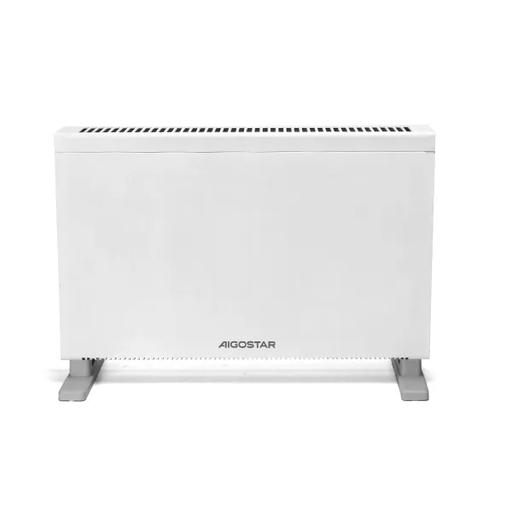
Aigostar convector heater, 2000 W
An alternative electric heater for supplementary warmth if you’re considering a convector instead of an infrared panel.
2000 W; thermostat, timer, remote control and two heat settings are listed. The product description says it’s suitable for 20–25 m²; it should be placed on a dry, stable surface. A convector isn’t an infrared heater.
View at Joybuy
Frequently asked questions
Can I work out the right heating output for my conservatory using its floor area?
Not reliably using a general figure alone. The Bundesverband Wintergarten recommends taking the conservatory’s specific conditions into account when assessing its heating requirements.
Will I automatically get cheaper heating electricity for an infrared panel?
No, a discounted tariff isn’t guaranteed. The Verbraucherzentrale points out that infrared heaters are usually powered by household electricity. Compare how long you expect to use the heater with your actual tariff.
What should I check before installation and during use?
Check that the exact model is designed for wall or ceiling installation, and find out which controls and connection type it requires. Follow the safety instructions. The Deutscher Feuerwehrverband (German Fire Services Association) advises against using appliances with damaged cables or visible scorch marks.
What does CE marking mean on a heating panel?
According to the Bundesnetzagentur, CE marking is based on the manufacturer’s declaration that the relevant legal requirements have been met; it isn’t an independent quality mark. Also check the manufacturer’s information and any required instructions and safety warnings in German.


