Households with several seats
If you want air to circulate around different seats, check the oscillation range from the intended position of the fan.


If you usually sit in one spot, an adjustable table fan is a good choice; for several seats, an oscillating function matters more. Neither type of fan lowers the room temperature. The German consumer advice centre recommends using suitable shading and ventilating when the outside air is cooler to help with overheated rooms. Noise and airflow figures apply to the operating conditions specified by the manufacturer.
If you want air to circulate around different seats, check the oscillation range from the intended position of the fan.
If you don't want to be disturbed while reading, working or chatting, check which speed setting the noise rating applies to.
If heat builds up, it's important to distinguish between circulating air around your seat and taking steps to reduce the heat in the room.
First, decide whether you want to feel a direct breeze in one spot or circulate air between several seats. If your main aim is to reduce the heat that builds up in the conservatory, shading and suitable ventilation are separate considerations from choosing a fan.
The percentages refer to consumers whose main consideration when choosing a table fan for a conservatory in use is the one listed in the corresponding row.
| Priority | What to check before buying | Who it matters most to |
|---|---|---|
| Airflow around several seats | Oscillation range from the planned position; whether you need horizontal or vertical oscillation too. | If you want the fan to reach several seats, its position in the room matters. Around 36% of consumers prioritise airflow around several seats. |
| Quiet operation when people are present | Noise rating alongside the relevant speed setting; the airflow you need at that setting. | If you read, work or chat in the conservatory, the airflow you need shouldn't require a setting that you find disruptive. Around 29% of consumers prioritise quiet operation. |
| A breeze where you sit | Tilt and direction; speed settings to adjust the breeze you want. | If you usually sit in one spot, directing airflow towards you may matter more than circulating it between seats. Around 21% of consumers particularly value targeted airflow where they sit. |
| Space and power consumption | Dimensions and a suitable, stable surface; power consumption at the setting you actually use. | If space is limited or you plan to run the fan for a long time, consider its size and stated power consumption together. Around 14% of consumers prioritise a compact, energy-efficient set-up. |
A fan moves air and can make you feel cooler, but it doesn't lower the room temperature.
Before buying, consider whether you want a breeze where you sit or less heat building up in the conservatory. The German consumer advice centre recommends suitable shading and ventilating when the outside air is cooler as additional measures.
A more powerful fan won't prevent the sun from heating the room.
Rowenta gives a noise rating of 38 dB(A) for the VU2730 at its lowest speed, which has four settings. This figure doesn't describe operation at maximum airflow.
Compare noise and airflow at their respective speed settings, rather than assuming the lowest noise level and maximum airflow can be achieved at the same time.
The VU2730 and VU2750 table fans described by Rowenta have different features. What's more, a Joybuy product page gives VU2740F0 in the title and VU5260 in the description.
Before buying, check the full model number and the features you want on the relevant product page. Conflicting model details don't prove that the products are the same model.
The VU2730 and VU2750 table fans are worth considering if you're looking for an oscillating model with several speed settings.
The MeacoFan 1056 and Sefte 10 Table are useful points of comparison if you're considering horizontal or vertical airflow and a wide choice of settings.
The manufacturer also describes Finn as suitable for use as a table fan, making it an option to consider if you're weighing up height and oscillation together.
The products below include table fans and flexible fan designs for targeted airflow in a conservatory in use. For foldable models or those described as floor fans, check carefully whether the planned position on or beside your table will work for your space.
 No image available
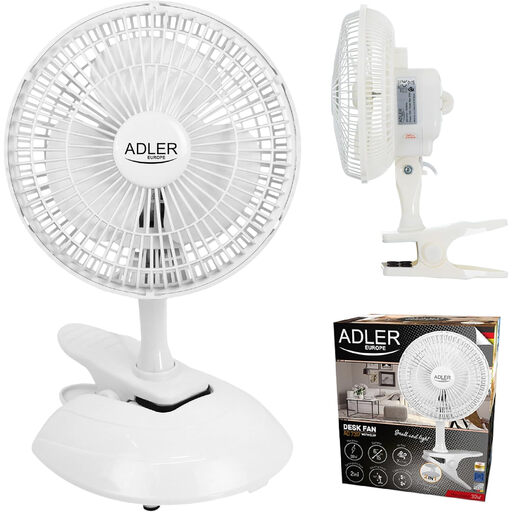
An option to consider if you want to direct airflow towards one seat.
The product name specifies a 15 cm diameter, two speed settings and 30 W.
 No image available
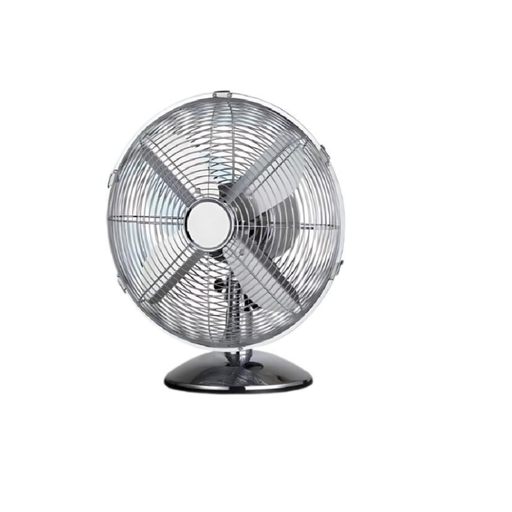
Worth considering if you want to circulate air between seats.
The product name specifies left-to-right oscillation and manually adjustable tilt.
 No image available
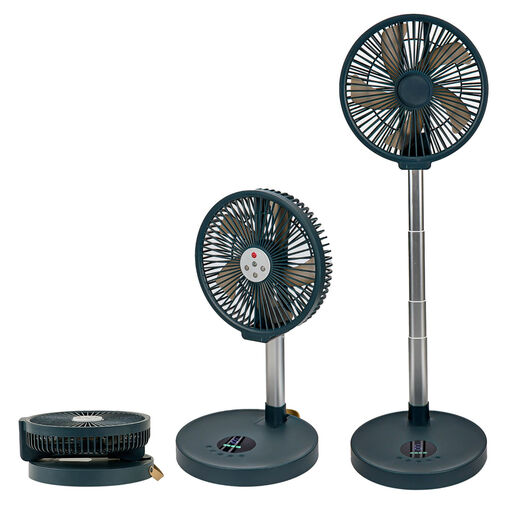
The product description identifies this as a foldable floor fan. Before buying, check that its intended position will work for your table area.
Features listed include a 7200-mAh battery, six speed settings, a remote control and a timer.
 No image available
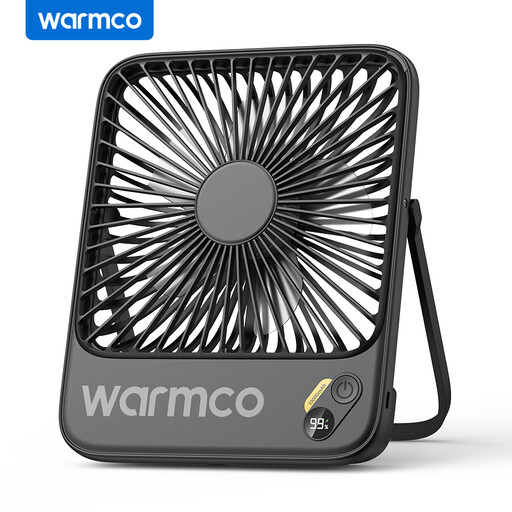
An option if you're looking for a fan you can position flexibly to direct airflow where you want it.
The product name specifies a 10.000-mAh battery, USB-C and four speed settings.
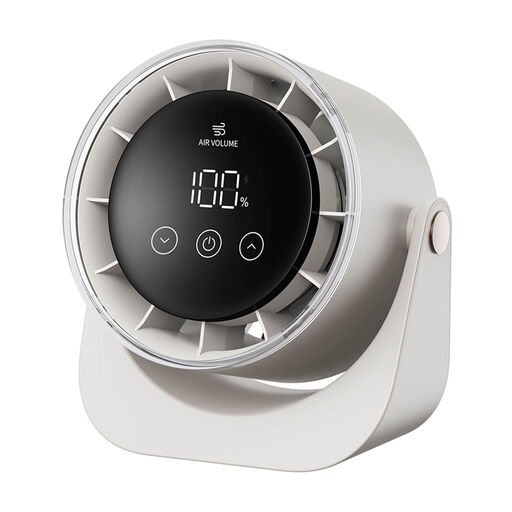 No image available
An option for one seat if you want to direct the airflow and fine-tune it across a wide range of settings.
The product name specifies an LED display, 100 speed settings and 90° tilt adjustment.
No. A fan moves air and can make people feel cooler, but it doesn't cool the room. The German consumer advice centre recommends suitable shading and ventilating when the outside air is cooler as additional ways to tackle heat build-up.
Choose a stable, level surface and keep the air inlets clear. The MeacoFan 1056 instructions also warn against standing water and using the fan outdoors. Don't assume that guidance for one model applies to other fans without checking.
Unplug the fan before working on the safety grille and follow the instructions for the model you've bought. Stadler Form specifically gives this advice for Finn; check the instructions for other models separately before attempting to dismantle them safely.
Statutory rights are a claim against the seller; a guarantee is an additional, voluntary offer with its own terms. The German consumer advice centre clearly distinguishes between the two. For your specific purchase, check who the seller is and which guarantee terms apply to that version.
New electrical equipment covered by the 1. ProdSV, including devices with a rated voltage of 50 to 1.000 V AC, must meet requirements for conformity assessment, the EU declaration of conformity and CE marking. Also check the manufacturer's identity and any required instructions and warnings in German. Germany's Federal Network Agency lists these details as part of its market surveillance; the voltage range stated does not apply automatically to every USB fan. CE marking alone is not an independent quality mark.