A focused breeze by your armchair
If you want to feel the airflow directly where you’re sitting, look for a fan that’s easy to position and has well-controlled speed settings. The German Environment Agency explains how moving air can cool your skin.


Choose a fan first by considering how close it will be to your armchair and whether you want a focused, finely adjustable breeze or wider coverage. Then check the noise level at the setting you’ll need, the space it takes up and how it’s powered. According to the German Environment Agency, moving air cools your skin, but it won’t lower the temperature in a conservatory that’s heated up.
If you want to feel the airflow directly where you’re sitting, look for a fan that’s easy to position and has well-controlled speed settings. The German Environment Agency explains how moving air can cool your skin.
If you spend long periods reading or sitting in the conservatory, don’t just consider the noise level on the lowest setting. IMTEST notes that a fan can create too much of a draught when used at close range.
If you want to move the fan around or spread the breeze across several seating positions, an oscillating function or battery power may be useful. Check which features the specific model offers.
Start by deciding how you want the airflow to feel and where you want it directed when you’re sitting in your armchair. The German Environment Agency explains how moving air cools the skin, while IMTEST highlights the risk of an unpleasantly strong draught at close range and the importance of quiet operation.
| Buying criterion | What to check before buying | Who it matters to |
|---|---|---|
| Airflow by your armchair | Distance and direction at the intended position; low speed settings and tilt or oscillation. | If I’m sitting close to the fan, I want to fine-tune the breeze rather than have it blowing strongly at me all the time. Around 36% of consumers prioritise focused airflow where they’re sitting. |
| Operating noise | Check the noise levels for each setting and consider which one you’re likely to need. | When I’m reading, I want to avoid distracting noise without compromising on the airflow I need. Around 29% of consumers put quiet operation first. |
| Positioning and power supply | Check the footprint, dimensions, cable route and socket location. For battery-powered models, check the runtime at your chosen setting and what’s included. | If I want to move the fan around or use it without a nearby socket, positioning and power supply are especially important. Around 21% of consumers prioritise flexible positioning. |
| Power consumption | Compare the power consumption of the specific model and the operating mode you plan to use. | If I’m going to use the fan for longer periods, I want to compare its power consumption with how I plan to use it. Around 14% of consumers put low power consumption first. |
A table fan can cool your skin by moving air, but it won’t stop the sun from heating up your conservatory.
Choose a fan for your seating area, and plan for shade and ventilation separately. The consumer advice centre recommends opening windows only once the air outside is cooler than the air indoors.
A strong airflow can feel uncomfortable when you’re sitting in your armchair. A noise rating for the lowest setting doesn’t automatically tell you how loud the setting you need will be at your distance from the fan.
Compare how easy the fan is to adjust and direct, and assess its noise level at the setting you’re likely to use.
Meaco quotes up to 40 hours of runtime for the Sefte 10 Table Pro on its lowest setting. This figure doesn’t automatically apply at higher settings.
Check the runtime at your preferred setting, as well as whether the specific model comes with a battery and mains adapter.
The Turbo Silence Extreme+ table fans are an option if you want focused airflow where you’re sitting.
The Sefte 10 Table models offer adjustable airflow, while the Pro version is a separate battery-powered model.
The Cool CF1 is a bladeless table fan for anyone looking for a housing with no exposed fan blades and a wipe-clean surface.
The brand’s table fans include models for focused airflow and versions that spread air over a wider area.
The Joybuy products below include classic table fans, battery-powered models and a bladeless fan for creating airflow where you’re sitting. The key things to consider are the airflow you need, the space available and how the fan is powered.
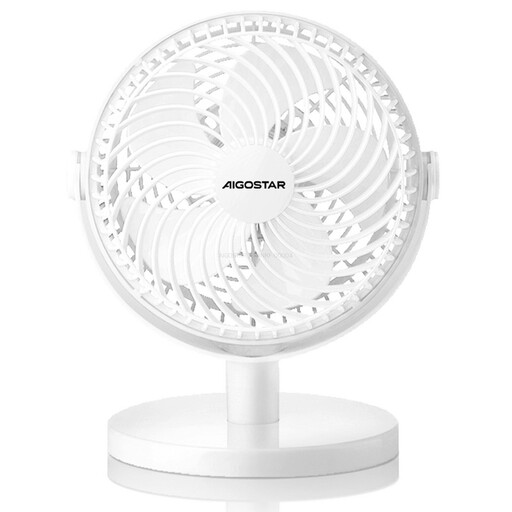 No image available
For focused airflow where you’re sitting, with a fan head you can angle to direct the breeze.
Two speed settings; 360° adjustable head; USB-powered; dimensions: 200 × 170 × 225 mm.
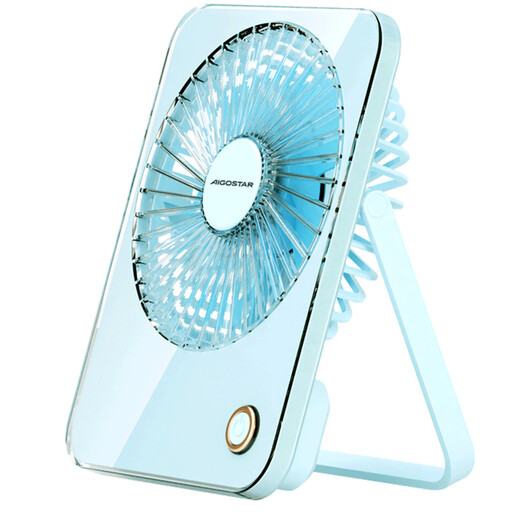 No image available
For flexible positioning when you want to use the fan without a nearby socket.
Built-in 3600-mAh battery; three speed settings; USB charging; folding stand with 180° adjustment. The product description says to keep the device away from water, moisture and excessive heat sources.
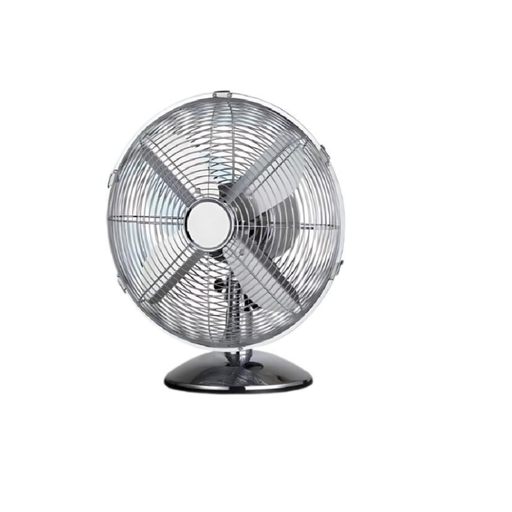 No image available
For a seating area where you want to direct the airflow or spread it across several positions.
Three speed settings; four aluminium blades; manual tilt and automatic left-to-right oscillation.
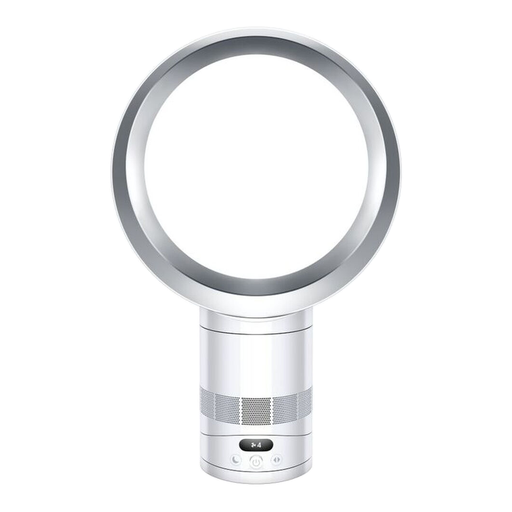 No image available
For a seating area where you want a housing without exposed fan blades and a manually adjustable breeze.
Bladeless design; manual tilt and oscillation up to 70°; Sleep mode. Dyson quotes a minimum noise level of 29 dB(A) for the CF1, but this doesn’t automatically indicate how loud it will be at the setting you need.
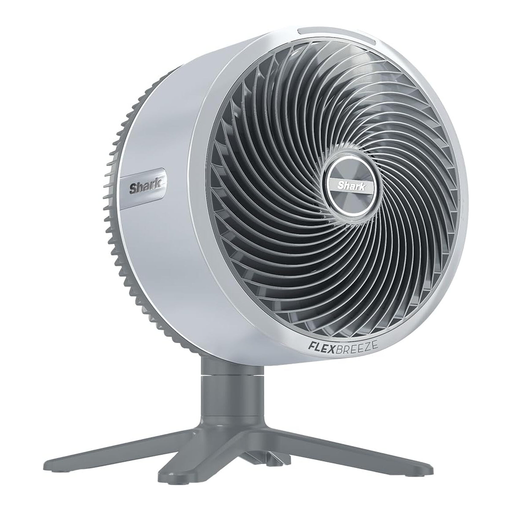 No image available
For changing seating positions or a spot without a nearby socket, when you want to adjust the airflow and its direction.
Battery or mains-powered; five speed settings; tilts up to 55° and oscillates sideways up to 180°. The quoted runtime of up to 24 hours applies to setting 1 without oscillation. According to the product description, don’t use it in bathrooms, near swimming pools or anywhere else where it may be splashed with water.
No. According to the German Environment Agency, a table fan doesn’t lower the room temperature; it cools your skin by moving air. To keep out the sun’s heat, use suitable shading and ventilate when the air outside is cooler than the air indoors.
Before buying, check the space available, the cable route and how the fan will be directed towards your seat. Follow the instructions for cleaning and permitted locations for your chosen model. Check them particularly carefully if the area where you plan to put it could actually get damp.
Check the information for the specific appliance, including CE marking and German-language instructions with the required usage and safety warnings. The German Federal Network Agency explains that, by applying the CE mark, the manufacturer declares under its own responsibility that the product meets the applicable legal requirements; it isn’t an independent quality mark.