
Lieferung heute & morgen

Qualitätsgarantie
App herunterladen
Kategorien
A console table is a piece of furniture primarily designed to optimise narrow traffic areas and functional spaces. Its characteristically shallow depth, typically between 25 and 40 cm, allows it to be placed in entryways, hallways, or behind sofas without obstructing the walkway. Selecting a suitable model is based on an analysis of dimensions, material properties, and structural load capacity to meet both functional and aesthetic requirements. This article analyses the technical criteria for selection and presents specific models.
The decision to purchase a console table should be based on objective parameters. The following criteria are crucial for making an informed choice.
The dimensions define the primary use case.
The choice of material affects the table's durability, maintenance, and style.
Functionality is determined by the design of the storage surfaces. A console with shelves in the form of one or more additional tiers maximises vertical storage space. This is particularly useful for an entryway table to neatly store shoes, baskets, or other items. Adjustable feet are a practical detail to ensure stability on uneven floors.
Based on the technical criteria mentioned above, we present two models that stand out for their specific design features and applications.
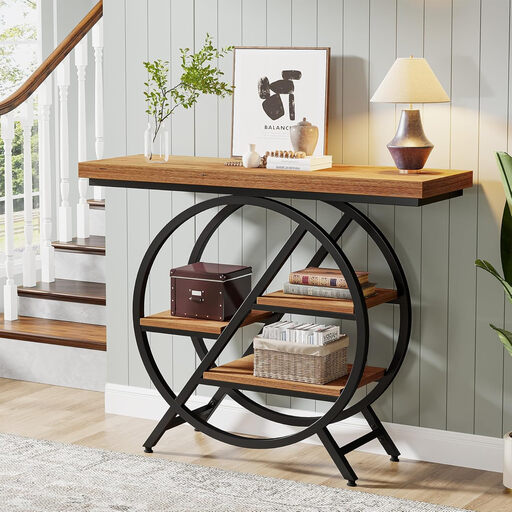
Why We Recommend This Product This model combines a compact 100 cm width with a four-tier shelf structure. The geometric metal frame ensures high structural stability, which, according to the manufacturer, allows for a load capacity of up to 158 kg. The thickened particleboard tabletop is resistant to everyday wear and tear. The design is suitable for users who need maximum vertical storage on a limited footprint.
Pros
Who It's For This model is designed for individuals seeking a space-saving yet highly functional solution for a hallway, living room, or narrow corridor. It particularly appeals to users who prefer the industrial style and value high load capacity and ample storage.
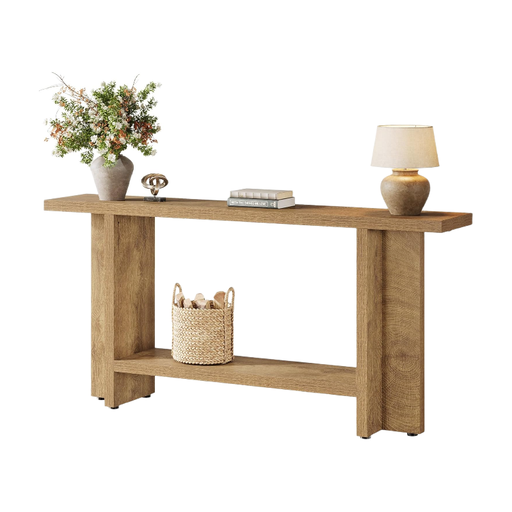
Why We Recommend This Product With a length of 150 cm, this table is specifically designed as a long sofa table or for spacious hallways. The construction of high-quality engineered wood with T-shaped legs ensures high stability and gives the table a farmhouse-inspired aesthetic. The two-tier shelving provides a generous surface for decorations and practical items.
Pros
Who It's For This model is aimed at users who need a wide surface area, such as homeowners with large living rooms or long entryways. The light oak finish appeals to those who prefer a warm, rustic, or farmhouse-inspired interior style.
A console table is often the focal point in a hallway or behind a sofa, but its impact is only fully realised with the right surroundings. Lighting, in particular, plays a crucial role in creating a functional and atmospheric whole. A table lamp on the console not only provides light but also serves as a design accent. For suitable lighting that complements the style of your new table, you can find a selection of matching models in our brown lamps category.
1. What is the difference between a console table and a side table? The main difference lies in their dimensions and primary purpose. A console table is typically long and narrow (e.g., 120 cm x 30 cm) and is placed against a wall or behind a sofa. A side table is usually smaller and more square or round (e.g., 50 cm x 50 cm) and stands next to an armchair or sofa.
2. How high should a console table be? The ideal height depends on its placement. In a hallway or entryway, a height of 75-85 cm is ergonomically practical. Behind a sofa, the table should not be higher than the backrest to avoid visual disruption. A height that is slightly below or at the same level is optimal.
3. Which materials are easiest to maintain for a console table? Models with a powder-coated metal frame and engineered wood tabletops with a melamine coating are the easiest to maintain. The surfaces are scratch-resistant, water-repellent, and can be easily cleaned with a damp cloth. In comparison, solid wood requires more regular care with special oils or waxes.