
Lieferung heute & morgen

Qualitätsgarantie

Willkommens-Angebote freischalten: KOSTENLOSE Lieferung | Bis zu 80 % RABATT | Kostenlose 30-Tage-JoyPlus-Testphase
App herunterladen
Whether it’s a renovation, workshop, garage or outdoor area, construction site equipment needs to suit the location, the duration of the work and the available power supply. A cheap product can quickly become impractical if key details about measuring range, ingress protection rating or mounting options are missing.
Three common buying mistakes often lead to unnecessary spending:
A laser distance meter – or digital distance measuring device – can save you time when taking room measurements, doing drywall work, assembling furniture or carrying out renovations. Before you buy, consider the following points:
When taking any measurement, make sure the device is held steady and aimed at a suitable surface. Moving, shiny or transparent surfaces can make measuring more difficult. For safety-critical building decisions, it’s also a good idea to double-check with a suitable reference measurement.
With construction site lights, lumens are an important comparison value, but not the only one. They describe the total light output. For real working quality, you also need to consider:
A 400 W halogen floodlight can be suitable for short-term, very bright illumination. For longer jobs, energy-efficient LED work lighting is often a better choice, provided the light output and coverage match your work area.
For the garden, yard, driveway or garage, the IP rating is a key technical specification. The first digit describes protection against solid objects and dust, while the second indicates protection against water.
An IP66 outdoor light is, according to the product details, protected against dust and powerful water jets. Even so, you should:
An LED outdoor floodlight with an adjustable bracket can be used for security lighting, garden lighting, yard areas and outdoor work. For lighting a garage, choose the mounting position so that strong shadows don’t fall on your workbench or vehicle.
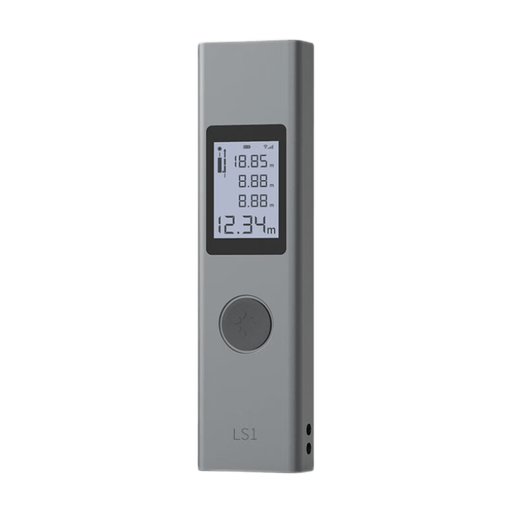
Why this product fits the profile: This compact measuring device is designed for home decoration, teaching and construction work. Its lightweight build, plus the included data cable and lanyard, make it easy to carry around.
Its portable design makes regular check measurements easy, preventing a heavy or awkward device from being left unused. Before buying, check the measuring range and functions in the product details.
Lightweight, portable design; according to the product description, it offers high precision and long battery life, plus a data cable and lanyard.
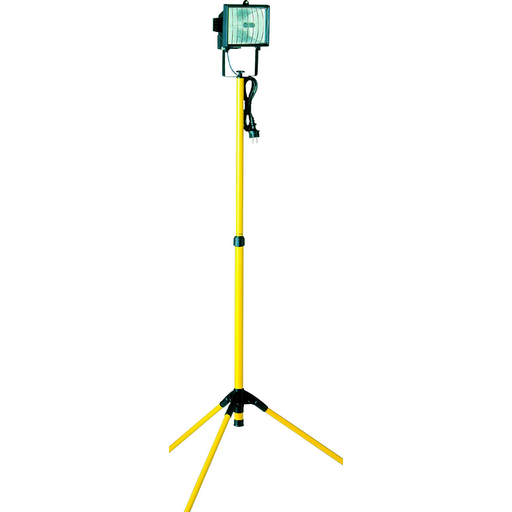
Why this product fits the profile: This mains-powered work light is aimed at users who need height-adjustable positioning and high light output on construction sites, in garages or during renovations.
The integrated tripod reduces the need for makeshift surfaces. The protective grille limits direct contact with the bulb. Due to heat generation, keep safe distances and follow the operating instructions.
400 W halogen bulb with approximately 8,850 lm according to the product details; height-adjustable tripod, protective grille and replaceable bulb.
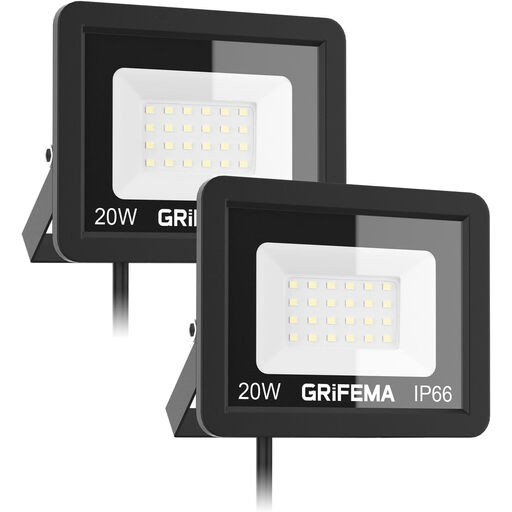
Why this product fits the profile: This two-pack is ideal for the garden, yard, garage and security lighting when you need to cover several areas with cool white light and an adjustable bracket.
The IP66 rating makes its intended resistance to dust and water clear. The 180° bracket allows precise aiming, but does not replace a protected, professionally installed cable connection.
Two lights at 20 W each, together delivering 2,200 lm according to the product details; 6,500 K, IP66 and an adjustable 180° bracket.
We’ve put together a full, regularly updated list of products that meet these strict selection criteria and comply with all applicable EU safety regulations.
That depends on the size of the space and the task at hand. For mobile, occasional use, a work light with a tripod can be a good choice. For permanent or larger areas, several directional LED lights are suitable, provided the mounting and power connection are planned properly. For external walls or damp areas, pay attention to the stated IP rating.
The power consumption of a 20 W LED floodlight is lower than that of a 400 W halogen floodlight. Actual running costs depend on operating time, your electricity tariff, light output and the number of lights. So don’t just compare watts – also look at lumens, usage time and the level of illumination you need.
The lifespan depends on the bulb type, operating hours, heat dissipation, moisture and mechanical stress. With halogen models, the bulb can be replaced. With LED lights, check the manufacturer’s information on lifespan, ambient temperature and IP rating.