
Lieferung heute & morgen

Qualitätsgarantie

Willkommens-Angebote freischalten: KOSTENLOSE Lieferung | Bis zu 80 % RABATT | Kostenlose 30-Tage-JoyPlus-Testphase
App herunterladen
Construction toys are more than just a pastime. They foster creativity, spatial reasoning, and foundational STEM skills in children, while also offering a challenging hobby for adults. However, the market can be overwhelming, and not every set delivers on its promises. Incorrect material specifications, incompatible systems, or unsuitable age recommendations can quickly lead to frustration and wasted money.
This guide will help you identify the key quality markers and make an informed decision. We'll show you what to look for to avoid common purchasing pitfalls and find the right construction toy for your needs.
Before you make a purchase, you should be aware of the typical problems that can spoil the fun.
To avoid these traps, focus on three objective criteria. These will help you evaluate a product's quality and suitability, independent of marketing promises.
Safety is non-negotiable. For plastic toys, look for the specification ABS plastic (Acrylonitrile Butadiene Styrene). This material is durable, dimensionally stable, and considered safe as it is free from harmful plasticisers.
Another critical feature is the CE marking. This symbol confirms that the product meets the applicable European Union requirements for health, safety, and environmental protection. For toys sold in the UK and Europe, this marking is mandatory.
The type of building system significantly determines the play experience and the skills it promotes.
A good building set for kids should not be a closed system. Explicitly check the product description to see if it is compatible with bricks from other major brands. This ensures the long-term play value of your investment and allows different sets to be combined into one large, creative world. This applies to both interlocking bricks and magnetic blocks, where the edge length of the tiles is a crucial factor for compatibility.
To make your decision easier, we have selected some products based on typical use cases and user profiles.
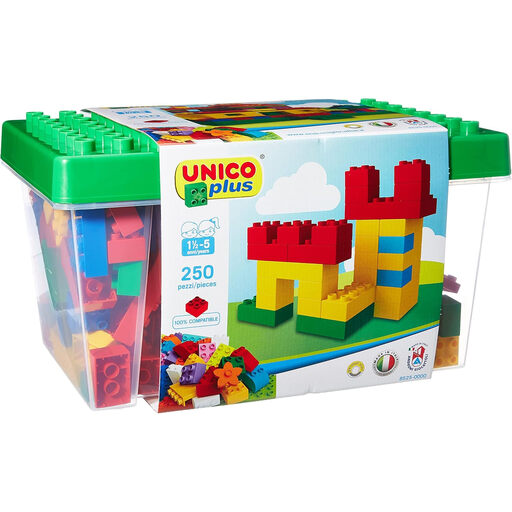
Why it's a good fit: Ideal for first building attempts. The large, easy-to-grip bricks are specially designed for small hands and, as a motor skills toy, promote hand-eye coordination without being overwhelming.
It sidesteps the pitfalls of inappropriate complexity and safety issues. The age recommendation of 18+ months is precise, and the size of the pieces minimises any choking hazard.
Its explicitly stated compatibility with other major brick brands ensures the long-term usability and expandability of the collection.
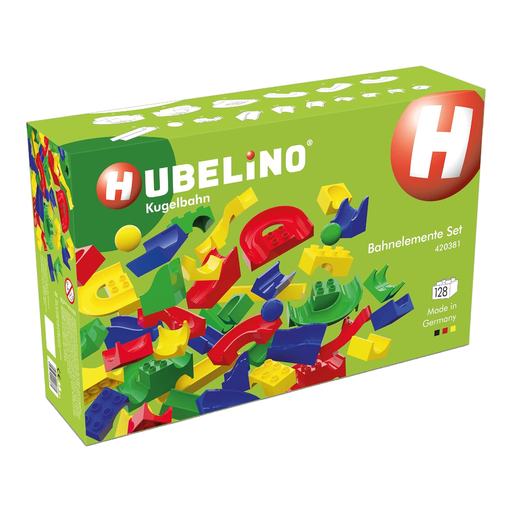
Why it's a good fit: Perfect for families who already own a collection of interlocking bricks. This set transforms static structures into dynamic marble runs, playfully introducing the principles of physics.
Excellently solves the compatibility trap. The product is declared as 100% compatible with bricks from other major brands, integrating seamlessly into existing play worlds.
Made in Germany under high quality standards. The set includes 124 track elements that allow for complex and varied course designs.

Why it's a good fit: A great entry point into the world of magnetic building blocks. It intuitively promotes an understanding of 3D structures and geometric shapes. Ideal as an educational toy for ages 3 and up.
Addresses the safety trap by using non-toxic ABS plastic with smooth edges and securely welded magnets. CPC/ASTM certification confirms compliance with safety standards.
The diamond surface texture of the 5.5 cm tiles creates unique visual effects and stable connections. A storage bag is included for easy organisation.
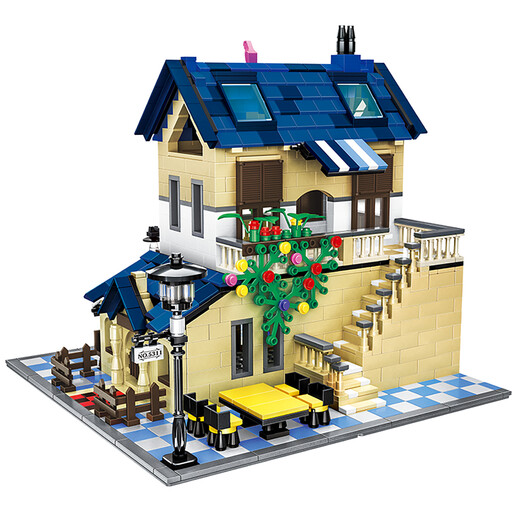
Why it's a good fit: A detailed architectural model for advanced builders and adults. It offers a demanding building challenge and serves as a decorative display piece upon completion.
Avoids the pitfall of being under-challenging. With 1298 pieces and a complex structure, this set is specifically aimed at an older audience looking for a demanding and time-intensive activity.
The high piece count allows for a detailed architectural replica. The finished model has significant collector and display value for fans of architecture and model building.
We have compiled a complete, up-to-date list of products that fully meet these strict selection criteria and EU safety regulations.
Look for the mandatory CE marking on the packaging. Check the material specifications; high-quality ABS plastic is a good choice. The product should not have any sharp edges or corners, and toys for children under three must not contain any small parts that could be swallowed. Additional safety seals like the GS mark (Geprüfte Sicherheit / Tested Safety) can be another indicator of high quality.
That depends on the system. For classic interlocking bricks, many manufacturers explicitly state compatibility with market leaders in the product description. It is advisable to check this before buying. For magnetic building blocks, tiles with the same edge length (e.g., 7.5 cm or 5.5 cm) are often compatible with each other, but here too, it's recommended to look at the product details.
Most manufacturers recommend magnetic building blocks for children aged 3 and up. This is because the components contain small, strong magnets. Although these are securely welded inside the plastic, there is a safety risk if the toy is damaged. Therefore, adult supervision is important, especially with younger children. They are well-suited for training spatial awareness at an early age.