
Lieferung heute & morgen

Qualitätsgarantie

Willkommens-Angebote freischalten: KOSTENLOSE Lieferung | Bis zu 80 % RABATT | Kostenlose 30-Tage-JoyPlus-Testphase
App herunterladen
The selection of construction toys is vast, but not every yellow vehicle lives up to its promise. Before you invest in a new toy excavator or truck, you should be aware of the most common pitfalls that often lead to disappointment in the playroom or on the collector's shelf. As your Joybuy Product Recommendation Officer, I'll help you separate the wheat from the chaff and make an informed decision.
Many buyers focus on the initial visual impression or flashy advertising claims. This often leads to three problems:
To avoid these pitfalls, you should focus on three core parameters. These objective criteria will help you realistically assess a model's quality and play value.
The longevity of a construction vehicle toy depends directly on the material used. High-quality ABS plastic, as used in many Bruder vehicles, is impact-resistant, robust, and weather-resistant. This makes it ideal for use as a sandbox toy. Look for the following features:
A good construction toy is characterised by realistic, mechanical functions that spark the imagination. A toy dumper truck should have an easy-to-operate and lockable tipping trough. A toy excavator impresses with a fully articulated arm and a rotatable cabin.
Ask yourself before buying:
A well-thought-out construction vehicle set can offer added value here, as the vehicles' functions are coordinated with each other, enabling a comprehensive play scenario right out of the box.
The scale indicates the size ratio of the model to the original vehicle. Common scales are 1:16 (large, detailed models, e.g., from Bruder), 1:50, or 1:87 (classic collector sizes, e.g., from Siku). Paying attention to the scale is crucial if you want to expand an existing collection or ensure that vehicles and accessories like figures or buildings fit together. A uniform Siku construction site or a fleet of Bruder vehicles in the same scale creates a cohesive and more realistic play environment.
Based on these criteria, we have identified a few models that represent a considered choice for different needs and age groups.
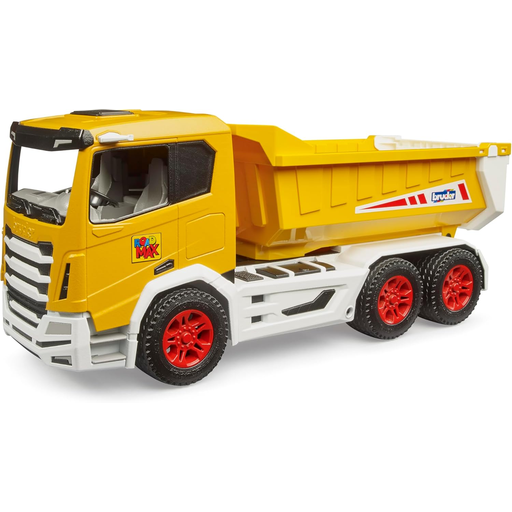
Why This Fits Their Persona: This model is specially designed for toddlers. It has no small parts that can be swallowed, features rounded edges, and a simple but fully functional tipping trough that small hands can operate effortlessly. The robust, treaded tyres are suitable for indoor and outdoor use.
Instead of fragile details, this model relies on extremely robust ABS plastic and a sturdy construction. It easily withstands intensive use in the sandbox, avoiding the pitfall of rapid material wear.
Promotes motor skills through simple, mechanical functions. Designed for safety and durability for the 2+ age group.
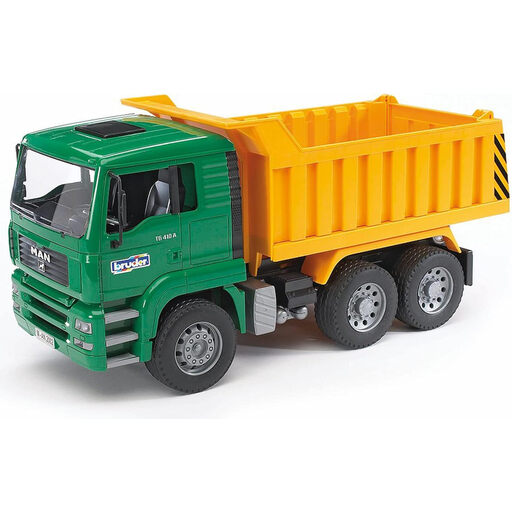
Why This Fits Their Persona: For children who appreciate realistic play experiences. The tilting driver's cab reveals the engine block, the mirrors are foldable, and the trough is fully functional. The 1:16 scale offers an impressive size and level of detail.
This model deliberately avoids short-lived electronics. The focus is on durable, mechanical functions that sustainably increase play value and promote technical understanding, rather than just entertaining at the push of a button.
High degree of realism thanks to many moving parts. Made in Germany from high-quality plastic for a long service life.
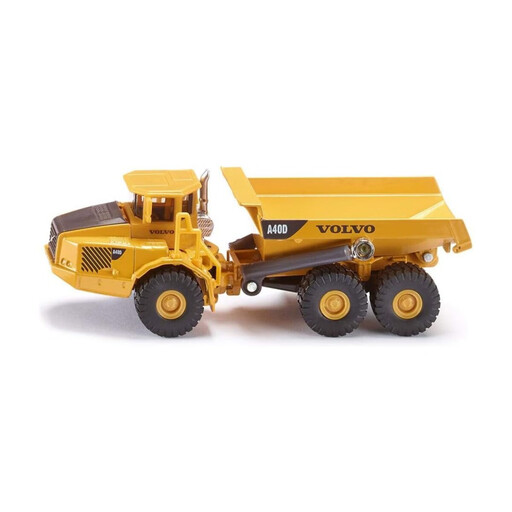
Why This Fits Their Persona: Ideal for collectors and anyone wanting to build a larger construction world. The clear 1:87 scale ensures compatibility with countless other Siku vehicles and accessories. The metal and plastic construction provides an authentic feel and high level of detail.
This model avoids the trap of incompatible sizes. By adhering to the standard collector's scale of 1:87, it integrates seamlessly into existing play and collection worlds, preventing disappointment from mismatched proportions.
High detail and robust metal construction. Perfect system compatibility within the Siku world at a 1:87 scale.
We have compiled a complete, up-to-date list of products that fully meet these strict selection criteria and safety regulations.
1. What is the most durable material for construction toys, especially for the sandbox? For use in the sandbox, high-quality, UV-resistant ABS plastic is an excellent choice. It is robust, doesn't fade quickly in the sun, and is easy to clean. Models specifically designated as sandbox toys, like those in the Bruder ROADMAX series, are optimised for this kind of stress. Vehicles with a high metal content, like those from Siku, are also very durable but should be dried after playing in the sand to prevent corrosion on the axles.
2. What does the scale (e.g., 1:16) mean for construction vehicles, and why is it important? The scale indicates how much the toy model has been scaled down compared to the original vehicle. A scale of 1:16 means the toy is 16 times smaller than the real machine. This value is important for compatibility. If you buy vehicles, figures, and buildings from the same manufacturer and in the same scale, they will match in size and create a cohesive, realistic play world. For collectors, maintaining a uniform scale is a key organising principle.
3. From what age are remote-controlled construction toys a good idea? The manufacturers' age recommendations are a good guide here. Simple, remote-controlled models with few functions (forward/backward, left/right) can be suitable for children as young as 3 or 4. More complex models with multiple channels for controlling crane arms or tipping troughs require finer motor skills and a better technical understanding, and are therefore usually recommended for children aged 6 or 8 and up. Look for interference-free 2.4 GHz radio technology so that multiple vehicles can be operated simultaneously without signal problems.