
Lieferung heute & morgen

Qualitätsgarantie

Willkommens-Angebote freischalten: KOSTENLOSE Lieferung | Bis zu 80 % RABATT | Kostenlose 30-Tage-JoyPlus-Testphase
App herunterladen
Construction toys can vary considerably depending on age and design: simple building blocks from 12 months, creative building sets for schoolchildren, or detailed models for teenagers and adults. However, product images do not always show how challenging the assembly really is. If you choose based solely on the theme or price, you may end up buying a set that is quickly overwhelming, contains parts that are too small or sees little use once assembled.
A high piece count may indicate an extensive building set, but it says little about how the product will actually be used. What matters is whether the set suits the child’s age, ability to concentrate and available space. A 390-piece model may be interesting for a child aged 9 and over, while a toddler is more likely to need large, easy-to-grip building blocks.
The term educational construction toy does not describe a uniform product feature. Check exactly which activities are possible: stacking, sorting, free combination, following instructions or understanding mechanical processes. A building set does not automatically support every skill to the same extent.
A marble run or mechanical model often requires a stable surface, sufficient space and regular checks of the connections. Electrically powered sets also involve a power supply and moving parts. For small children, balls, magnets and small parts are particularly critical in principle.
The manufacturer’s age recommendation should match the child’s stage of development and the intended use. Building blocks from 12 months should be easy to grip and contain no small parts that could be swallowed. For sets with small components, heed the choking hazard warning. The indication ‘from 3 years’ does not replace supervision if a child still puts parts in their mouth.
Also look out for:
For plastic sets, material specifications, coatings and care instructions are relevant. Wooden building sets should include details about the wood, paintwork or coating. For toys in the EU, the CE marking and product safety information are important points of reference, among other things. However, the CE mark is not an independent quality seal. Buyers should therefore also check that the manufacturer and responsible person details, age recommendations and warnings are all provided in full.
For many models, a dry or slightly damp cloth is sufficient for cleaning. Electrical components must not come into contact with water. With mechanical building sets, gears, tracks and connections should be checked regularly for looseness.
A model building kit from 9 years with many small parts is more suitable for concentrated work following instructions than for spontaneous free play. With a 3D wooden puzzle for adults or a detailed technical model, you should also plan for the assembly time, lighting at the workspace and the size of the completed model.
A mechanical marble run raises further questions:
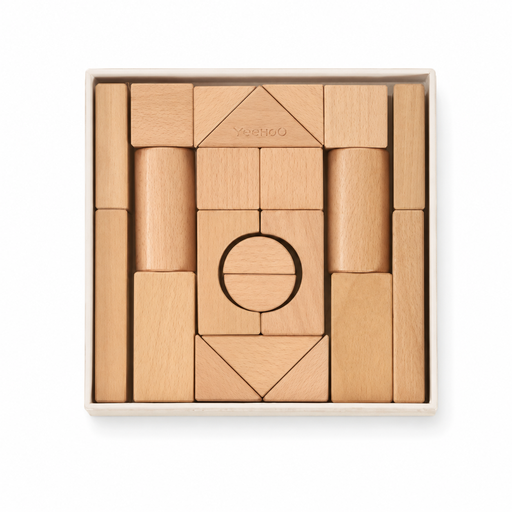
Why this product suits the profile: This 22-piece set is intended for children aged 12 months and over, supporting simple stacking and combination play in everyday life.
The manageable number of pieces reduces the assembly effort. Before use, however, you should still follow the guidance on supervision, damaged parts and not chewing or swallowing the pieces.
22 building blocks, free combinations and a woodland theme for shared play with parents or family members.
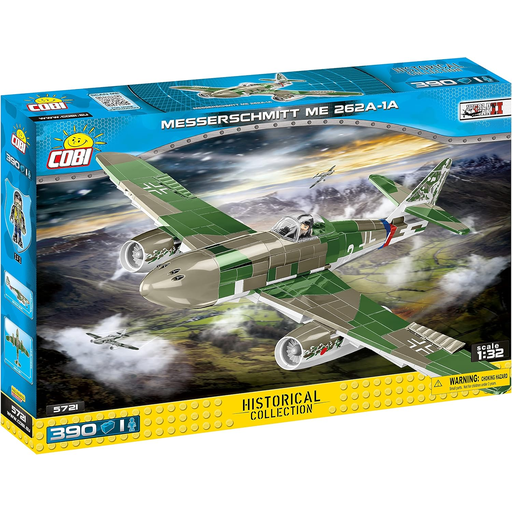
Why this product suits the profile: The COBI Messerschmitt Me 262 building set combines a historic aircraft theme with structured 1:32 scale assembly and is intended for people aged 9 and over.
The piece count, scale and illustrated step-by-step instructions make the expected assembly process more transparent than a description based solely on the theme.
390 plastic pieces, 1:32 scale, manual use without batteries and stated compatibility with popular building block brands.

Why this product suits the profile: This model is designed for teenagers aged 14 and over and adults. It works both as a challenging marble-run building set and as a decorative object.
The product details specify the assembled dimensions, USB power supply, moving mechanism and required supervision. This makes it easier to assess the space and operating requirements before buying.
Approximately 31.2 × 25.1 × 23 cm when assembled, with wooden, plastic and metal parts, ten steel balls, plus manual and USB-powered modes.
We have put together a complete, regularly updated list of products that fully meet these strict selection criteria and the safety regulations applicable in the EU.
For a gift for children and teenagers, the age, interests and available assembly time should all match. Toddlers benefit from simple shapes and free stacking. Schoolchildren can work on a model building kit by following instructions. Teenagers and adults are often interested in themes such as aviation, technology, mechanics or decorative 3D wooden puzzles.
When choosing a gift, it is sensible to consider more than just the design. Also take into account:
Sets with age-appropriate labelling, easy-to-grip components and manageable shapes are suitable. Building blocks from 12 months should only be used in accordance with the manufacturer’s instructions and preferably under supervision. Small balls, magnets and loose small parts are not suitable for this age group.
Its lifespan depends on the material, connection quality, storage and use. With mechanical models, tracks, gears and plug-in connections should be checked regularly for damage. Dry storage, careful cleaning and keeping the set in a low-dust environment can help extend its usable life, but do not guarantee a specific lifespan.
The Robotime-ROKR model is powered via a 5-volt USB connection; according to the product details, a USB cable is included. Actual consumption depends on how long it is operated and the power supply connected to it. If you are not using the building set, disconnect the cable from the power source.