
Lieferung heute & morgen

Qualitätsgarantie

Willkommens-Angebote freischalten: KOSTENLOSE Lieferung | Bis zu 80 % RABATT | Kostenlose 30-Tage-JoyPlus-Testphase
App herunterladen
Construction toys for children combine open-ended play with learning to recognise shapes, colours and spatial relationships. Whether you are looking for magnetic building blocks, a 3D puzzle, a Rubik’s Cube or a classic children’s building set, there is plenty of choice. However, the number of pieces or eye-catching packaging should not be the only deciding factors.
Before buying, parents, grandparents and educational settings should check whether the recommended age, materials, magnet construction and scope of play are suitable for the intended use.
A set with 120 pieces may initially seem more extensive than a building set with 32 or 50 pieces. However, very young children may find a large number of components confusing. If there are no simple templates or clear sorting system, the toy may only be used for a short time.
For beginners, smaller sets with basic geometric shapes are often easier to manage. Larger packs are more suitable once children have experience with magnetic construction toys or when several children are going to build together.
When choosing magnetic building blocks for children, magnet strength is only one factor. It is equally important that the magnets are securely enclosed within the pieces and that the casing has no sharp edges or damage.
Magnets must not be removed, opened or swallowed. Parents should check magnetic building blocks regularly. If a magnet becomes visible or the casing comes loose, the product should no longer be given to children.
A 3D puzzle for children aged 8 or over presents different challenges from educational toys for children aged 3 and over. Small pieces, longer assembly times and complex instructions may overwhelm younger children. The recommended age is therefore not an insignificant packaging detail, but an important selection criterion.
For children aged 3 and over, carefully follow the information relating to small parts and choking hazards. Sets containing magnetic components also require attention to warnings about strong magnets. The product is not suitable for children below the stated age.
Also pay attention to the size of the individual elements. In Tokky sets, for example, the square magnetic tiles measure 3.75 cm. This can provide a manageable gripping surface for small hands, but it does not replace adult supervision.
ABS plastic is used in many magnetic building blocks. The following points are particularly important:
Information about safety standards should be verifiable directly on the product page or packaging. For example, the product description for the XINQIYUAN Space Set states ASTM and EN71 safety standards and fully sealed magnets. Buyers should compare such information with the details on the packaging.
A building set containing lots of squares and triangles supports different construction ideas from a puzzle with numbered individual pieces. Magnetic building blocks and transparent tiles are suitable for open-ended construction. For a clearly defined sense of achievement, 3D puzzles or a Rubik’s Cube may be a better choice.
Storage also matters: a box or container helps prevent pieces from getting lost and makes the set easier to use at school, nursery or while travelling.

Why this product suits the profile: With 32 pieces and a metal tin, this compact set is ideal for first building attempts, limited storage space and taking on the go.
The manageable number of pieces reduces the risk of an overwhelming collection. The storage tin helps keep the components together after play.
32 magnetic tiles, individual pieces measuring 3.75 cm, ABS plastic and a portable metal tin.
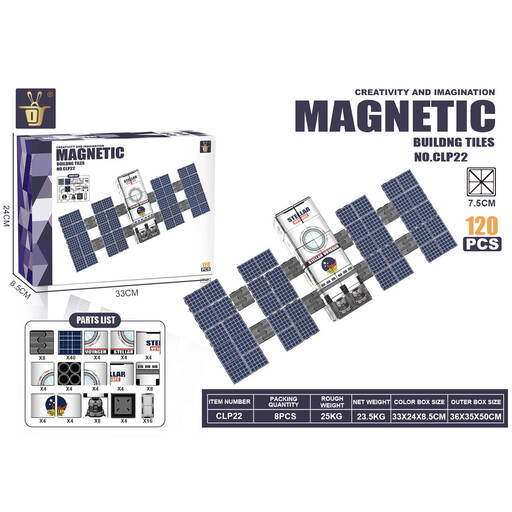
Why this product suits the profile: With 120 pieces and a space theme, this set offers larger construction projects for families, groups or educational settings.
The product description highlights fully enclosed magnets, smooth edges and a piece size of 7.5 cm as key construction features.
120 pieces, space motifs, an idea booklet and stated ASTM and EN71 compliance.
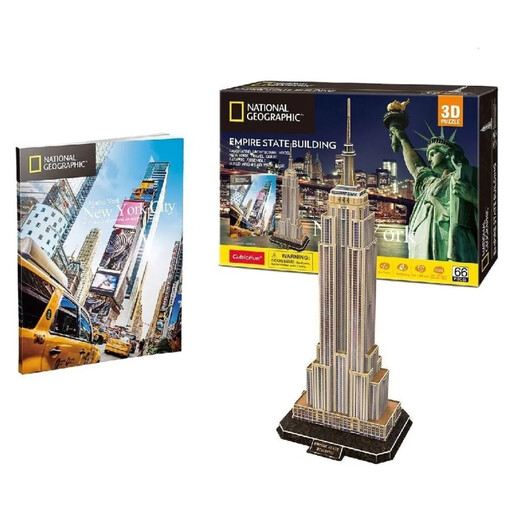
Why this product suits the profile: Designed for children aged 8 and over, this model is ideal for those who prefer a longer, clearly structured building challenge.
The 66 numbered pieces and stated assembly time of approximately 120 to 220 minutes make it easier to assess the scope before buying.
66 pieces, numbered elements, assembly without tools or glue and a model suitable for display.
Themed STEM toys or STEAM educational toys can support interests in science, technology and design. However, the label alone says nothing about the actual learning content. Check whether building instructions, templates or additional learning cards are included.
We have put together a complete, regularly updated list of products that fully meet these strict selection criteria and the safety regulations applicable in the EU.
Their lifespan depends on the materials, workmanship and how they are used. ABS components with smooth edges can remain suitable for use for a long time when handled properly. Throwing, bending, dismantling or contact with water and harsh cleaning products can damage the surfaces and magnet casings. Check the pieces regularly.
Magnetic building blocks, 3D puzzles and Rubik’s Cubes normally do not incur electricity or battery costs. The main expense to consider is replacing lost or damaged pieces. A suitable storage box can help prevent these costs.
Check the recommended age, secure magnet capsules, undamaged casings and clear warning notices. Swallowed magnets can cause serious injuries. If you suspect that a magnet has been swallowed, seek medical help immediately.