
Lieferung heute & morgen

Qualitätsgarantie

Willkommens-Angebote freischalten: KOSTENLOSE Lieferung | Bis zu 80 % RABATT | Kostenlose 30-Tage-JoyPlus-Testphase
App herunterladen
Construction toys for children can be a worthwhile indoor activity – provided the age range, piece size and play concept are a good match. However, parents and relatives face a huge choice: LEGO building sets, construction blocks, model-building kits and creative building toys differ significantly in their assembly, target audience and storage requirements.
820 or 1,229 pieces may initially seem impressive. What matters, however, is whether children can build freely with them, whether the instructions are easy to understand and whether figures or accessories create additional play scenarios. A larger set can also mean more sorting and a longer assembly time.
A building set for children aged 4 and over is aimed at a different developmental stage from a model-building kit for ages 9 or 10 and over. Small pieces pose a choking risk to younger children. The age recommendation on the packaging does not replace adult supervision, particularly when siblings of different ages are playing together.
Loose building blocks can quickly become scattered around a child’s bedroom. A box or sturdy organiser is therefore a practical consideration. The LEGO Classic 10696 and LEGO Classic 10698 include a plastic storage box. With other construction block sets, check whether a storage solution is included or needs to be purchased separately.
For children aged 4 and over, sets with a clear age recommendation and manageable building steps are suitable. For all products containing small parts, pay attention to warnings such as “Not suitable for children under 3 years” and “Choking hazard due to small parts”. A set recommended for ages 6 and over is not automatically suitable for younger children, even if they like the theme.
The information in the product details should be as clear as possible. The CAYI M4 Sherman Medium Tank has a contradictory age recommendation alongside the warning about small parts. As the product also warns against use by children under 3, buyers should check the specific packaging label and retailer information again before purchasing.
ABS plastic is listed as the main material for the sets featured. This alone does not describe the complete play experience. Other relevant factors include:
Brand information should be treated as product information, not as a blanket guarantee of quality. For sets intended for younger children, it is also important that the pieces are easy to handle and do not include too many very small specialist parts.
A LEGO Classic building block set supports open-ended building with colours, wheels, windows and baseplates. A LEGO Friends playset, by contrast, focuses on figures, rooms and imaginative role play. A themed model such as an aircraft, military vehicle or the Nevermore Academy is more likely to appeal to children and teenagers who want to follow a specific theme.
Before ordering, it is worth checking the dimensions of the finished model and the packaging. A set with more than 900 pieces needs a sufficiently large, clear surface during assembly. You should also consider whether there will be enough room to display it on a shelf or desk afterwards.
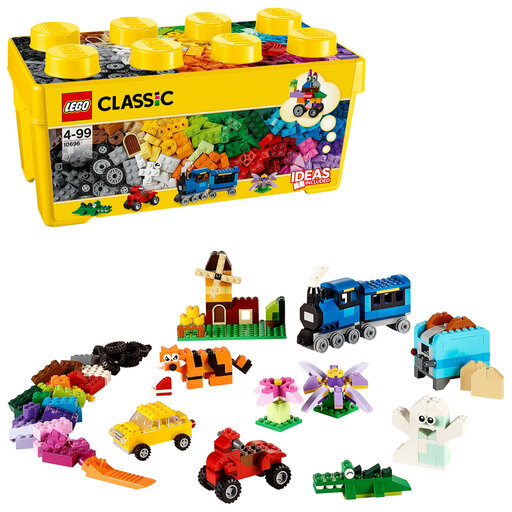
Why this product suits the profile: The box contains 484 pieces, including wheels, windows, eyes and baseplates, and according to the product information is suitable for children aged 4 and over. It is ideal as an introduction to open-ended building and as a gift for boys and girls.
The piece count is complemented by specific building elements. The storage box reduces the need for additional organisers.
484 pieces, a variety of colours and a plastic box with initial building ideas.
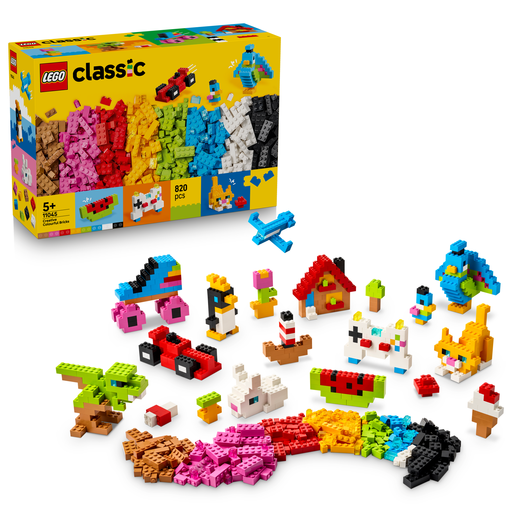
Why this product suits the profile: With 820 pieces, 14 printed model ideas and digital instructions for three additional models, this set offers a structured introduction followed by open-ended creative building for children aged 5 and over.
The set is not limited to a single model. Printed and digital instructions make it easy to follow the first steps.
820 ABS plastic pieces, 14 building ideas, plus cleaning and storage guidance.
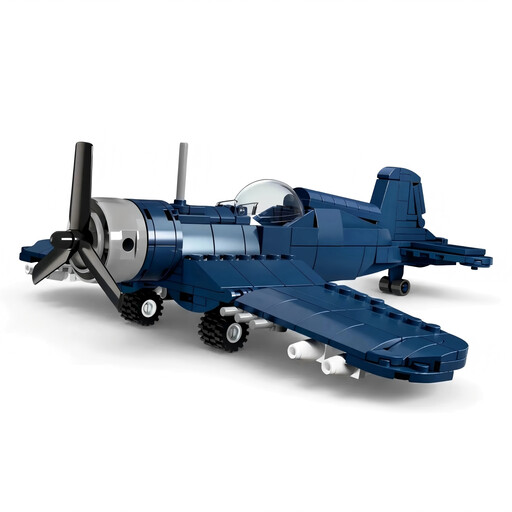
Why this product suits the profile: According to the product information, this themed model is aimed at hobby builders and children aged 6 and over. Its 318 ABS building blocks focus on constructing an aircraft rather than providing an open-ended collection of blocks.
The specific model name makes its intended use clear. The recommended age limit and small-parts warning should be taken into account before buying.
318 pieces, the stated ABS construction and compact packaging dimensions of 27,5 × 6 × 20 cm.
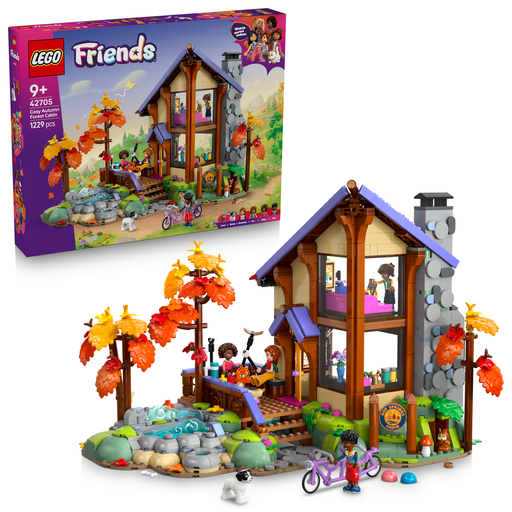
Why this product suits the profile: The set is recommended for children aged 9 and over and combines 1,229 pieces with four mini-dolls, a dog, a squirrel and numerous accessories for imaginative role play.
Alongside the building experience, the model offers a clear play context with a kitchen, living area, bedroom and woodland setting.
1,229 pieces, four mini-dolls, two animal figures and digital 3D instructions via the LEGO Builder app.
Construction toys for children stay tidier and in better condition when three habits are introduced after play:
Sets with storage boxes are practical for families with limited space. With larger play worlds, you should also establish whether the finished model can remain on display permanently or needs to be dismantled after each use.
We have put together a complete, regularly updated list of products that fully meet these strict selection criteria and the safety regulations applicable in the EU.
For children aged 4 and over, open-ended LEGO Classic building blocks with larger basic elements, colours and initial building ideas are worth considering. The specific age recommendation for the product in question is decisive. Because of the small parts, younger children should only play with these toys under appropriate supervision.
That depends on the purpose of the set. 300 to 500 pieces can be enough for a themed introduction. Larger sets with 700 to more than 1,000 pieces offer more possibilities, but require more space, sorting time and perseverance. For open-ended building, the variety of elements is often more important than the overall number.
LEGO Classic focuses on building blocks, colours and different basic elements that can be combined freely. LEGO Friends also includes figures, animals, rooms and accessories. This makes it particularly suitable for stories and imaginative role play. The choice should depend on whether the child prefers developing their own constructions or expanding predefined themed worlds.