
Lieferung heute & morgen

Qualitätsgarantie

Willkommens-Angebote freischalten: KOSTENLOSE Lieferung | Bis zu 80 % RABATT | Kostenlose 30-Tage-JoyPlus-Testphase
App herunterladen
Construction toys for children are designed to encourage creativity, offer long-lasting play value, and match the child’s developmental stage. In practice, however, the number of pieces alone doesn’t determine the play experience. For parents, grandparents, nurseries and educational settings, the key factors are age recommendation, materials, building principle and safety features.
A high piece count sounds appealing, but for younger children it can be overwhelming. If basic shapes, sturdy connections or a clear instruction manual are missing, many pieces will go unused. A smaller building set for children aged 3 and up, with suitable shapes, can be more practical in everyday use than a large box of complicated elements.
Magnetic building blocks for children are often advertised with particularly high magnetic holding strength. What matters more, however, is whether the magnets are securely enclosed within the piece and whether the manufacturer warns about small parts that could be swallowed. Damaged magnetic building blocks must be removed immediately. Swallowed magnets can cause serious injury and require urgent medical attention.
A toy labelled “from 3 years” isn’t automatically suitable for every three-year-old. Small balls, delicate connecting pieces and complex building instructions demand extra attention. For children under 6, adult supervision is advisable depending on the product, especially with a marble run for children or sets containing small magnets.
First, check the age rating and warning labels. For toddlers from 2 years, larger building blocks that are easy to grip are ideal. A LEGO DUPLO Peppa Pig set, for example, combines large building elements with role-play. The LEGO 10467 DUPLO Peppa Pig Family House is designed for children aged 2 and up according to the product description, and includes figures, rooms and accessories for everyday scenes.
From 3 or 4 years, more complex construction tasks can be introduced. LEGO Classic bricks are aimed at children aged 4 and up for the sets mentioned, offering classic bricks, wheels, windows and base plates. For a child who enjoys free building, an open box is usually more suitable than a thematically fixed model.
With plastic building blocks, the material should be clearly stated. Several of the sets listed here are made from ABS plastic according to product information. Smooth edges, sealed components and regular checks for cracks or loose parts are practical selection criteria.
For wooden building blocks, stable paint finish, rounded edges and a clear age recommendation are important. The 51-piece wooden stacking game includes building blocks with animal motifs and a dice, according to the description. Due to small parts, use from 3 years under direct adult supervision is specified.
Consider whether the set can only be used following instructions or also for free play. Creative building blocks with different shapes can be sorted, stacked and recombined. Magnetic systems are suitable for quick 2D patterns and 3D structures, while classic interlocking bricks often require more patience when assembling.
For nurseries and heavy users, storage, expandability and compatibility are important. A box or bag makes sorting easier. With magnetic systems, pay attention to compatible edge lengths: 2.5 cm and 7.5 cm systems are not automatically compatible with each other.
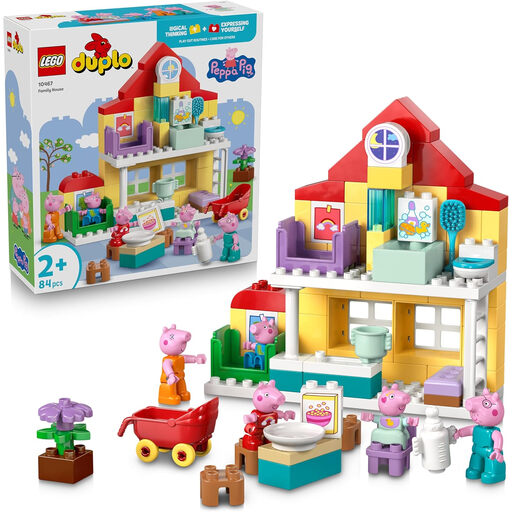
Why this product fits the profile: According to the product description, this set is designed for children aged 2 and up, combining large building elements with figures and everyday scenes. It offers a gentle introduction to construction toys for children.
The age rating and larger building pieces reduce the risk of choosing a set that is too complex for a toddler.
Figures, multiple rooms and accessories support role-play; LEGO DUPLO bricks are designed for small hands.
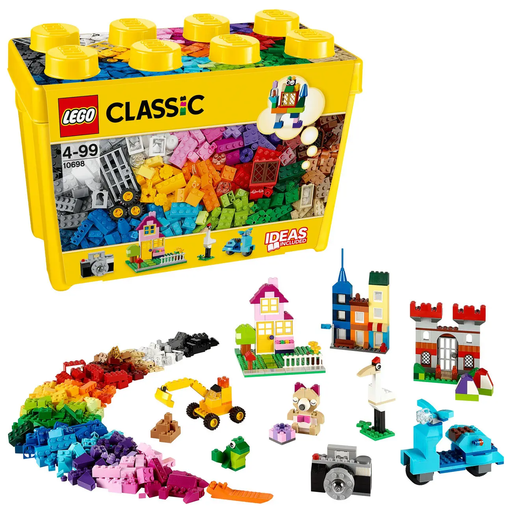
Why this product fits the profile: According to product information, the box contains 790 pieces in 33 colours, plus windows, doors, wheels and base plates. This gives older children aged 4 and up a versatile foundation for free building.
The variety of pieces is clearly specified and is complemented by a storage box and building ideas.
790 elements, two green base plates and numerous special pieces; suitable for building, rebuilding and expanding existing collections.
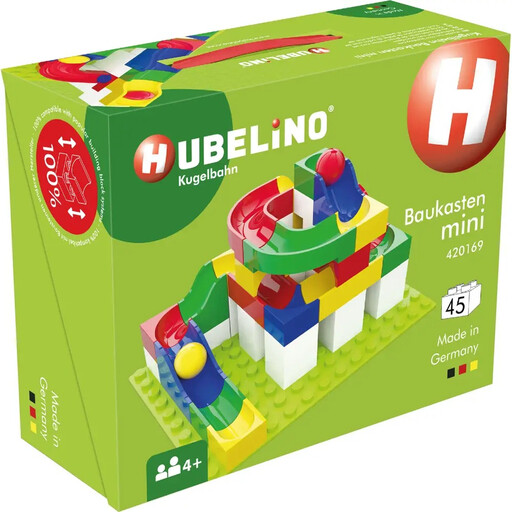
Why this product fits the profile: According to the product description, this set is aimed at children aged 4 and up and includes a base plate, building bricks, track elements, marbles and instructions. It suits families who want to build a marble run for children and expand it later.
The included components and age warnings are clearly stated; small marbles are explicitly flagged as a risk.
45 pieces, storage case and expandability with other Hubelino products; no batteries required.
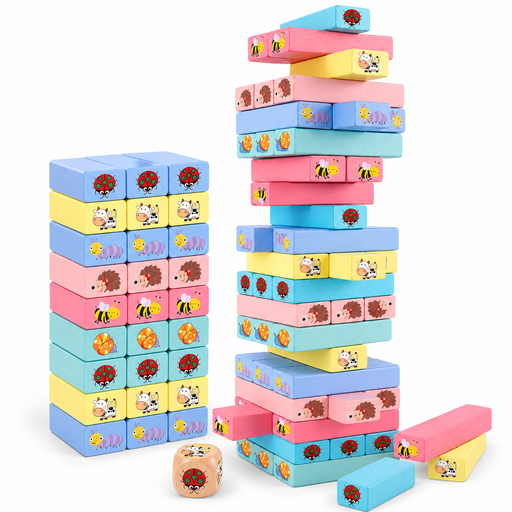
Why this product fits the profile: This wooden block game combines stacking, sorting and balancing. It works well as a manageable gift for children aged 3 and up and requires no batteries.
The number of pieces, the dice and the recommended use under supervision are all clearly stated, rather than just advertising general learning benefits.
51 pieces with animal motifs and a dice; the game mechanics encourage concentration, fine motor skills and creative thinking.
We’ve put together a full, regularly updated list of products that fully meet these strict selection criteria and the safety regulations in force in the EU.
Larger building blocks with rounded edges and a clear age rating are suitable. Magnetic building blocks for children aged 3 and up can be used if the magnets are securely enclosed and play takes place under supervision. Small individual pieces and marbles should not be given to unsupervised toddlers.
The lifespan depends on the material, connection mechanism and care. ABS bricks can be used for a long time under normal use, but should be checked regularly for cracks, deformation and loose magnets. Wooden blocks must be stored in a dry place and checked for damaged paintwork. A sorting box also helps prevent loss and unnecessary replacement purchases.
Most building sets don’t require batteries. Ongoing costs mainly come from expansion sets, missing pieces or replacements after damage. If you’re choosing a learning toy for building, you should therefore pay attention to compatibility, storage and available expansions. This is particularly relevant for magnetic building blocks and modular marble runs.