
Lieferung heute & morgen

Qualitätsgarantie

Willkommens-Angebote freischalten: KOSTENLOSE Lieferung | Bis zu 80 % RABATT | Kostenlose 30-Tage-JoyPlus-Testphase
App herunterladen
Construction toys for children should spark imagination, be easy to understand, and suit their age. For parents, grandparents, nurseries and schools, however, the choice isn’t always straightforward: building blocks, magnetic tiles, LEGO bricks and wooden blocks differ significantly in material, play principle, storage and safety requirements.
A set with lots of pieces looks appealing at first glance. What really matters, though, is which shapes are actually included. Windows, wheels, base plates or special connecting elements expand the possible models far more than lots of nearly identical standard pieces. When looking at building block sets for children, you should check the parts list, not just the total number stated.
Magnetic tiles can be quickly joined and separated. However, their load-bearing capacity depends on the shape, magnet position, tile size and construction. Large, multi-storey models can tip over despite strong connections. What’s more, magnetic sets contain small, powerful magnets. That’s why age recommendations, warning labels and regular checks for cracks or loose magnets are essential.
The marking “ages 3+” doesn’t mean every child of that age can play independently with the set. Small parts can be swallowed. For children under 3, such products are fundamentally unsuitable. Even with older children, age-appropriate supervision is advisable for magnetic tiles and building blocks with small accessories.
For free building, sets with different colours, basic shapes and supplementary elements are ideal. LEGO Classic sets, for example, include windows, eyes, wheels and base plates. This means you can create vehicles or animals as well as buildings. Building blocks with wheels are especially suitable if your child enjoys constructing vehicles and then playing with them.
With magnetic tiles, the focus is on surfaces, geometric shapes and spatial connections. They support play with patterns, planes and 3D models. For children who like sorting and stacking, wooden building blocks for children can be a more straightforward alternative.
For plastic sets, the product description should state the material used, often ABS plastic. Look for smooth edges, a robust connection between individual pieces, and clear manufacturer information. With magnetic products, it’s particularly important that the magnets are securely enclosed within the tile. Damaged pieces should be removed from play.
For wooden blocks, the surfaces, varnish and edges are relevant. Claims like “non-toxic” should be backed up with specific product or conformity information. For the UK market, warning labels, age markings and details about the responsible person in the EU are important points to check.
A storage box for building blocks or a sturdy bag reduces lost pieces and makes tidying up easier. This is practical in the playroom, at nursery and when travelling. With compatible systems, check the exact scale: magnetic tiles measuring 2.5 cm or 5.5 cm aren’t automatically interchangeable.
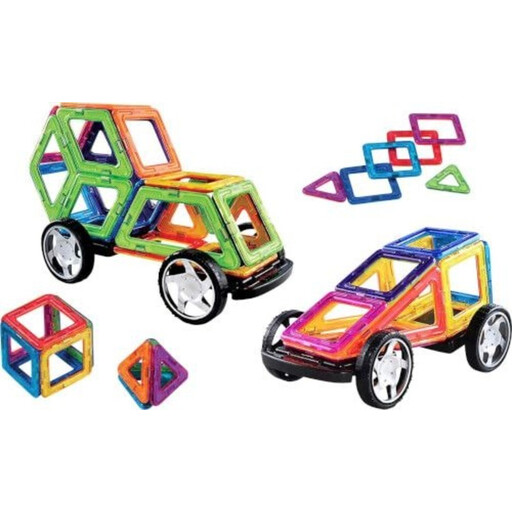
Why this product fits the profile: With 32 pieces, this set offers a manageable introduction to magnetic building and includes wheels for simple vehicles.
The specific piece count and included wheels make the play offering clearer than a simple marketing claim about creativity.
32 magnetic components, wheels and an age recommendation of 3+ according to the product description.
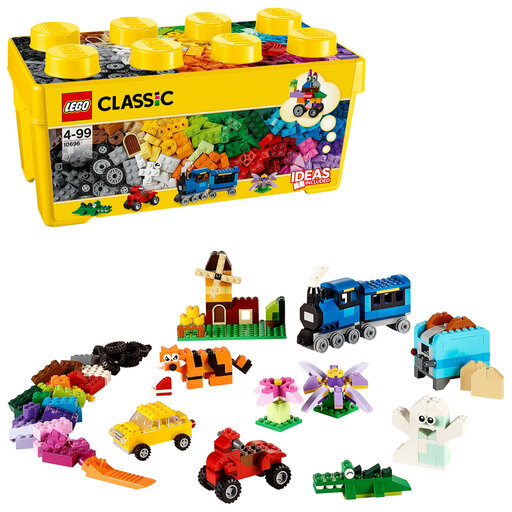
Why this product fits the profile: According to product information, this box is aimed at children aged 4+ and combines 484 elements with a storage box.
The description mentions colours, windows, eyes, wheels, wheel hubs and base plates. This means you can clearly assess the contents before buying.
484 elements, 35 colours according to the product description, and a plastic storage box.
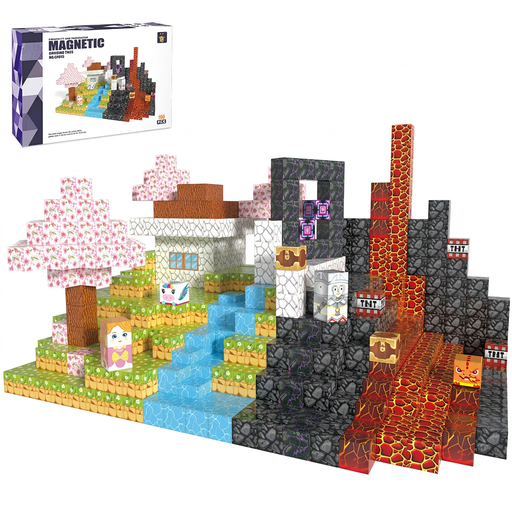
Why this product fits the profile: With 100 geometric pieces and a carry bag, this set is ideal for extensive building projects at home, in the classroom or on the go.
The product details state the piece count, tile size of 2.5 cm, storage bag and notes about regularly checking the magnets.
100 pieces, basic geometric shapes, carry bag and compatibility with other 2.5 cm magnetic sets according to the product description.
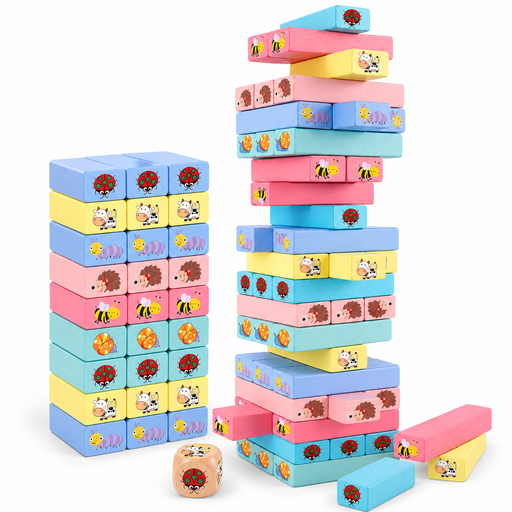
Why this product fits the profile: This wooden game is suitable for stacking, sorting and balancing activities, and can be used from age 3 with direct supervision.
The play principle is clearly described: 51 pieces, animal motifs and a dice. There’s no reliance on batteries or digital features.
51 wooden blocks, balancing game, dice and age recommendation of 3+ according to the product description.
We’ve put together a complete, regularly updated list of products that fully meet these strict selection criteria and the safety regulations in force in the EU.
From age 3, age-labelled magnetic tiles, larger wooden blocks and sets with appropriately sized plastic pieces are suitable. Small individual parts and strong magnets require particular attention. The manufacturer’s specific age recommendation and the warning labels on the packaging are what you should follow.
The lifespan depends on the material, connection points, storage and intensity of play. Plastic building blocks can last a long time with proper use. With magnetic sets, parents should regularly check whether the housings, edges or magnet fixings are damaged. Damaged pieces should no longer be kept in the toy box.
With classic construction toys, there are normally no ongoing energy costs, as they’re used without batteries. Possible additional costs may arise from expansion sets, replacement parts or an extra storage solution. So before buying, it’s worth checking compatibility and any existing block collections you have.