
Lieferung heute & morgen

Qualitätsgarantie

Willkommens-Angebote freischalten: KOSTENLOSE Lieferung | Bis zu 80 % RABATT | Kostenlose 30-Tage-JoyPlus-Testphase
App herunterladen
Construction toys for children are designed to inspire building, adapting and creative thinking. In practice, however, not every building set suits every age or play area. Parents, grandparents and other family members should therefore look beyond the piece count or eye-catching product images, and instead pay attention to age recommendations, component size, material details and storage.
"More pieces" sounds appealing at first. What really matters, however, is which shapes are included. A set with many identical elements offers different possibilities to a creative building set with wheels, windows, base plates or special parts. With a marble run, the track layout also comes into play: curves, connectors and support pieces determine whether you can build different structures.
Building blocks for ages 3 and up and building blocks for ages 4 and up differ not only in their age recommendation. Small parts can pose a choking hazard. Magnetic building blocks for children also contain magnets, which can cause serious health risks if swallowed. The information on the packaging and in the product description should therefore be checked before purchase and before each use.
Loose parts can easily get lost if there is no box or bag. With LEGO bricks, it is also important to know whether the set can be combined with existing LEGO Classic bricks. With magnetic building blocks, you should check whether the formats and connection systems are compatible. A stated compatibility does not replace checking the size and magnetic connection.
First, choose a set that matches the age recommendation. The LEGO Classic Set 10696 is intended for children aged 4 and over according to the product description and contains small parts. The XINQIYUAN magnetic sets in this selection are recommended for ages 3 and over, but also carry warnings about small parts and magnets. Supervised use is advisable for younger children.
Also look out for:
For a toy intended for the German market, the required markings and safety information should be clearly stated. A CE marking alone is not a substitute for checking the specific product and its warnings.
The piece count is only meaningful in relation to the contents. The LEGO Classic 10696 contains 484 elements according to the product data, 35 colours, windows, eyes, wheels, tyres and green base plates. This makes it suitable for open-ended building ideas such as vehicles or animals.
A magnetic set with 28 pieces is more suited to a manageable introduction. Sets with 55, 58 or 60 pieces offer additional geometric shapes for two-dimensional patterns and simple three-dimensional constructions. A set with 120 pieces allows for more elaborate scenes, but also requires more sorting and storage space.
ABS plastic is listed as the base material for several of the products featured here. More important than a general material description, however, are smooth edges, sturdy construction and securely enclosed magnets. With magnetic building blocks, parents should regularly check the pieces and immediately discard any damaged ones.
For cleaning, a soft, slightly damp or dry cloth is usually sufficient, unless the product instructions state otherwise. Magnetic parts should not be placed in water or treated with harsh cleaners.
The following products are not ranked in any particular order. They differ in age recommendation, number of pieces, building principle and area of use.

Why this product fits the profile: This compact set for ages 3 and over offers a manageable introduction to magnetic building and requires no batteries.
The number of pieces and the individual component size of 5.5 cm are stated. This makes it easier to assess the actual scope before purchase than relying on a general marketing claim about versatility.
28 pieces, storage bag, manual use without batteries, and details about smooth edges and enclosed magnets.
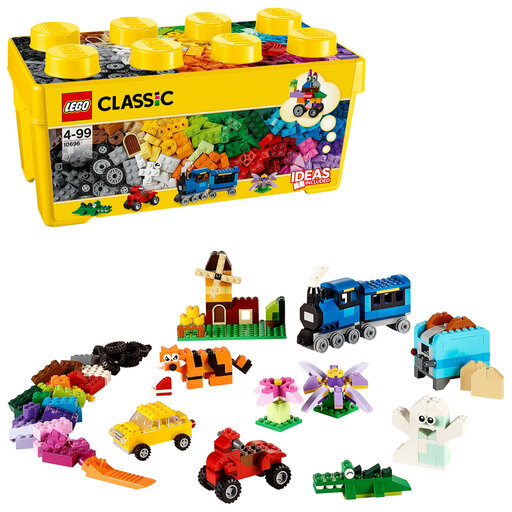
Why this product fits the profile: If you are looking for a classic, expandable building set for children aged 4 and over, you get a documented selection of pieces with a sorting box and building ideas.
The product data lists 484 elements, 35 colours, wheels, windows, eyes and base plates. The box also supports organised storage.
484 elements, instructions with building ideas, storage box and, according to the product description, compatible with other LEGO bricks.
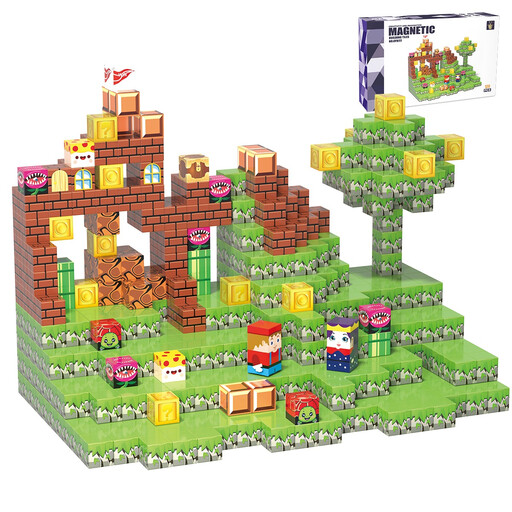
Why this product fits the profile: The combination of magnetic tiles and balls is aimed at families who want to build many different patterns, vehicles or 3D structures.
The product description explicitly mentions small parts and strong magnets. Regular checks and supervised use are therefore part of the purchasing decision.
120 pieces, storage container, nature and forest motifs, plus tiles and magnetic balls for different types of building.
We have put together a complete, regularly updated list of products that fully meet these strict selection criteria and the safety regulations in force in the EU.
For children aged 3 and over, larger magnetic components with a clear age recommendation may be suitable, provided adults observe the warnings and check the set regularly. For children aged 4 and over, classic LEGO Classic bricks with many standard pieces offer a structured introduction to free building.
A STEM toy such as a marble run appeals to families who want to combine construction with movement and cause-and-effect observation. The DIY set listed contains 128 pieces. Before purchasing, parents should check whether the size of the balls and the age recommendation are appropriate for their particular use.
Sets with a clear age recommendation of 3 years and over and understandable safety instructions are suitable. Special care is needed with magnetic building blocks, as swallowed magnets can be dangerous. Adults should supervise the first use and discard any damaged pieces.
This depends less on the pure number of pieces and more on the variety of shapes and expandability. LEGO bricks with standard shapes can often be combined with existing sets. Magnetic building blocks enable patterns and 3D models; special parts such as roofs or wheels change the play area.
A building set can work well as a birthday or Christmas gift if age, interests and existing toys are taken into account. For LEGO and Disney fans, themed models can be appealing; for open-ended creativity, Classic or magnetic building blocks are more suitable. What matters are clear product data, safe storage and an appropriate age rating.