
Lieferung heute & morgen

Qualitätsgarantie

Willkommens-Angebote freischalten: KOSTENLOSE Lieferung | Bis zu 80 % RABATT | Kostenlose 30-Tage-JoyPlus-Testphase
App herunterladen
The selection of construction vehicle toys is vast. From highly detailed excavator toys to durable truck toys, the range of options can be overwhelming. But not every model lives up to its promises. Many buyers are frustrated by common defects that quickly put an end to the fun. These include three typical pitfalls:
This guide will help you navigate these pitfalls and make an informed decision that ensures long-lasting enjoyment.
To find a durable and suitable construction vehicle toy, you should look for a few key features that go beyond first impressions.
A toy's durability is directly linked to its material. Budget models are often made from brittle plastic that breaks easily under stress. Pay attention to the specifications of the materials used:
The functions determine the play value. A wheel loader toy should have a movable bucket, and a toy crane should have a functional boom. What's important here is not just the number of functions, but their smooth mechanical implementation.
The scale indicates the size ratio to the original vehicle and is crucial for the level of detail and compatibility with other models in a series.
Safety is the most important criterion, especially for toys for ages 3 and up. Look for the EN 71 European toy safety standard certification. This ensures the product is free from harmful plasticizers and is mechanically safe.
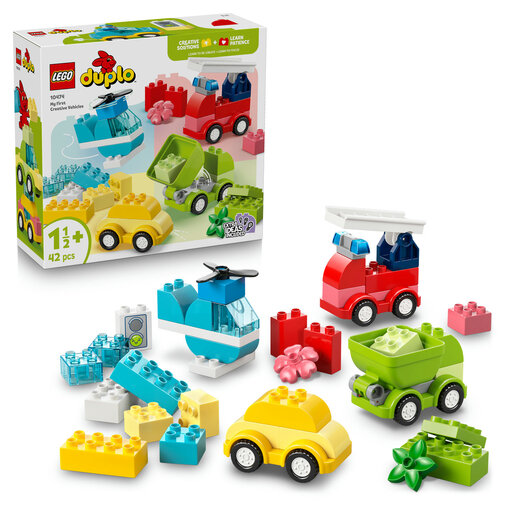
Why it's a great fit: Perfect for toddlers from 18 months. The large, easy-to-grip bricks are safe and playfully promote fine motor skills and creativity without being overwhelming.
This set avoids the pitfall of mismatched complexity. LEGO's robust ABS plastic is extremely durable and withstands even rough play, unlike brittle, low-cost plastics.
Promotes creativity and colour recognition; safe, large bricks that are easy to handle.
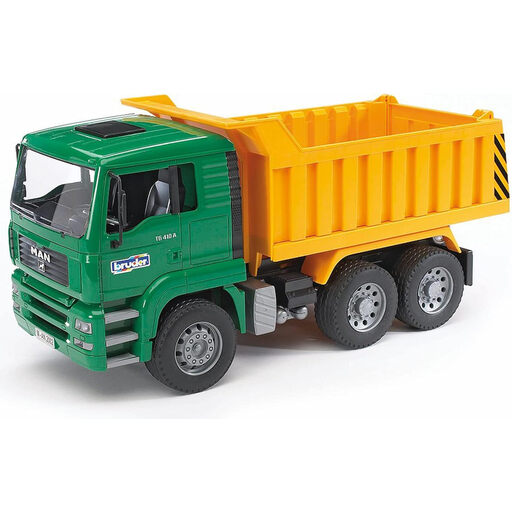
Why it's a great fit: Ideal for children who love realistic play scenarios. The 1:16 scale and numerous authentic functions, like the tipping trough and folding cabin, offer long-lasting play value.
This model counters the pitfall of poor-quality materials by using high-grade ABS plastic. The mechanical functions are robustly and reliably engineered, rather than relying on fragile electronics.
True-to-scale (1:16) and highly detailed; made from durable plastic for indoor and outdoor use.

Why it's a great fit: Appeals to older children and adult collectors who value detail and a high-quality feel. The combination of metal and plastic provides an authentic weight and excellent durability.
The sturdy metal-and-plastic construction avoids the feel of cheap plastic. The mechanical functions, like the pivoting backhoe arm, are precise and designed for lasting use.
Sturdy die-cast metal and plastic construction; high level of detail in a 1:50 collector's scale; fully functional loader and backhoe.
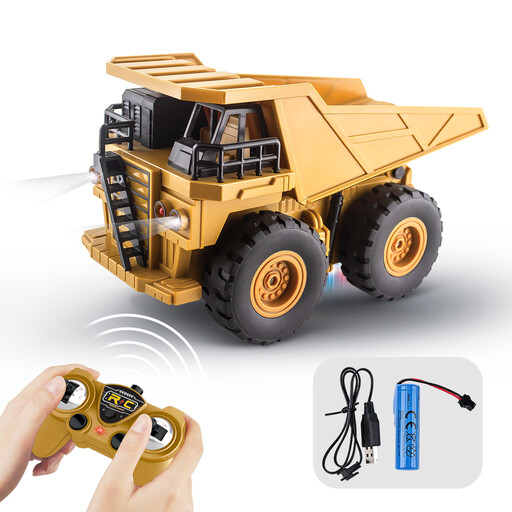
Why it's a great fit: Perfect for tech-savvy kids looking for an interactive play experience. The remote control allows for precise manoeuvres, and the hydraulic bed simulates real construction site processes.
The 2.4 GHz radio system prevents interference, a common problem with cheap RC toys. Its functions are well-defined and robustly implemented, adding real play value rather than just being a gimmick.
Interference-free 2.4 GHz remote control; realistic lifting bed; light and sound effects for an immersive experience.
We've compiled a complete, up-to-date list of products that fully meet these strict selection criteria and safety regulations.
Pay attention to the material specifications. ABS plastic, often used in Bruder vehicles, is very robust and shatterproof. Models with a high proportion of die-cast metal, typical of SIKU models, are particularly durable and have a realistic weight that is valued by many children and collectors.
The scale indicates how much the model has been scaled down compared to the original vehicle. A 1:16 scale (Bruder) means the toy is 16 times smaller than the real vehicle. These models are relatively large and detailed. A 1:50 or 1:87 scale (SIKU) results in smaller, more compact models that are well-suited for collecting or for model railway layouts.
Most manufacturers recommend remote-controlled excavators for children aged 6 or 8 and up. Operating the controls requires a certain level of hand-eye coordination. Additionally, the remote controls and vehicles often contain small parts and battery compartments that may be unsuitable for younger children. Always check the manufacturer's specific age recommendation on the packaging.