
Lieferung heute & morgen

Qualitätsgarantie

Willkommens-Angebote freischalten: KOSTENLOSE Lieferung | Bis zu 80 % RABATT | Kostenlose 30-Tage-JoyPlus-Testphase
App herunterladen
By Joybuy Product Recommendation Officer, August 30, 2026
The selection of construction vehicle toys is vast, but the disappointment is often just as great when the new excavator breaks down after just a few days in the sandbox. Many products appear robust at first glance but prove unsuitable for the rough-and-tumble of the playroom or garden construction site. Before you make a decision, it's helpful to know the typical weak points that often only become apparent after the purchase.
This guide will show you what to look for to find durable, age-appropriate construction toys that foster creativity instead of causing frustration.
Not every yellow vehicle is a rugged piece of equipment. Watch out for these three common flaws to avoid a bad investment:
To separate the wheat from the chaff, you should check three crucial features before buying. These define the quality and long-term play value of a model.
The durability of a construction vehicle toy depends directly on the material used.
The scale indicates the size ratio of the model to the original vehicle and is an important indicator of its intended use.
The functions should promote the child's motor skills without overwhelming them.
Here are some recommendations tailored to different age groups and play scenarios.
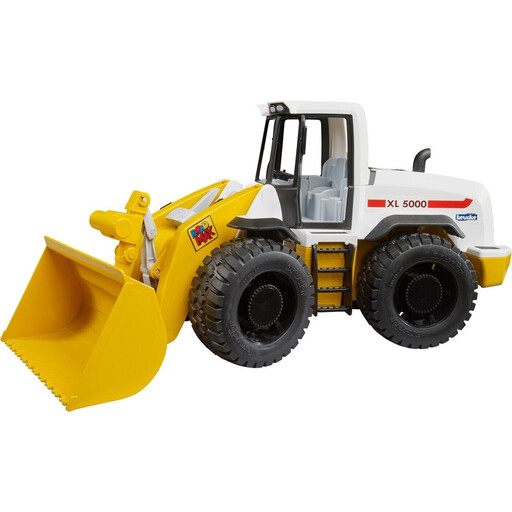
Why This Fits Their Persona: Specifically designed for toddlers, this model is extremely robust and has simple, intuitive controls. The central handle for controlling the loading arm and shovel is perfect for small hands and promotes hand-eye coordination without frustration.
It avoids the trap of being overly complex. Instead of delicate parts, it offers a clear, simple function that is immediately understood. The high-quality ABS plastic withstands drops and use in the sandbox.
Made from durable ABS plastic; simple operation via a central handle; functional articulated steering for good manoeuvrability.

Why This Fits Their Persona: For children and collectors who value realism. This 1:50 scale model combines a robust metal chassis with detailed plastic parts and offers several realistic functions, such as a movable front loader and a swivelling rear backhoe.
The brittle material trap is bypassed by the metal-plastic construction. The joints are designed for repeated play, and the level of detail ensures long-lasting interest, avoiding the "quickly becomes boring" trap.
High stability due to metal and plastic construction; realistic functions (front loader, backhoe); compatible with other SIKU models of the same scale.
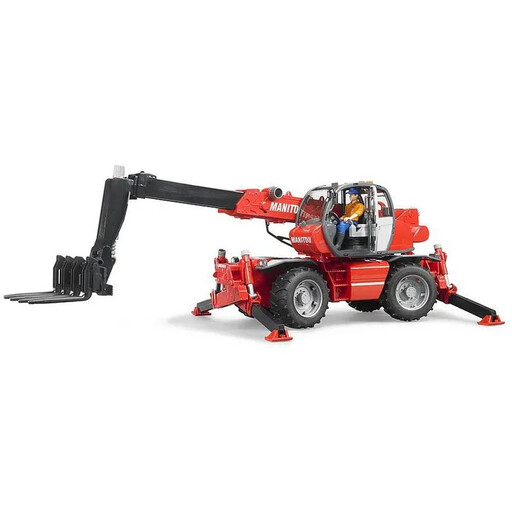
Why This Fits Their Persona: Ideal for older children (ages 4+) who want to act out complex sequences. With its extendable telescopic arm, 360° rotation, and interchangeable tools, this model offers enormous functional variety for demanding play scenarios.
This model avoids the trap of being underwhelming. While complex, its functions are manageable and durable thanks to the robust Bruder construction and child-friendly controls, unlike flimsy, cheap models.
Extensive functions (telescopic arm, 360° rotation); interchangeable attachments for high versatility; sturdy stabilisers for a secure footing.
We've compiled a complete, up-to-date list of products that fully meet these strict selection criteria and rigorous safety regulations.
1. Which construction vehicle toys are suitable for the sandbox? For use in the sandbox, models made of high-quality, UV-resistant plastic like ABS plastic are the right choice. Make sure the toy has no electronics, no rusting metal parts, and no paper stickers. Vehicles from brands like Bruder are generally designed for outdoor use and can be easily cleaned with water after playing.
2. What does the scale mean on Siku or Bruder construction vehicles? The scale describes the size ratio of the toy to the real vehicle. A scale of 1:16 (typical for Bruder) means the model is 16 times smaller than the original. These models are very large and ideal for playing with. A scale of 1:87 (typical for Siku) means the model is 87 times smaller. These are much more compact and are well-suited for collecting and for detailed play worlds.
3. From what age is a crane toy appropriate? Simple, robust plastic cranes with a hand crank are often suitable for children from 3 years old. Models with more complex functions like an extendable telescopic arm, a cable winch, and stabilisers (e.g., from Siku or Bruder) require more fine motor skills and technical understanding. These are generally recommended for children aged 4 or 5 and up, as they can then fully utilize the functions without getting frustrated.