
Lieferung heute & morgen

Qualitätsgarantie

Willkommens-Angebote freischalten: KOSTENLOSE Lieferung | Bis zu 80 % RABATT | Kostenlose 30-Tage-JoyPlus-Testphase
App herunterladen
The selection of construction vehicle toys is vast and, at first glance, impressive. From detailed toy excavators to mighty toy trucks, the shelves and online shops are filled with models that make children's eyes light up. But that joy can quickly fade when the expensive gift ends up in a corner, proving to be impractical, fragile, or unsuitable for the child. As a Joybuy Product Recommendation Officer, I see every day which products deliver long-term satisfaction and where the typical pitfalls lie.
Before you make a decision, you should be aware of the three most common traps that lead to disappointment:
To find a durable and suitable construction vehicle for kids, you should focus on objective features. These three criteria are crucial for quality and play value.
A robust toy must withstand the rigours of the playroom and the sandbox. Pay attention to the following points:
The fascination of construction vehicle toys lies in imitating reality. The more realistic functions a model offers, the more intense and creative the play becomes.
The manufacturer's age recommendation is more than just a formality. It indicates whether the complexity and sturdiness of the toy are appropriate for a child's motor and cognitive skills. A good toy for ages 3 and up has rounded edges and no easily detachable small parts.
The scale defines the size of the model in relation to the original:
Instead of making a one-size-fits-all recommendation, we have selected models tailored to specific needs and age groups.
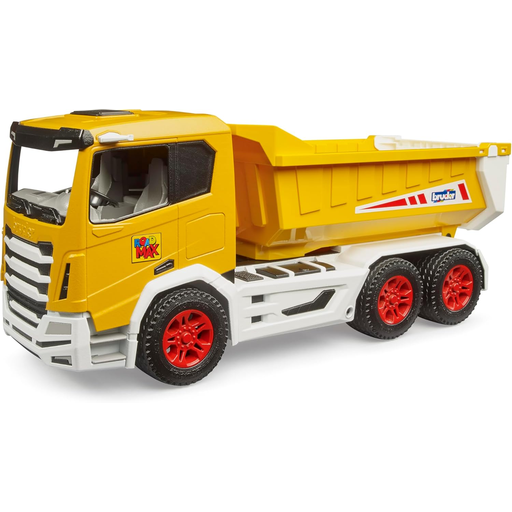
Why This Fits Their Persona: This model is specifically designed for the needs of toddlers. It has rounded shapes, no small parts that can be swallowed, and a very simple, intuitive tipping trough. Ideal as a first construction vehicle.
It bypasses the trap of complexity and fragility. The construction from high-quality ABS plastic is extremely robust and deliberately avoids delicate, easily breakable parts or electronics.
Officially suitable for children aged 2 and up; very stable design for indoor and outdoor use; simple, functional tipping trough.
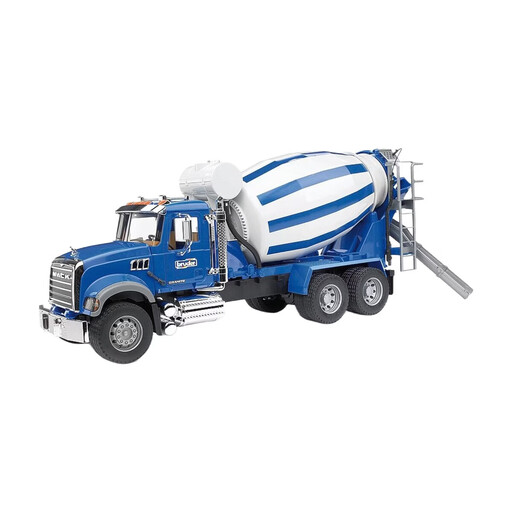
Why This Fits Their Persona: For children who love realistic functions. This large-scale 1:16 concrete mixer toy features a drum that can be turned by a hand crank, a fold-out concrete chute, and many authentic details like opening doors.
The impressive functions are purely mechanical, making them durable and easy to understand. Instead of short-lived electronics, Bruder focuses on well-engineered, robust mechanics made from high-quality plastic.
Functional mixing drum with crank drive; highly detailed 1:16 scale design; made in Germany.
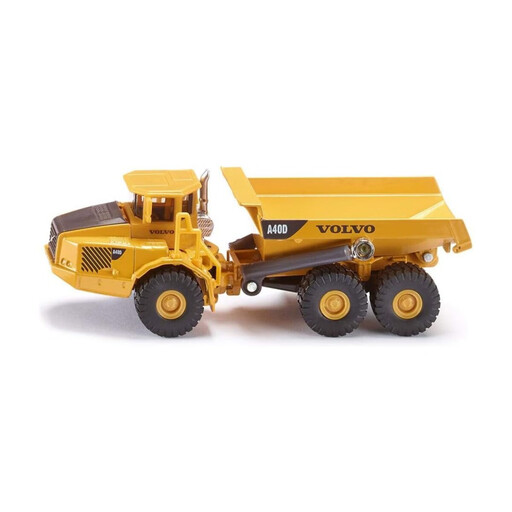
Why This Fits Their Persona: Perfect for anyone who wants to build an entire SIKU construction site. The uniform 1:87 scale allows for the combination of countless vehicles. The high metal content also makes it attractive to collectors.
This model avoids the misleading size trap with its clearly defined 1:87 scale. The robust construction of metal and plastic also promises high durability that surpasses that of all-plastic models.
High metal content for stability and a premium feel; articulated joint and tipping trough; part of the extensive SIKU world in 1:87 scale.
We have compiled a complete, up-to-date list of products that fully meet these strict selection criteria and rigorous safety standards.
Look for robust ABS plastic, which is known for being flexible and break-resistant. For a more premium feel and greater stability, models with a high proportion of metal parts, like those often found from SIKU, are a great choice. Regardless of the material, the finish is crucial: there should be no sharp edges or burrs.
The scale indicates the size ratio of the toy to the real vehicle. A model in 1:16 scale means the toy is 16 times smaller than the original. These are typically large, detailed models. A scale of 1:87 (the classic H0 model railway scale) results in significantly smaller, more collector-friendly vehicles. The choice of scale is important for compatibility with existing toys and figures.
A remote-controlled truck can be a great gift for boys and girls, but it requires a certain level of motor coordination. Most manufacturers recommend such models for children aged 6 or 8 and up. For younger children (e.g., under 5), the controls are often too complex, and the delicate technology can be damaged by rough handling. In this case, mechanically operated vehicles are often the better choice.