
Lieferung heute & morgen

Qualitätsgarantie

Willkommens-Angebote freischalten: KOSTENLOSE Lieferung | Bis zu 80 % RABATT | Kostenlose 30-Tage-JoyPlus-Testphase
App herunterladen
Construction vehicle toys need to work reliably in a child’s bedroom, in the sandpit or on the carpet. In practice, it’s not just the price that can lead to a disappointing purchase: unsuitable age recommendations, delicate parts and the wrong size can all be an issue. So, if you’re choosing a toy excavator, toy wheel loader or construction vehicle for a child, check a few technical details before you buy.
A model may look appealing to a younger child, but still contain small detachable parts. Shovels, trailer couplings, figures and accessories can pose a choking risk for children under three. The age recommendation on the product page is therefore an important factor when choosing a toy, but it does not replace adult supervision.
Many collector’s models look realistic, but aren’t necessarily designed for regular play in the sandpit or garden. Metal parts can heat up or become misshapen if dropped, while moving plastic components can be damaged by rough handling. It’s not just about appearance: the construction, wheel size and type of moving parts all matter.
A driving or sound module can be fun, but it also means extra maintenance. Batteries need replacing, electronic parts often must not come into contact with water, and the volume may not suit every home. Manual construction vehicle toys with a moving shovel or excavator arm, on the other hand, are ready to use straight away and don’t need batteries.
For children aged two and over, choose larger models with easy-to-grip controls and as few detachable small parts as possible. One example is a wheel loader with a central handle designed for little hands. Models for children aged three or four and over often offer more features, but may also include smaller accessories.
Look out for:
The EN 71 toy safety standard and CE marking are important formal indicators. However, they don’t replace checking whether the specific model is suitable for your child’s stage of development and intended use.
A 1:16 construction vehicle is considerably larger than a model in 1:32 or 1:50 scale. Scale affects how easy a toy is to handle, how much storage space it needs and whether it’s compatible with accessories. A vehicle measuring around 40 to 50 centimetres in length will take up a fair amount of space in a child’s bedroom and will be used differently in the sandpit from a small metal model.
For active role play, consider the following:
Plastic models are usually lighter and can be cleaned with a damp cloth after play. Metal-and-plastic models often put the emphasis on realistic looks. Whatever the material, check the joints, shovels and wheels regularly for cracks, loose parts and restricted movement.
A tractor with a front loader can be a good choice for farm and construction play, provided it can be fitted with implements or trailers. With construction toys for children, such as a LEGO excavator, it’s worth distinguishing between the building process and the play that follows. These sets are generally aimed at older children and contain lots of small parts.
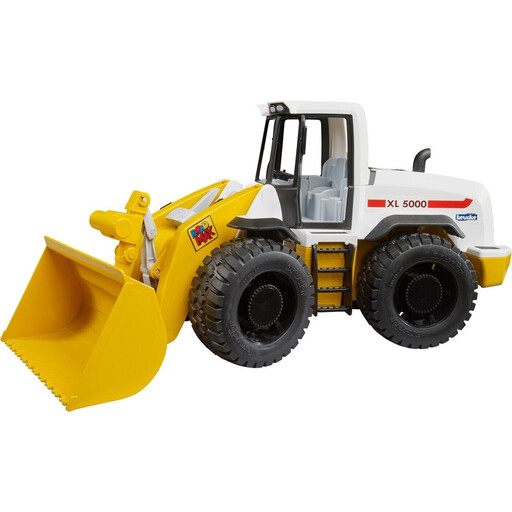
Why this product suits this play need: Designed for children aged two and over, this model doesn’t need batteries and has a central handle for operating the loading arm and shovel.
Its large design and manual controls reduce reliance on batteries and hard-to-reach controls.
46 cm long, with treaded tyres, articulated steering and a moving shovel for indoor and outdoor play.
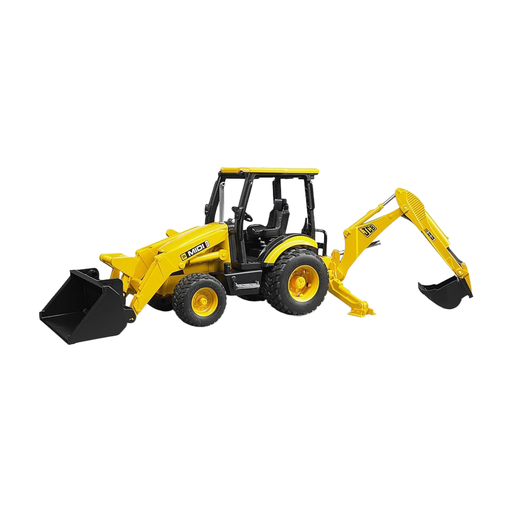
Why this product suits this play need: This 1:16 model combines a front loader and backhoe in one vehicle and is designed for children aged three and over.
The features are operated mechanically, and the detachable backhoe unit and folding supports are clearly described.
1:16 scale, dimensions of 41,1 × 12,2 × 16,8 cm, a oscillating axle and a compatible seat for bworld figures.
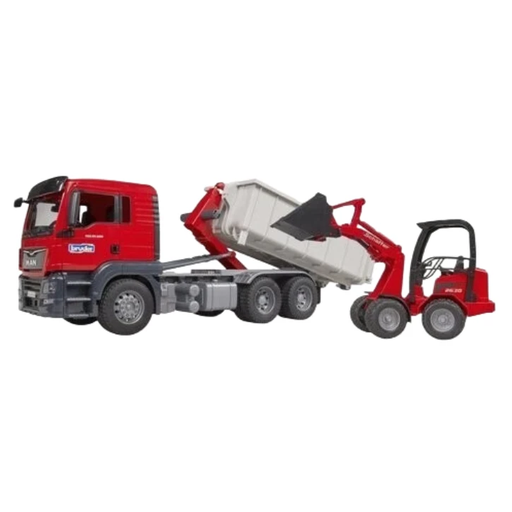
Why this product suits this play need: This set is aimed at children aged four and over who want to play out transporting, loading and unloading as part of one complete construction site scenario.
The set includes a lorry, tipping container and articulated loader; optional light and sound modules are clearly stated as sold separately.
1:16 scale, a cab that rotates 360 degrees, a crane arm and a container with swinging doors.
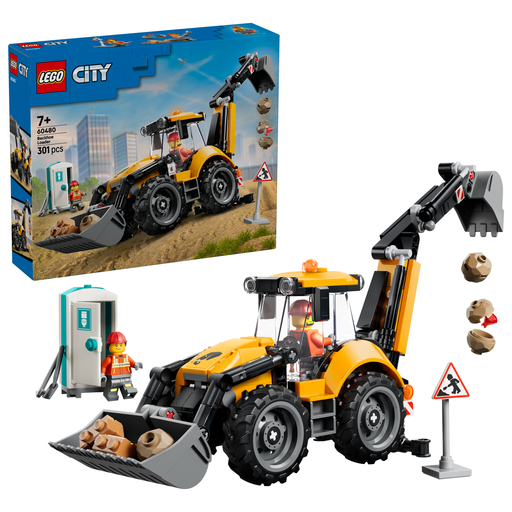
Why this product suits this play need: This set, for children aged seven and over, combines building a vehicle with construction site role play afterwards.
The product description specifies 301 pieces, two minifigures and a clear age recommendation, so you can get a feel for the build before buying.
Working front bucket, moving backhoe, stabiliser legs and digital building support through the LEGO Builder app.
We’ve put together a complete, regularly updated list of products that meet these strict selection criteria and fully comply with the safety regulations in force in the EU.
Larger, manually operated models with few detachable small parts are a good choice. A wheel loader with an easy-to-grip control can suit this age group. Even so, always check the specific age recommendation, warnings and condition of the toy before use.
Remove sand and dirt after outdoor play, wipe plastic parts with a slightly damp cloth and let the model dry completely. Check moving joints regularly for looseness. Electronic vehicles should never be put in water and should be stored according to the manufacturer’s instructions.
It depends on the material, features and what’s included. Large 1:16 models usually offer more easy-to-handle features, but take up more space. Small metal models in 1:32 or 1:50 scale need less room and may appeal to collectors, but they also contain small parts and aren’t automatically suitable for younger children.