Which buying criteria matter in a cookery class?
First, check that the cooking area will fit the slices you’re planning to cook, and decide whether you want to grill with the lid open or closed. Then consider how important adjustable heat, easy cleaning and space-saving storage are to you.
| What matters |
What to look for when buying |
Who is it important for? |
| Cooking area for the class |
Compare the plate dimensions with the size of your slices and available workspace; distinguish between the usable area when open and when closed. |
If I want to grill several slices for the group at once, I’ll consider the cooking area and potential number of batches together. Around 36% of consumers put throughput first. |
| Adjustable heat |
Check the exact model for a manual mode or adjustable thermostat; only use recipe timings under the conditions they specify. |
If I want to account for slice thickness and the desired browning during the class, the right heat controls are important. Around 29% of consumers put heat control first. |
| Cleaning between batches |
Check separately whether the plates and drip tray are removable and whether they’re dishwasher-safe. |
If I need to use the grill repeatedly and clean it between stages of the class, I’ll want to know how easy the plates and drip tray are to clean. Around 21% of consumers put cleaning first. |
| Space and features |
Compare the appliance dimensions and the space needed to open it with your work area; only factor in features you’ll use in the class. |
If my kitchen has limited worktop or storage space, I can weigh up extra batches against choosing a more compact appliance. Around 14% of consumers prioritise a small footprint and a streamlined set of features. |
Contact grills at Joybuy
Contact grills for cooking aubergines in batches during a cookery class – with the lid closed or an opening cooking surface.
 No image available
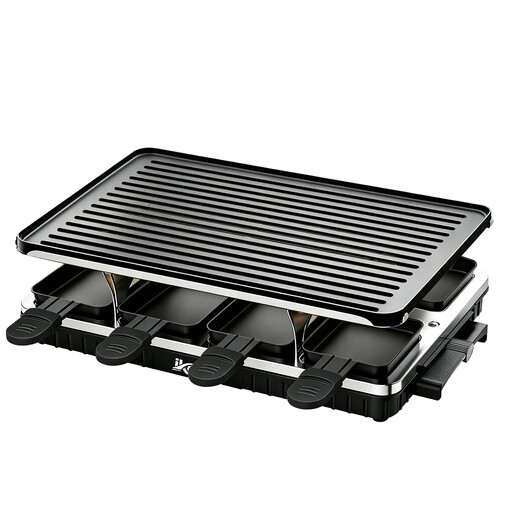
MAWIRON RT506 contact grill, 800 W, with 8 metal grilling plates
The closed design and stated plate area make this grill suitable for cooking in batches; compare the area with the size of your slices.
Cooking area: 37 × 25 cm. The plates are described as non-stick.
View at Joybuy
 No image available
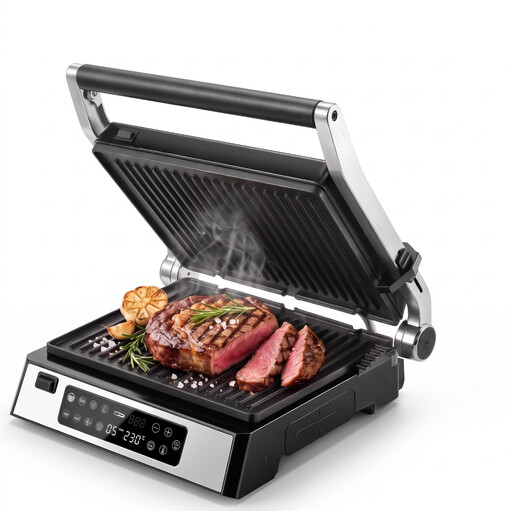
FOHERE 4-in-1 contact grill, 2,200 W, silver, with 4 removable plates
The opening cooking surface is an option if participants want to turn slices side by side. When open, the slices won’t be heated from above and below at the same time.
Manual temperature control: 80 °C to 230 °C. The grill opens to 180°; all four plates are removable and dishwasher-safe.
View at Joybuy
 No image available
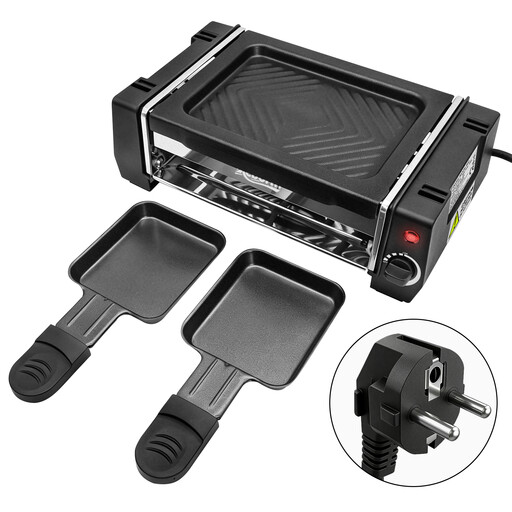
MAWIRON RT508 contact grill, 800 W, with 2 metal plates
The compact plate area may suit smaller quantities; if you’re cooking several portions for a class, allow for extra batches.
Plate area: 25.5 × 14 cm. The plates are non-stick and heat from above and below at the same time.
View at Joybuy
Contact grills for cookery classes: frequently asked questions
How should I plan aubergine slices for a class session?
Compare the slices you’ve cut with the plate dimensions and allow for several batches if needed. A Tefal recipe for the OptiGrill Connect recommends slices 1.5–2 cm thick and a grilling time of 3–5 minutes after preheating. These timings apply to the preparation described and are not a set cooking time for other appliances or quantities.
Does a contact grill for a cookery class need to open flat?
No, not if you want to grill the slices between two plates and the specific appliance is designed for that. If the group needs to turn slices on an open surface, the model must explicitly support open grilling; Severin says the KG 2394 does not.
What should I consider when cleaning the grill and preparing other ingredients?
Check the cleaning instructions for the specific appliance, as removable plates are not automatically dishwasher-safe. If you’re also handling raw animal products, the German Federal Institute for Risk Assessment recommends careful kitchen hygiene to prevent germs from spreading to ready-to-eat food via hands, utensils or surfaces.
What’s the difference between statutory rights and a guarantee?
Your statutory rights apply against the retailer; a guarantee is a separate, voluntary promise. The consumer advice centre recommends first making a claim against the retailer under your statutory rights if a product is faulty. If the manufacturer offers a guarantee, check its specific terms.
Which labelling and disposal rules apply to an electric contact grill?
Electrical equipment covered by the EU Low Voltage Directive, including appliances rated at 50–1,000 V AC, must meet its requirements. After assessing conformity, the manufacturer applies the CE marking. This is a declaration by the manufacturer, not a general independent quality mark. The stiftung ear explains that retailers with the relevant obligation must accept an old appliance free of charge on a one-for-one basis when you buy a new appliance of the same type; not every retailer has the same take-back obligation.


