
Lieferung heute & morgen

Qualitätsgarantie

Willkommens-Angebote freischalten: KOSTENLOSE Lieferung | Bis zu 80 % RABATT | Kostenlose 30-Tage-JoyPlus-Testphase
App herunterladen
A contact grill promises quick, versatile, and uncomplicated meals—from crispy paninis and juicy steaks to grilled vegetables. However, the market is flooded with appliances whose real-world performance often fails to live up to their advertising claims. Before you make a decision, it's crucial to understand the typical weaknesses that often only become apparent after the purchase.
This guide will walk you through the three most common pitfalls when buying a contact grill and highlight the technical features you should look for to find a device that truly meets your needs.
Many devices lure customers with attractive prices and long feature lists. In practice, however, three specific flaws often lead to frustration and render the appliance useless.
The Cleaning Trap: Fixed Plates and Poor-Quality Coatings A device advertised as "easy to clean" can quickly turn into a nightmare. If the grill plates are permanently fixed, cleaning is cumbersome and unhygienic. Burnt-on food residue in the grooves is difficult to remove without damaging the non-stick surface. A damaged coating causes food to stick even more and can significantly shorten the appliance's lifespan.
The Heat Problem: Uneven Cooking A common issue with budget-friendly models is insufficient or uneven heat distribution. The result: the sandwich is burnt on the outside but still cold on the inside, and the steak is more steamed than grilled. This is often due to low wattage or poorly designed heating elements that can't maintain a constant, high temperature across the entire grilling surface.
The "3-in-1" Myth: Limited Versatility Many devices are marketed as a 3-in-1 electric grill but, in reality, only offer the functionality of a basic sandwich maker. True versatility requires more than just two heating plates. A rigid hinge cannot accommodate thickly filled paninis or steaks, and without the ability to open the unit completely flat, its use as a tabletop grill for the whole family is not an option.
To avoid the problems mentioned above, you should base your choice on three objective criteria. These define the actual performance and user-friendliness of a contact grill.
The grill plates are the heart of the appliance. Look for the following features:
The power, measured in watts, determines how quickly the grill heats up and how well it maintains the temperature.
The mechanical design determines the grill's versatility.
Based on the criteria above, we have compiled a selection of devices suitable for different user profiles and budgets.
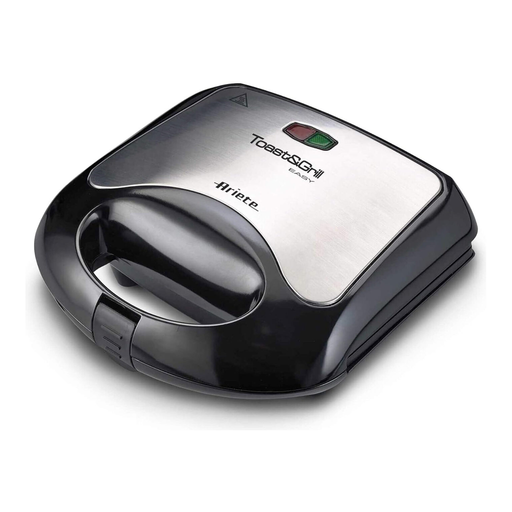
Why This Fits Their Persona: Ideal for students or small households looking for a straightforward appliance primarily for sandwiches and paninis. The compact design is space-saving, and its operation is self-explanatory.
The device avoids the cleaning trap for simple use cases with a solid non-stick coating. It doesn't promise high-end steak performance, focusing instead on its core competency as a panini grill.
Compact design with vertical storage capability; simple operation with an indicator light.
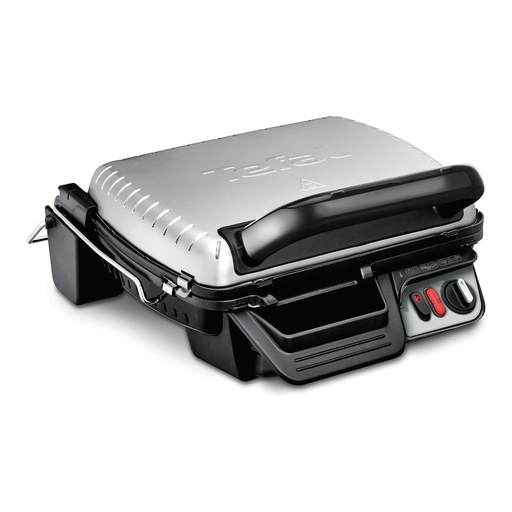
Why This Fits Their Persona: For users seeking a powerful and flexible appliance for daily use. Ideal for preparing meat, vegetables, and sandwiches without compromising on performance or cleaning convenience.
Solves all three core problems: The removable, dishwasher-safe plates ensure easy cleaning. The 2000 watts of power and adjustable thermostat provide even heat. The 180° opening turns it into a true 3-in-1 tabletop grill.
High power for a perfect sear; true 3-in-1 functionality (contact grill, panini press, tabletop grill); maximum cleaning convenience.

Why This Fits Their Persona: Perfect for families or ambitious home cooks who need a large grilling surface, precise control, and maximum power. The separate temperature controls for each plate allow for simultaneous cooking of different foods.
Addresses the heat problem at a high level with embedded heating elements and two separate thermostats for precise temperature control. The dishwasher-safe plates and large drip tray solve the cleaning problem even with heavy use.
Separately adjustable temperature for top and bottom plates; very large grilling surface; high power of 2000 watts for perfect grilling results.
We've compiled a complete, up-to-date list of products that fully meet these strict selection criteria and UK safety regulations.
Cleaning is more challenging with fixed plates. After use, let the appliance cool down slightly, but not completely. Place a damp paper towel between the plates and close the lid for a few minutes. The resulting steam will loosen most of the residue. Afterwards, you can carefully clean the plates with a soft sponge and a little dish soap. Be careful not to let any water get inside the appliance.
A high and consistent heat is crucial for searing steaks. We recommend a power output of at least 1800 watts, ideally 2000 watts or more. Lower-wattage devices tend to lose temperature upon contact with cold meat, which causes the steak to steam rather than grill.
Generally, yes, but the result heavily depends on the appliance. For optimally grilled vegetables, an adjustable thermostat is a major advantage. This allows you to set a medium temperature that cooks the vegetables without burning them. A floating hinge is also useful for evenly cooking thicker vegetable pieces like bell pepper halves or zucchini slices.