
Lieferung heute & morgen

Qualitätsgarantie

Willkommens-Angebote freischalten: KOSTENLOSE Lieferung | Bis zu 80 % RABATT | Kostenlose 30-Tage-JoyPlus-Testphase
App herunterladen
A contact grill can prepare sandwiches, paninis, burgers, meat and vegetables whatever the time of year. For many households, however, an electric contact grill does more than replace the traditional outdoor barbecue: it can also partly replace a sandwich maker or panini press. That is why it is worth taking a close look at the technical specifications and cleaning system before buying.
Anyone looking to buy a contact grill will often come across marketing claims that say little about day-to-day use. It is not just a question of high wattage. The key is how the grill surface, temperature control, plate material and ease of use work together.
A 2000-watt contact grill or more can heat up quickly. However, wattage primarily describes the electrical power consumption. It does not automatically indicate how evenly the heat is distributed or how well the appliance maintains its temperature.
For occasional sandwiches, a model rated at 750 to 1000 watts is often sufficient. If you want to prepare several portions, steaks or thicker paninis, you are more likely to benefit from a larger grill surface and stable temperature control.
A non-stick coating can make it easier to remove food. Even so, fat, cheese and marinades can collect in hard-to-reach areas when the plates are permanently fitted. Check whether the plates can be removed and whether the manufacturer explicitly states that they are dishwasher-safe.
A contact grill that may only be wiped clean with a damp cloth requires more manual cleaning after use than a contact grill with removable plates and a removable drip tray.
Compact appliances take up little storage space, but naturally offer less cooking room. A grill surface of around 22 × 14 cm is mainly suitable for one or two smaller sandwiches. For families or several burgers, look for larger surfaces, such as 28 × 22 cm or around 600 cm².
A fixed temperature is sufficient for toast and simple sandwiches. For meat, vegetables and paninis of different thicknesses, a contact grill with temperature control is more versatile. Rotary dials or digital controls with clearly marked temperature settings are particularly practical.
Depending on the model, product specifications range from fixed temperatures of around 200 °C to adjustable ranges such as 60 to 230 °C or 120 to 270 °C. A wider temperature range gives you more control, but it does not replace following the relevant cooking times and preparation instructions.
Depending on its design, a 3-in-1 contact grill can be used as a closed contact grill, an open electric table grill or, in some cases, in an oven position. Opening the grill to 180 degrees increases the usable cooking area, but requires more space on the worktop.
Reversible plates with a smooth side and a ridged side are suitable for different cooking methods. An adjustable-height upper plate is useful if thick paninis, burgers or filled sandwiches are regularly on the menu.
Look for a removable drip tray, non-slip feet, heat-insulated handles and easily accessible controls. A dishwasher-safe contact grill is only genuinely convenient if the plates and drip tray are specifically stated to be dishwasher-safe.
The housing, cable and mains plug must not be immersed in water. Before cleaning, switch off the appliance, unplug it from the mains and allow it to cool down completely. Metal utensils or abrasive cleaning products can damage coated plates.
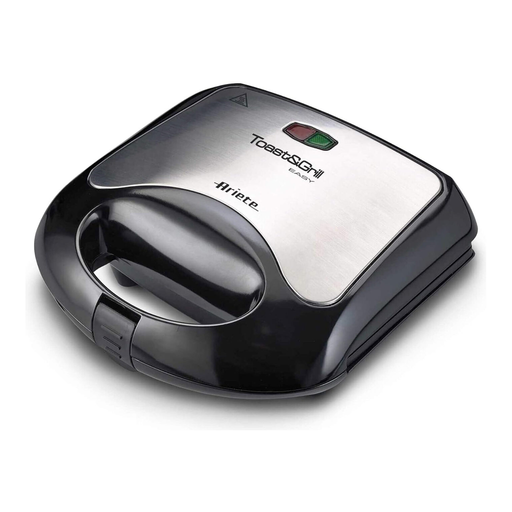
Why this product suits this profile: This compact appliance is designed for smaller kitchens and occasional sandwiches or paninis. The grill surface measures 22 × 14 cm, while vertical storage saves space.
The 750-watt power consumption is not paired with an oversized grill surface. This keeps its intended use clear: smaller portions and straightforward cooking.
Non-stick plates, heat-resistant handle, indicator lights and locking system.
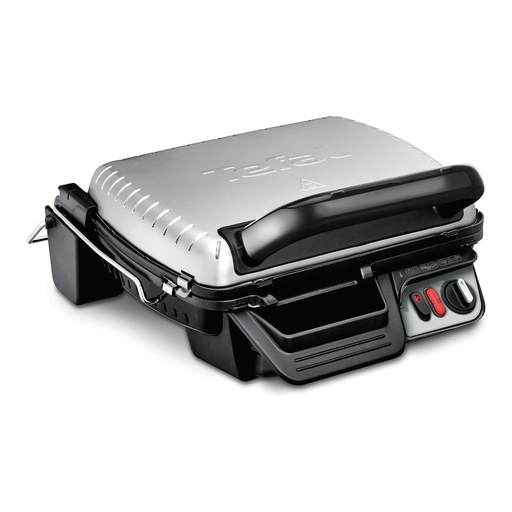
Why this product suits this profile: The model can be used closed as a contact grill or fully opened as an electric table grill. Three thermostat settings and a temperature indicator support controlled cooking.
The 180-degree opening clearly expands its possible uses, rather than relying solely on a vague multifunctional label.
2000 W, removable non-stick plates and a removable, dishwasher-safe drip tray.

Why this product suits this profile: The large 36.5 × 36 cm surface and separate temperature controls for the upper and lower plates are suitable for frequent, versatile cooking.
The power rating is supported by specific features: adjustable temperatures from 60 to 230 °C, a timer and separate heating zones.
Reversible smooth and ridged plates, a 1- to 99-minute timer, drip tray and upright storage.
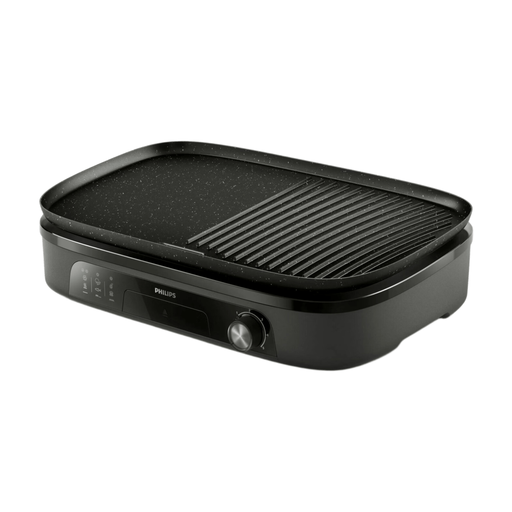
Why this product suits this profile: The 1250 cm² grill surface provides room for several ingredients. Five power settings and an adjustable thermostat support different recipes for everyday family cooking.
The high power consumption is paired with a specified grill surface, two cooking zones and adjustable temperature control.
Removable plates and drip tray, stated in the product specifications to be dishwasher-safe; plus automatic shut-off and a child lock.
We have put together a complete, regularly updated list of products that fully meet these strict selection criteria and the safety regulations applicable in the EU.
For toast and occasional sandwiches, 750 to 1000 watts is often sufficient. For larger portions, meat and faster preheating, models rated at 1600 to 2400 watts are common. However, wattage alone is not enough to base your choice on. You should also consider the grill surface, temperature control and heat distribution.
They make cleaning much easier, particularly after cooking with melted cheese or fatty foods. The product specifications must explicitly state whether the plates are dishwasher-safe. The housing itself must never be cleaned under running water or immersed in water.
The cost depends on the power rating, how long you use the appliance and your electricity tariff. As a guide: power consumption in kilowatts × operating time in hours × electricity price per kilowatt-hour. A 2000-watt appliance running for 15 minutes consumes 0.5 kWh mathematically. Preheating and the actual heating phases can affect consumption.