
Lieferung heute & morgen

Qualitätsgarantie

Willkommens-Angebote freischalten: KOSTENLOSE Lieferung | Bis zu 80 % RABATT | Kostenlose 30-Tage-JoyPlus-Testphase
App herunterladen
A contact grill can replace several appliances in a small kitchen: it toasts sandwiches, heats paninis, grills vegetables and, depending on its design, can also cook burgers or steaks. However, not every model makes a good everyday purchase. Marketing terms such as “multifunctional”, “healthy” or “particularly powerful” reveal little about how the appliance will actually perform.
If you want to buy an electric contact grill, there are three common pitfalls you should avoid:
What matters, therefore, is whether the design, grilling surface and cleaning requirements suit your cooking habits.
For singles or couples, a surface of around 22 × 14 cm may be sufficient. If you regularly cook for several people, you should plan for larger plates. Models with surfaces of around 28 × 22 cm or more provide additional room for several ingredients, but also require more worktop space.
An appliance with a hinged lid can usually be stored in a space-saving way. If the grill opens fully to 180 degrees, it can be used as a tabletop grill. This is useful for larger paninis, vegetables or several portions, but requires a sufficiently wide work surface.
Wattage alone is not a reliable measure of quality. A 750-watt sandwich maker may be sufficient for toast, while a larger contact grill with 2,000 to 2,400 watts heats up more quickly and takes less time when preparing larger quantities.
More important are:
The term health grill, on the other hand, is not a uniformly defined technical category. It should not be interpreted as indicating any medical or health benefit. Specific features such as fat drainage, removable plates and the ability to cook with little additional oil are more meaningful.
A contact grill with removable plates is often easier to clean in everyday use than an appliance with permanently installed grilling surfaces. Also check whether only the plates, or the fat collection tray as well, can go in the dishwasher.
With a non-stick coating, you should not use metal turners or abrasive sponges. Even a dishwasher-safe plate should be cleaned according to the manufacturer’s instructions. The main unit, cable and plug must not be immersed in water.
For safety, a heat-resistant handle, non-slip feet and a stable base are also important. Make sure the power supply is suitable for 220 to 240 volts and use the appliance on a dry, heat-resistant surface.
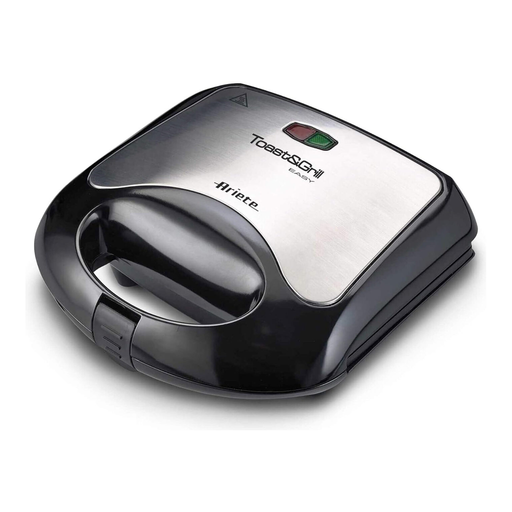
Why this product suits this profile: This compact model has 750 W of power and a grilling surface measuring 22 × 14 cm, making it suitable for households that mainly want to prepare sandwiches and paninis.
The product information clearly states the grilling surface, power rating, indicator lights and non-stick coating. This makes it easier to assess whether the capacity is sufficient for your household.
Compact dimensions, vertical storage, heat-resistant handle and ready indicator.
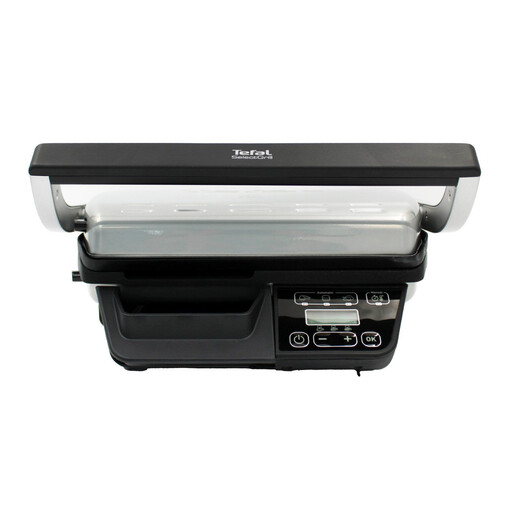
Why this product suits this profile: If you want to prepare steaks, burgers, poultry and sandwiches using different settings, this model offers several automatic programmes as well as a manual temperature range.
In manual mode, the temperature can be set from 120 to 270 °C. The product also features a digital time display, removable plates and a removable drip tray.
2,000 W, three automatic programmes, a manual temperature range, and dishwasher-safe plates and drip tray.
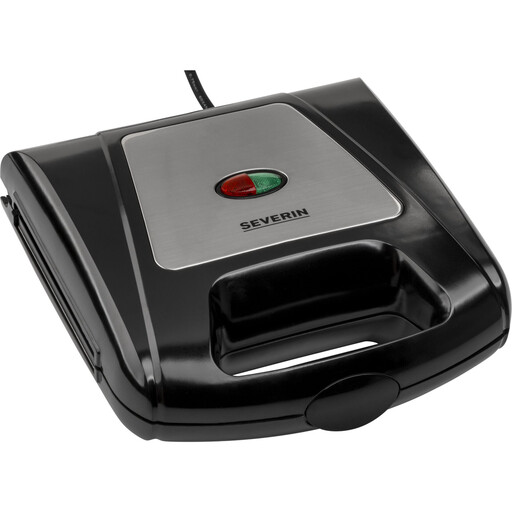
Why this product suits this profile: This 3-in-1 appliance is designed for users who want to prepare sandwiches, grilled dishes and Brussels waffles with a single space-saving appliance.
The three interchangeable plate sets are clearly specified. This allows buyers to check in advance whether the function they want is actually included, rather than relying solely on the term “multifunctional”.
Sandwich, grilling and waffle plates, 1,000 W, ready indicator and upright storage.
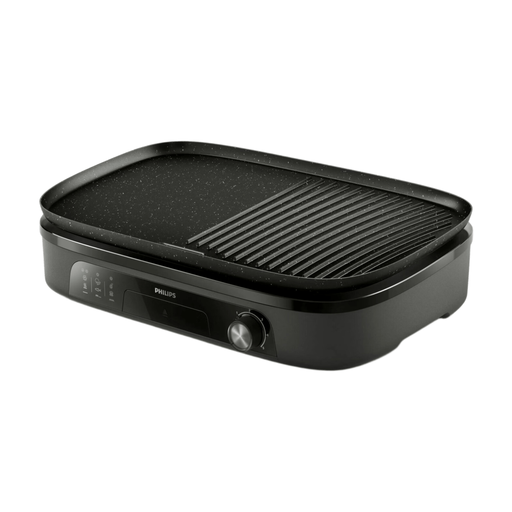
Why this product suits this profile: The stated grilling surface of 1,250 cm² and two usable grilling zones provide a suitable basis for family meals, vegetables and several sandwiches.
In addition to the larger surface, the product features five power levels, a removable grill rack, a drip tray and dishwasher-safe parts.
2,400 W, five power levels, two cooking zones, automatic shut-off and dishwasher-safe components.
We have put together a complete, regularly updated list of products that fully meet these strict selection criteria and the safety regulations applicable in the EU.
Before using the appliance for the first time, clean the plates according to the instructions and place the appliance on a stable, heat-resistant surface. When using a non-stick coating, kitchen utensils made from wood or heat-resistant plastic are more suitable than metal ones.
Energy consumption depends on the power rating and the actual operating time. In theory, a 2,000-watt appliance uses 2 kWh when operated continuously for one hour. In practice, the heating phase is usually shorter and the grill is switched off between portions. For a realistic assessment, operating time, preheating time and automatic shut-off are therefore more important than wattage alone.
After use, allow the contact grill to cool down completely. Then remove the plates and drip tray, provided this is permitted according to the instructions. Clean the casing with a slightly damp cloth. Burnt-on residue and harsh cleaning products can damage the coating.
For toast and individual paninis, appliances from around 750 watts are often sufficient. For steaks, several portions and large grilling surfaces, models with 1,600 to 2,400 watts are generally more practical. Power should always be considered together with the grilling surface and temperature control.
Yes, provided that the plates are large enough and the lid can accommodate foods of different heights. An adjustable temperature is particularly useful for steaks. For thin sandwiches, a fixed temperature with a ready indicator is often sufficient.
It is not possible to give a reliable fixed lifespan. Among other things, it depends on how often the appliance is used, how it is cleaned, how the non-stick coating is treated, and the quality of the hinges and cables. Allowing the appliance to cool down regularly before cleaning and using suitable utensils can reduce wear.