Preparing lunchboxes in advance
If you’re preparing chicken and vegetables for several working days, usable tray space and a practical cooling routine are important.


Choose your oven based first on the usable tray area, the space available for a built-in or freestanding appliance, and how many shelves you want to use at once. A built-in oven with a stated multi-level cooking function is an option if you have a suitable housing unit; if not, a freestanding convection oven may suit you, provided the tray dimensions and available worktop space are right. Also compare the stated energy consumption and how much cleaning is involved. For poultry, the German Federal Institute for Risk Assessment recommends a core temperature of at least 70 °C for two minutes. You’ll need to plan separately for cooling and transporting your lunch portions.
If you’re preparing chicken and vegetables for several working days, usable tray space and a practical cooling routine are important.
If a built-in oven isn’t an option, the space you have available and the actual internal and tray dimensions will determine which model is right for you.
If you often prepare meals in advance, it’s worth weighing up energy consumption and cleaning against the features you want.
First, check that your tray and the quantity you want to cook will fit in the oven. Then consider the installation requirements, heating method, energy use and cleaning in relation to your day-to-day needs.
| What matters when buying | What to check | Who is this important for? |
|---|---|---|
| Space and batch size | Check the internal and tray dimensions, what’s included and which shelf levels can be used. | If I’m preparing several lunch portions in one go, usable tray space matters to me. Around 33% of consumers put space and batch size first. |
| Appliance type and kitchen space | For built-in appliances, check the housing dimensions; for freestanding models, check the external dimensions and placement instructions. | If there’s no suitable space for a built-in oven, I need an appliance that can be positioned safely and still fit my tray. Around 27% of consumers prioritise choosing the right type of appliance. |
| Cooking chicken safely | Check whether the model includes a core temperature probe or requires a separate suitable thermometer; keep raw and ready-to-eat ingredients separate. | When I prepare poultry, I want to check that it has reached a safe temperature in the centre, then cool the portions promptly. Around 20% of consumers prioritise being able to check that chicken is cooked safely. |
| Energy use and cleaning | For ovens covered by the energy label, compare kWh per standard cycle for fan-assisted cooking, oven capacity and cleaning method. | If I use the oven regularly, I want to weigh up its energy consumption against the effort involved in cleaning it. Around 20% of consumers prioritise running costs and cleaning. |
For household ovens covered by the EU energy label, it shows, among other things, the average energy consumption per standard cycle for fan-assisted and conventional cooking. The Verbraucherzentrale (German consumer advice centre) points out that the appliance’s actual energy consumption is what matters. The label value isn’t a measurement of how much energy your particular tray bake will use.
Ovens with several stated shelf levels may allow you to cook multiple trays at once, but that doesn’t guarantee that trays packed with food will cook evenly. Check the instructions for the heating method and the recommended shelf levels for the specific model. The German Federal Institute for Risk Assessment recommends a core temperature of at least 70 °C for two minutes when cooking poultry; the oven alone can’t confirm that this temperature has been reached.
The stated oven capacity alone won’t tell you whether your tray will fit or how much space you’ll have for a meal.
Measure the tray you need and compare it with the internal dimensions and what’s included with the specific model.
If the right tray isn’t included, you may need to buy one separately. If there isn’t enough room, you may have to cook in several batches.
Pyrolytic cleaning can reduce the amount of scrubbing, but the cleaning cycle uses extra electricity. NDR points out that it consumes energy.
Weigh up the cleaning effort and how often you’ll use the oven, rather than treating the feature as an advantage on its own.
The cleaning cycle adds to the electricity used for cooking.
Cooking food safely, cooling it quickly and keeping it chilled during transport are separate steps. An oven programme won’t cool your food.
Check that the chicken has reached a safe temperature in the centre, and plan how you’ll cool and transport it before you start batch cooking.
Built-in ovens, including models with a stated multi-level fan-assisted cooking function.
Built-in ovens, with multi-level fan-assisted cooking listed by the manufacturer for selected models.
Built-in ovens, including models with a fully retractable door.
Built-in ovens, including a model with a stated oven capacity of 72 l.
Freestanding mini ovens, for kitchens without space for a built-in model.
The models below include built-in ovens and a freestanding cooker with fan-assisted cooking for tray bakes. Before choosing, check that you have the right space for installation or placement and that the oven will fit the tray you need.
 No image available
For cooking on several levels, if you have a suitable built-in space.
71 l capacity; 3D Hotair on up to three levels; universal pan; pyrolytic cleaning; 0.69 kWh in fan-assisted mode according to the product description.
 No image available
For fan-assisted tray bakes, if the appliance fits your existing installation.
70 l capacity; fan-assisted cooking on several levels according to the product description; AquaClean; energy efficiency class A.
 No image available
For cooking on several levels, provided the housing unit and tray dimensions are right.
71 l capacity; 3D Hotair on up to three levels; one baking tray listed; pyrolytic cleaning; 0.69 kWh in fan-assisted mode according to the product description.
 No image available
For larger tray bakes, if the dimensions of your housing unit and tray are a good fit.
78 l capacity; nine cooking functions according to the product title; one baking tray listed; hydrolytic cleaning; 0.72 kWh in fan mode according to the product description.
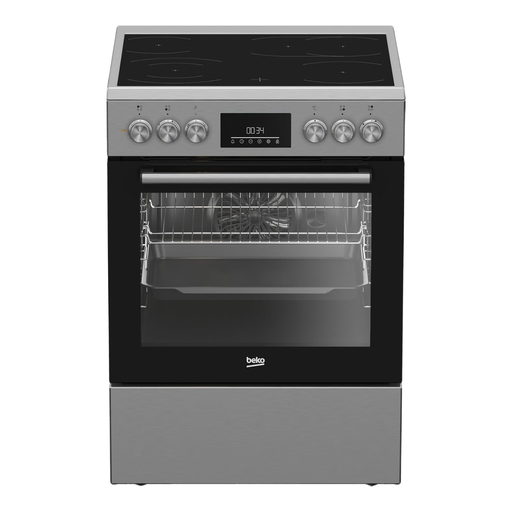 No image available
A freestanding option if you don’t have space for a built-in oven and have enough room to position it.
72 l capacity; fan-assisted cooking with a ring heating element; universal enamel baking tray; SteamShine steam cleaning; energy efficiency class A.
No. The German Federal Institute for Risk Assessment recommends a core temperature of at least 70 °C for two minutes when cooking poultry. Check that the chicken has reached this temperature in the centre, and keep raw meat separate from ready-to-eat ingredients.
The German Federal Institute for Risk Assessment recommends cooling hot food quickly to below 7 °C if you’re keeping it for longer. Perishable foods should be stored in the fridge at 2 °C to no more than 7 °C, and kept chilled when you’re out and about. The oven won’t take care of these steps.
Not necessarily. The European Commission lists small ovens as outside the scope of the household oven regulations referred to here. For ovens covered by the rules, the label shows, among other things, oven capacity and energy consumption per standard cycle for fan-assisted and conventional cooking. These values aren’t a measurement of the energy used for your recipe.
Check the housing or placement dimensions, positioning instructions and connection type against the instructions for the specific appliance. The Bosch HBA272BB3 and Siemens HB572ABS3 are both listed with appliance dimensions of 595 × 594 × 548 mm and an earthed Schuko plug. This doesn’t tell you whether the appliance is suitable for your kitchen installation.
No. According to the Verbraucherzentrale, statutory rights are set out in law and apply in your dealings with the seller; a guarantee is a voluntary offer with its own terms and conditions. If there’s a fault, you should generally ask for the seller to put it right first.