People with one chilly room
If you want to give a room an occasional boost of warmth, match the heater’s power and controls to the room size and insulation. The ADAC classifies convector heaters primarily as supplementary heating.


For occasional extra warmth in a chilly room, a convector heater with suitable controls could be a good option. The right power output depends on the room, its insulation and how long you want to heat it for. If you plan to use it for longer periods every day, compare its electricity consumption with your existing heating, and choose between a freestanding portable model and a suitable wall-mounted option based on space and flexibility. Check the connection, safety clearances and instructions for the specific model.
If you want to give a room an occasional boost of warmth, match the heater’s power and controls to the room size and insulation. The ADAC classifies convector heaters primarily as supplementary heating.
If you want to keep the floor clear, a model designed for wall mounting could be a good fit. If you want to move the heater between rooms, you’ll need a suitable spot for a freestanding model. The manufacturer’s documentation for each model sets out its design and installation method.
If you plan to run the heater often or for long periods, work out the cost based on your expected use and your own price per kilowatt-hour. The Federal Network Agency explains how the unit rate contributes to your electricity bill.
| What matters when buying | What to check | Who it matters most to |
|---|---|---|
| Suitable heat output and controls | Compare the room and its insulation with the specific model’s rated output, heat settings and thermostat. | If I want to warm a chilly room for a while, I need to match the heater’s output to the room and its insulation. Around 33 % of consumers put suitable heat output and controls first. |
| Electricity use for the way you plan to use it | Factor in the power output in kW, actual running time and your own rate in €/kWh; the Federal Network Agency explains the role of the unit rate. | If I plan to use the heater regularly, I want to estimate the electricity costs using my tariff, rather than looking only at the power rating or thermostat. Around 27 % of consumers prioritise ongoing running costs. |
| Safe positioning and connection | Follow the model’s instructions and required clearances; check that the socket and wiring are suitable for the intended use. The German Fire Service Association warns against overloading sockets or drying clothes on heaters. | If furniture, curtains or the connection limit where I can put the heater, I want to check before buying whether it can be used safely in that spot. Around 20 % of consumers prioritise safe positioning and connection. |
| Floor space or portability | Compare the dimensions and feet with the clearance required; for wall mounting, check that it is intended for the specific model and possible in your home. | If I want to keep floor space free in a small room or move the heater to another room, its design needs to suit my space and plans. Around 20 % of consumers prioritise floor space or portability. |
Your electricity bill depends on the heater’s power output, how long it actually runs and your unit rate. A thermostat or a marketing claim is no substitute for working out your own costs.
Calculate a realistic usage scenario using your tariff, and compare longer heating periods with your existing room heating.
A stated room size doesn’t automatically account for insulation, draughts or the temperature you want to reach. The heater may therefore perform differently from what the square-metre figure suggests.
Compare the specific model’s output and controls with your room. Treat stated room sizes as a guide that depends on the conditions.
Furniture and curtains may make it impossible to position a heater with the clearances required by its instructions.
Before buying, check the installation or mounting instructions, the intended connection and the clearance available in the spot where you plan to use it.
The consumer advice centre considers very small plug-in fan heaters unsuitable for heating whole rooms.
Check the type of heater, its stated output and intended use instead of assuming that a compact design will provide enough heat for a room.
Wall-mounted convector heaters for supplementary or occasional heating; the CNS 1000 Plus LCD is a specific example with a 1,000 W output.
Freestanding convector heaters; the TCH 20 E is a portable 2,000 W model with three heat settings.
Portable convector heaters; the HSX2320F is a model with an additional fan.
Convector heaters, including slim wall-mounted models; the HotSpot Wave 1000W is a specific example with a 1,000 W output.
A selection of Joybuy convector heaters for extra warmth in chilly rooms.
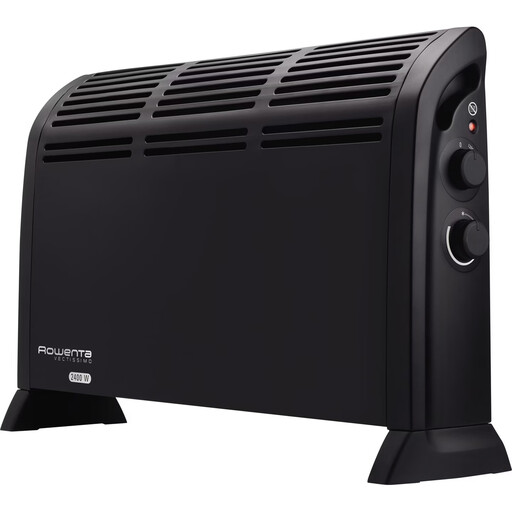 No image available
This freestanding model could suit you if you want to use the heater in different places.
According to the instructions, place it on a stable, level surface and at least 1 m away from flammable materials. Do not use it in the bathroom, near water or outdoors.
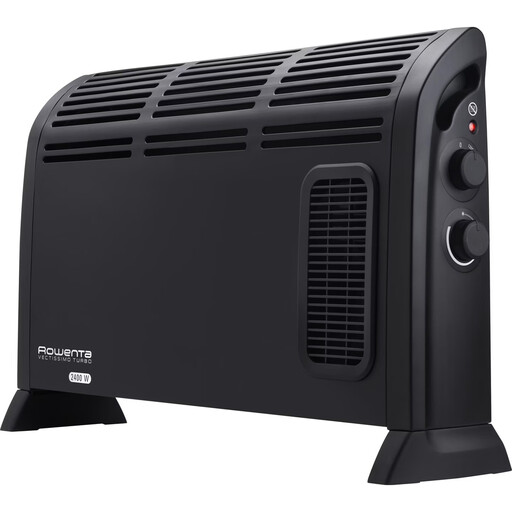 No image available
This freestanding model could be an option if you have a suitable spot for it.
The product name specifies a 1.2 m cable and IP20. According to the instructions, keep it at least 1 m away from flammable materials, do not cover it, and do not use it in the bathroom, near water or outdoors.
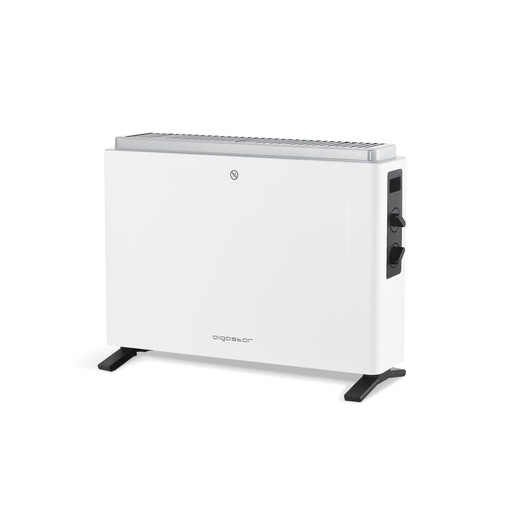 No image available
This portable model could be suitable for occasional warmth in different spots.
The product name specifies 2,000 W, three heat settings and adjustable temperature control. According to the instructions, use it upright, do not cover it while it is running, and do not place it near baths, showers or swimming pools.
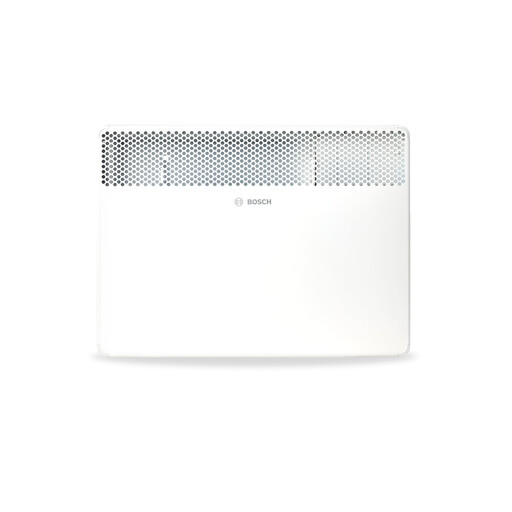 No image available
The stated output may help you choose a heater for a chilly room; check that it is suitable for the room’s insulation and heating needs.
The product details specify up to 15 m², a weekly programme, Eco mode, open-window detection and IP24. The product description says feet for floor-standing use are available separately. Do not cover the heater, and keep it away from curtains and other flammable materials.
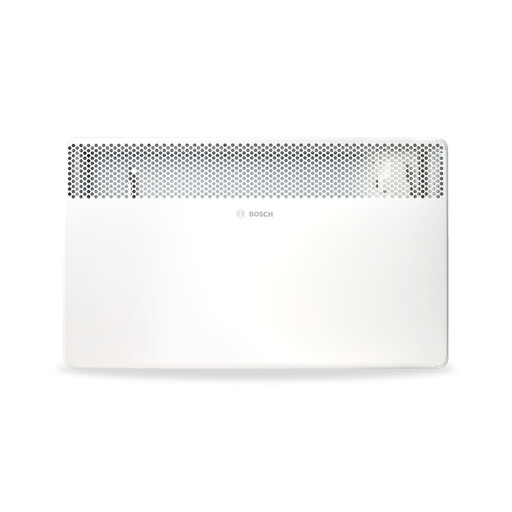 No image available
Consider the stated output alongside the room, its insulation and how long you plan to heat it for, rather than choosing based on the square-metre figure alone.
The product details specify up to 20 m², a weekly programme, Eco mode, open-window detection, child lock and IP24. The product description says feet for floor-standing use are available separately. Do not cover the heater, and keep it away from curtains and other flammable materials.
Multiply the power output in kW at the heat setting you’re considering by the actual running time and your rate in €/kWh. At 2 kW, one hour of continuous use at full power works out to 2 kWh; pauses while the thermostat is off will affect actual consumption. Your own tariff is what matters.
Only if the specific model is designed for wall mounting and it is possible to install and connect it according to its instructions. The manufacturer says the STIEBEL ELTRON CNS 1000 Plus LCD is wall-mounted; that does not mean it is approved for any wall or fixings. If a fixed electrical connection is required, the work should be carried out by a qualified professional.
Keep to the clearances stated in the instructions, do not cover the heater with clothes, and do not use it if the cable is damaged. Read the model’s guidance before cleaning, and disconnect it from the mains as instructed.
For domestic local space heaters within its scope, Regulation (EU) 2024/1103 has generally applied to placing products on the market and putting them into service since 1 July 2025. The specific product determines whether an exception applies and when it was placed on the market. Your Europe explains that the CE marking is the manufacturer’s declaration that the product meets relevant EU requirements; it is not an independent quality mark. Check the details for the exact model.