What should you look for when buying?
First, check the heat loss and how long you plan to use the heater. You can then make a more informed comparison of the controls, design and safe location for use.
| Priority |
What to check when buying |
Who is it most relevant to? |
| Enough warmth |
Take glazing, ventilation and your desired temperature into account when assessing the heat demand, then compare it with the rated output of the specific model. |
If I want to use a cold conservatory occasionally, I need to know whether the heater will provide enough warmth for that particular room. Around 36% of consumers put having enough warmth in their own room first. |
| Ongoing electricity costs |
Factor in your expected heating time and electricity tariff; check whether the thermostat or timer programme suits when you’ll actually use the heater. |
If I use the heater regularly, I want to be able to control how long it runs rather than focusing only on its output. Around 29% of consumers say running costs are their main buying priority. |
| Safe place to use it |
Follow the instructions, check the type of connection and observe the specified clearances; if there may be moisture, check that the specific model is suitable for the location. |
If the heater will be near curtains, furniture or a potentially damp area, I pay particular attention to choosing a suitable, safe place for it. Around 21% of consumers put suitability for the location first. |
| Space and noise |
Compare freestanding and wall-mounted options and the clearance they need; if the heater has a fan, check whether it can be switched off. |
If floor space is limited or I want quiet operation, I look for a design that suits the room. Around 14% of consumers prioritise space, installation or noise. |
Brands and models to consider
The information below relates to the model ranges mentioned and isn’t a general assessment of each brand’s entire range.
STIEBEL ELTRON
According to the manufacturer, the CNS 2000 Plus LCD Move is a freestanding convector supplied ready to plug in, for supplementary or transitional heating. The brand also makes wall-mounted convectors.
- For the CNS 2000 Plus LCD Move specifically, the manufacturer lists 2000 W, a weekly timer, tip-over and overheat protection, and IP24.
- These model specifications don’t prove that its output will be enough for every conservatory.
AEG Haustechnik
The WKL 2005 is a wall-mounted convector for buyers looking for a fixed installation rather than a movable model.
- The manufacturer lists 2,0 kW, IP24 and a weekly timer for the WKL 2005.
- Heaters that aren’t supplied ready to plug in require professional installation. The model number alone doesn’t tell you whether a heater can be plugged into a socket.
Klarstein
The Bornholm Smart 2000W is an option for buyers looking for electronic controls and a weekly programme.
- The manufacturer lists 2000 W and a weekly programme for this model.
- Whether it will provide enough warmth for a particular conservatory depends on the room’s heat demand and how you plan to use it.
De’Longhi
The HSX2320F is a portable convector with an additional fan.
- The manufacturer lists a maximum output of 2000 W, a room thermostat and a fan for this model.
- The manufacturer recommends it for well-insulated rooms or occasional use. This is worth bearing in mind if you plan to use it continuously in a poorly insulated conservatory.
Joybuy products for extra warmth in your conservatory
The following Joybuy models are convector heaters for adding warmth to a chilly room. The selection includes freestanding heaters and models designed for wall mounting.
 No image available
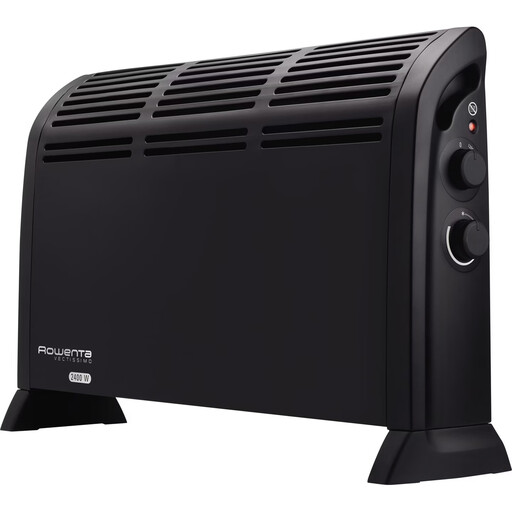
Rowenta Vectissimo, 2400 W, Class II
This freestanding model is worth considering for extra warmth if you’d prefer a portable heater to a wall-mounted one.
2400 W; thermostat-controlled; weighs 4 kg and has a 1,6 m cable, according to the product description.
Joybuy
 No image available
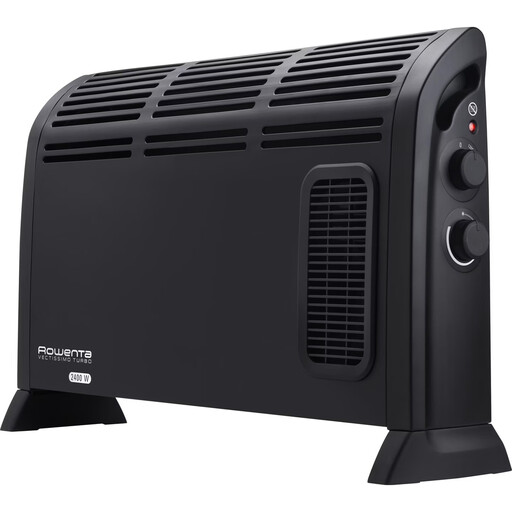
Rowenta Vectissimo II CO3035, 2400 W
The model with Turbo function is worth considering if you want active air circulation and don’t mind the noise of a fan.
Two heat settings, thermostat and Turbo function; designed for indoor use and rated IP20.
Joybuy
 No image available
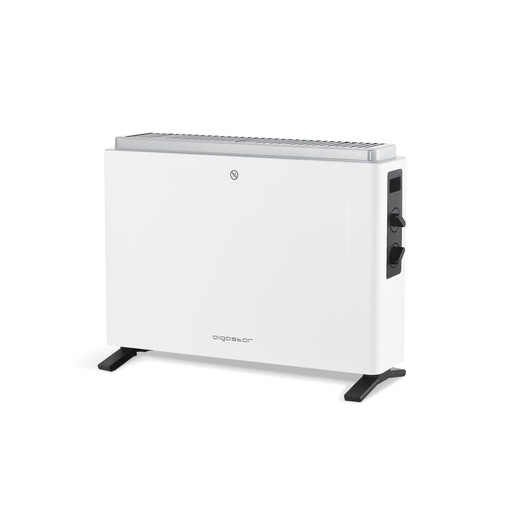
Aigostar convector heater, 2000 W
The remote control and adjustable temperature are useful if you want to operate the heater from a distance.
Three heat settings; LED touch controls, thermostat and timer of up to 24 hours, according to the product description. Overheat and tip-over protection are also listed.
Joybuy
 No image available
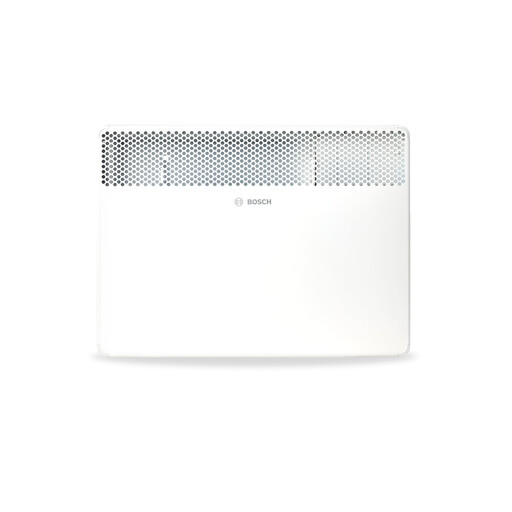
Bosch HC 4000-15, 1500 W
This model may suit buyers who want weekly scheduling and are planning to mount the heater on a wall.
Listed for rooms up to 15 m²; features an LED display, weekly programme, Eco mode, open-window detection and IP24. Feet are sold separately.
Joybuy
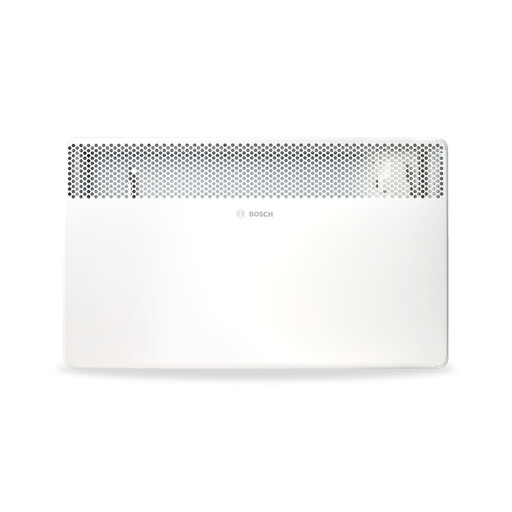 No image available
Bosch HC 4000-20, 2000 W
This model may suit buyers looking for weekly scheduling; the stated room size doesn’t replace checking the heat demand of your conservatory.
Listed for rooms up to 20 m²; features an LED display, weekly programme, Eco mode, open-window detection, child lock and IP24. Feet are sold separately.
Joybuy
Frequently asked questions
How do I work out what output my conservatory needs?
Assess the heat loss in your particular room before choosing the heater’s output. This includes, in particular, the windows, the rest of the building’s envelope and ventilation; a general guide based on floor area isn’t enough for reliable sizing. ENERGIE-FACHBERATER and BauNetz Wissen explain these factors.
How do I position a convector heater safely?
Follow the instructions for the specific model, keep airways clear and observe the specified clearances from curtains and furniture. Don’t dry clothes on the heater. Check the cable and heater for damage. If a wall-mounted model isn’t supplied ready to plug in, it must be installed professionally as specified.
How can I estimate the running costs?
Take the power consumption, actual heating time and your electricity tariff into account. A thermostat and timer programme can limit unnecessary heating, but they don’t change the rated output while the heater is running. The ADAC considers electric heaters more suitable as a supplement.
What product rules apply in Germany, and do I need an energy label?
Since 1 July 2025, electric local space heaters that fall within the scope of Regulation (EU) 2024/1103 and are newly placed on the EU market have been subject to its ecodesign requirements; the European Commission explains when these requirements took effect. According to information from the European Commission, electric local space heaters are exempt from energy labelling for this product group. The absence of such a label therefore doesn’t, in itself, demonstrate non-compliance. These requirements alone don’t establish whether a specific model complies.


