Who is a convector heater at your desk suitable for?

People who only need extra warmth from time to time

If you want to warm up a small room occasionally while you work, a convector heater could be a useful supplementary heat source. The ADAC considers convector heaters better suited as a supplement than as a typical primary heating source.

People with limited floor space

If there’s no suitable place for a freestanding heater near your desk, you could consider a wall-mounted model. The German Fire Service Association warns of the risks posed by damaged cables and visible scorch marks, so installation and positioning should follow the instructions for the specific model.

Regular home workers

If you often work from home, check the power consumption, thermostat and operating time against your electricity tariff. A weekly timer can limit heating times when set appropriately; Stiebel Eltron lists this feature for the CNS 1000 Plus LCD model.

What should you consider when choosing one?

What you need What to check before buying Who it matters most to
Suitable supplementary heat Check the rated output, heat settings and thermostat. Consider the manufacturer’s room-size guidance only in light of the conditions specified. If I only want to warm up a small room occasionally while working at my desk, the right power output matters more to me than a general room-size claim. Around 31% of consumers prioritise extra warmth.
A safe position Check the installation or positioning instructions, required clearances and the condition of the cable. If it’s freestanding, check that it has tip-over protection. If there’s little space around furniture and walkways, I want to be able to position the heater safely beside my desk. Around 25% of consumers prioritise a safe position.
Ongoing electricity costs Calculate the cost using your own tariff: output in kW × actual operating hours × price per kWh. Don’t assume thermostat breaks guarantee a fixed saving. If I regularly use heating while working from home, I want to estimate the cost of actual use in advance. Around 25% of consumers consider ongoing costs their most important selection factor.
Working without distractions Check whether the heater has a fan or whether one can be switched on, and whether the controls suit your daily routine. If I’m easily distracted by noise at my desk, I want a suitable setting without a disruptive fan. Around 19% of consumers prioritise quiet working and straightforward controls.

Common selection mistakes

  • Assuming an electric heater is cheap to run continuously

    The ADAC considers electric heaters better suited as a supplementary heat source. For longer periods of use, electricity costs depend on the actual power consumption, operating time and your tariff.

    Base your calculations on realistic working hours and your electricity price, rather than comparing only the heater’s output or purchase price.

  • Assuming the stated room size applies to every flat

    According to the manufacturer, the room-size guidance for the TESY CN03 100 MIS F applies to well-insulated rooms or occasional use. Insulation and length of use affect whether the guidance is right for your room.

    Compare your room size, insulation and planned operating time with the conditions specified for the particular model.

  • Putting a freestanding heater in a cramped corner by your desk

    In a small room, the heater, furniture, cables and walkways can all compete for the same space. According to the German Fire Service Association, damaged cables or visible scorch marks are a reason not to use the appliance.

    Choose a position in line with the instructions and make sure the appliance is undamaged and placed safely, with enough clear space around it. Tip-over protection is no substitute for safe positioning.

  • Choosing a fan-assisted model for focused work without checking it first

    According to the manufacturer, the De’Longhi HSX2320F has an additional fan. Whether it’s distracting at your desk depends on how sensitive you are to noise and how you use the heater.

    Before choosing, check whether the fan can be switched on separately and what the manufacturer says about the specific model.

Key brands at a glance

Stiebel Eltron

Wall-mounted convector heaters for extra or occasional warmth when floor space is limited and suitable installation is possible.

  • For the CNS 1000 Plus LCD, the manufacturer specifies 1000 W, a weekly timer, frost protection and overheat protection.
  • This model is designed for wall mounting; the installation and connection requirements must be suitable for the location.

TESY

According to the manufacturer, the portable CN03 100 MIS F is designed for occasional use or well-insulated rooms.

  • For this model, TESY specifies 1000 W, a mechanical thermostat, tip-over protection and overheat protection.
  • The manufacturer’s 8–12 m² guidance applies to well-insulated rooms or occasional use.

Trotec

The portable TCH 19 E is an option if you’re looking for a convector heater with several heat settings.

  • The manufacturer specifies up to 2000 W, three heat settings, an adjustable thermostat, frost protection and overheat protection.
  • The stated suitability for rooms up to 24 m² is not an independently measured claim for a particular small flat.

De’Longhi

The portable HSX2320F combines convection with an additional fan for buyers who want extra air circulation.

  • The manufacturer specifies an output of 800–2000 W, as well as a room thermostat and a fan.
  • The fan may be distracting when you’re concentrating at your desk. According to the manufacturer, the appliance is suitable for well-insulated rooms or occasional use.

Convector heaters for warmth at your desk

The Joybuy models below include wall-mountable and freestanding convector heaters for extra warmth at your desk. Before choosing, check that the installation or available floor space suits your room.
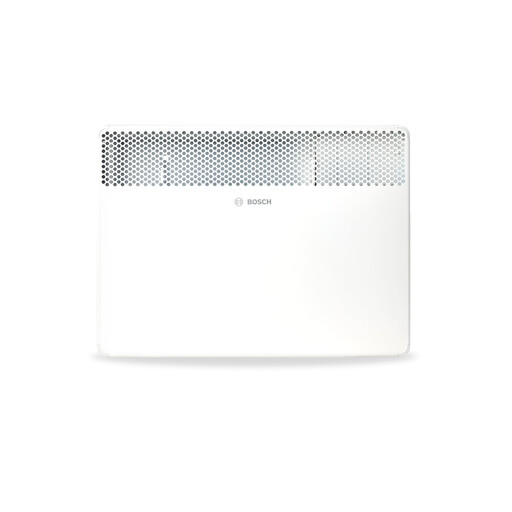
Bosch HC 4000-15 convector heater

Bosch HC 4000-15 convector heater

Wall mounting could be a good option if floor space is limited at your desk.

1500 W; manufacturer’s guidance is for rooms up to approximately 15 m²; LED display, weekly programme, Eco mode, open-window detection and IP24. Feet for freestanding use are available separately.

View at Joybuy
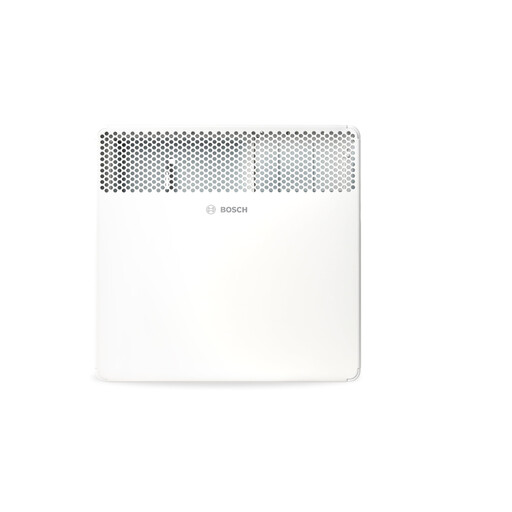
Bosch HC4000-10 convector heater

Bosch HC4000-10 convector heater

This model can be wall-mounted or used with feet, available separately, provided the space is suitable.

1000 W; manufacturer’s guidance is for rooms up to approximately 10 m²; LED display, weekly programme, Eco mode, open-window detection, child lock and IP24.

View at Joybuy
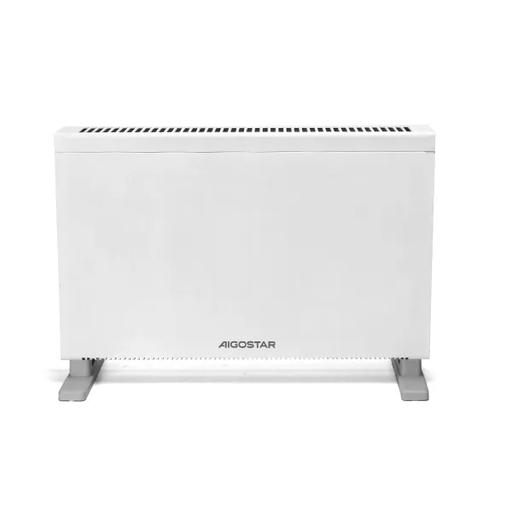
Aigostar 2000 W convector heater with remote control

Aigostar 2000 W convector heater with remote control

A freestanding convector heater could work if you can set up a stable position at your desk with enough clearance around it.

The product name specifies 2000 W, a remote control and a thermostat. The instructions specify a clearance of at least 1 m from furniture, curtains and other objects.

View at Joybuy
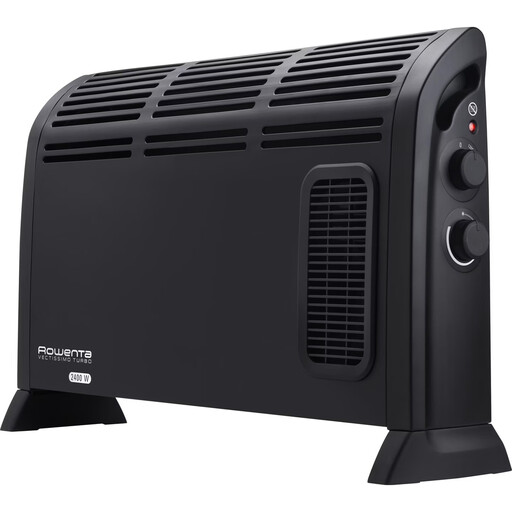
Rowenta Vectissimo II CO3035 convector heater

Rowenta Vectissimo II CO3035 convector heater

As a freestanding appliance, this model is suitable only if you can allow enough safe floor space at your desk.

The product name specifies IP20. The instructions specify a clearance of at least 1 m from furniture and flammable materials.

View at Joybuy

Frequently asked questions

How can I estimate the electricity costs before buying?

Multiply the power consumption in kW by the actual operating hours and your electricity price per kWh. At 2000 W, one full hour of operation at that output uses 2 kWh; thermostat breaks affect actual consumption. The ADAC considers electric heaters better suited as a supplementary heat source.

What should I bear in mind when positioning a convector heater?

Follow the clearance and cleaning instructions for the specific model, and don’t use an appliance with a damaged cable or visible scorch marks. The German Fire Service Association warns about this kind of damage. For a wall-mounted convector heater, the installation and connection must be suitable for the intended location.

Does an electric convector heater need an energy label or a GS mark?

The European Commission exempts electric local space heaters from energy labelling for this product group; ecodesign requirements are separate. According to the Federal Institute for Occupational Safety and Health, the GS mark is not a general guarantee of performance or service life. With CE marking, the manufacturer declares that the product complies with the relevant EU product regulations.

Which ecodesign rules are relevant when buying?

The European Commission explains that the revised Ecodesign Regulation (EU) 2024/1103 includes new provisions that have applied since 1 July 2025. This alone is not enough to determine whether an individual product or listing complies.

Do I need to register a portable electric supplementary heater in Germany?

VDE FNN describes no registration process for the sale and connection of these portable direct-acting heaters. This applies to portable supplementary heaters and is not a general authorisation to make changes to a permanently installed heating system or electrical installation.