What should you consider when buying?
First, decide whether you want to warm the room or mainly want direct heat around your seat. Then compare the installation type, controls and how long you expect to use the heater.
| What you need |
What to check when buying |
Who is this important to? |
| Suitable warmth for the room |
Compare the rated output and control range with the specific room and existing heating. The wattage alone does not determine whether a heater is suitable. |
If I want to warm my hobby room during occasional sessions, the output and controls need to suit how I use it. Around 33% of consumers put suitable additional room heating first. |
| A safe location |
Check the type of installation and the clearances and unobstructed airflow required in the instructions. |
If there is furniture or hobby equipment next to my desk, I want to know whether the planned location is suitable for the specific heater. Around 27% of consumers prioritise space and safe positioning. |
| Electricity consumption |
Take the rated output, actual heating hours and your electricity tariff into account; a thermostat can affect how long the heater runs. |
If I plan to use the heater for longer sessions, I want to be able to estimate the cost using my tariff. Around 20% of consumers place particular importance on running costs. |
| Working in peace and quiet |
Check the full model details to see whether it has a fan. Also consider the controls and dimensions for your intended use. |
If airflow or noise could disturb me while I’m working on a hobby, I want to know in advance whether the heater has a fan. Around 20% of consumers prioritise unobtrusive operation and ease of use. |
Joybuy models for extra warmth
The selection below includes portable freestanding convector heaters, models with an additional fan and one wall-mounted model. Check that the installation type and features of each option suit your desk area.
 No image available
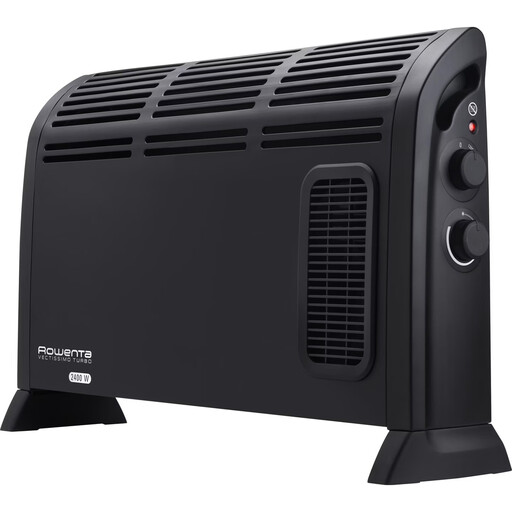
Rowenta Vectissimo II CO3035 convector heater with fan
This freestanding model with a fan may suit you if you’re looking for a portable heater and don’t mind the extra airflow.
The product description requires a clearance of at least 1 m from other objects. The heater is intended for indoor use and not for bathrooms, outdoor areas or near sources of water.
View at Joybuy
 No image available
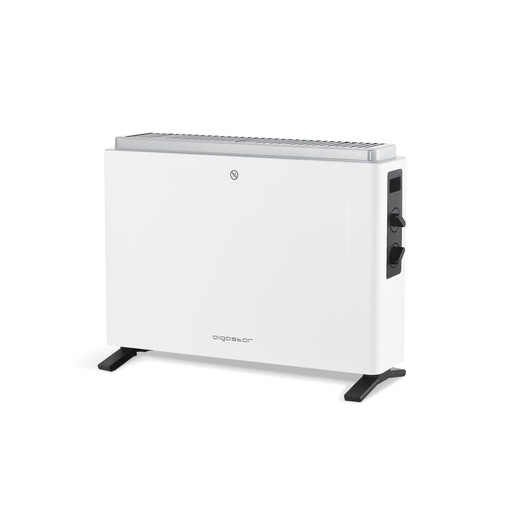
Aigostar convector heater, 2,000 W, 3 heat settings
This freestanding heater is an option if you want to warm the room during your hobby sessions and choose from several heat settings.
The product title lists a 2,000 W output and three heat settings. The product description requires the heater to be used upright and warns against covering it or using it near a bath, shower or swimming pool.
View at Joybuy
 No image available
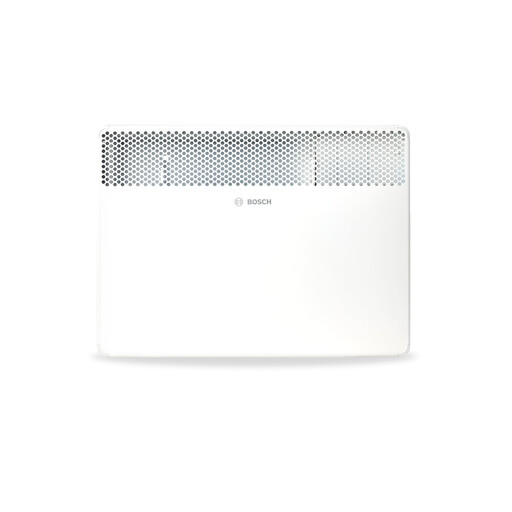
Bosch HC 4000-15, 1,500 W
This model suits a setup with a wall-mounted convector heater and programmable heating times. Feet for freestanding use are available separately.
The product title lists coverage of up to 15 m², a weekly programme, Eco mode and open-window detection. The product description requires unobstructed airflow and clearance from combustible materials.
View at Joybuy
 No image available
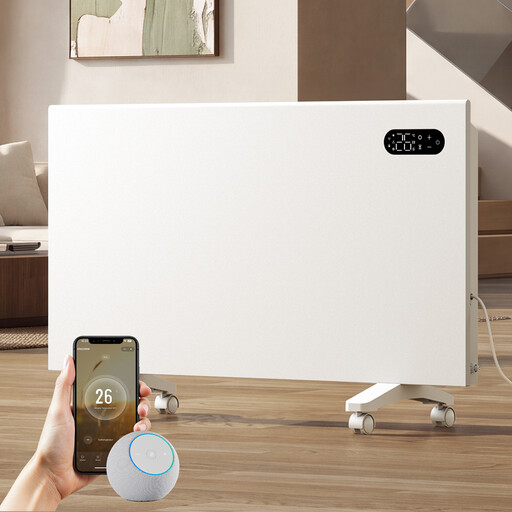
EMKE Smart electric heater, 2,000 W
The product title specifies both freestanding and wall-mounted use, making this an option worth considering for different room layouts.
Features listed include a 2,000 W output, app and voice control, a thermostat and a timer.
View at Joybuy
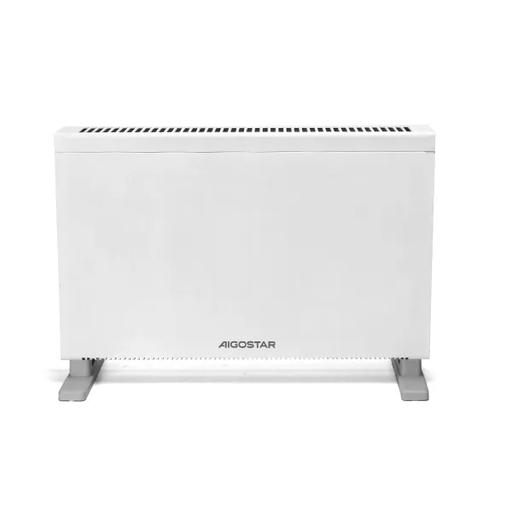 No image available
Aigostar convector heater, 2,000 W, with remote control
This freestanding model may suit you if you want to control a convector heater with a remote and thermostat from your desk.
The product title lists a 2,000 W output and a remote control. The product description requires a clearance of at least 1 m from furniture and other objects, and a stable, heat-resistant surface.
View at Joybuy
Frequently asked questions
How can I estimate the electricity costs of a convector heater?
Multiply the output in kilowatts by the actual number of hours spent on that setting and your electricity price per kilowatt-hour. At 2 kW, one hour of continuous use on that setting works out to 2 kWh; a thermostat that regulates the heat can change the actual running time.
Can I simply put a convector heater under my desk?
Not necessarily. The instructions for the specific model, unobstructed airflow, clearance from other objects and an undamaged electrical connection are all important. Overheat or tip-over protection does not replace these checks.
What should I bear in mind when cleaning and maintaining it?
Follow the instructions for the specific heater and check its condition regularly. Stop using it if the cable is damaged or you can see scorch marks; electrical repairs should be carried out by a qualified professional.
What product rules apply to electric room heaters?
Heaters within the scope of the rules are subject to the ecodesign requirements of Regulation (EU) 2024/1103. The European Commission gives 1 July 2025 as the start date for the new requirements. When considering a specific product listing, look for clear product and manufacturer information, CE marking, and operating and safety instructions in German. The Federal Network Agency explains that the manufacturer declares conformity under its own responsibility when applying the CE marking; this is not a safety inspection of the individual product listing.
Who should I contact if the heater is faulty, and how should I dispose of an old one?
Your statutory rights relating to faulty goods generally apply against the seller; a manufacturer’s guarantee is separate. According to the German Environment Agency, a discarded electric heater must not go in household waste. Take it to a suitable collection or take-back point for waste electrical equipment.


