What should you consider when buying?
Convector heater
A good fit if: you mainly want to warm the air in a small room and have a suitable place to mount or position it.
The trade-off: the heat required and how long you’ll use the heater determine the power you need; a higher rated output may use more electricity per hour at full power.
Infrared heating panel
A good fit if: you mainly need warmth at a particular seat or workspace and can position the panel to face it.
The trade-off: warmth at your seat doesn’t necessarily mean the air throughout the room will be warm enough; depending on the model, you may need a separate controller.
Choosing a heater for a chilly room in a small flat depends on whether you need to warm the whole room, keep running costs predictable, heat a particular seat or have the flexibility to position the heater.
| What matters to you |
What to check before buying |
Who is this important to? |
| Warming the whole room |
Rated output and thermostat; take heat loss through insulation and windows into account. |
If I want to warm the whole room, I’ll compare the heater’s output with the heat required. Around 36% of consumers put having a sufficiently warm room first. |
| Calculating electricity costs |
Rated output in kW, expected hours of use and your electricity tariff. |
If I plan to use the heater regularly, I want to be able to estimate its running costs using my tariff. Around 29% of consumers prioritise ongoing electricity costs. |
| Warmth at your seat |
For infrared: positioning and a clear area in front of the panel; check whether controls are included. |
If I usually sit on the sofa or at my desk, warmth in that spot matters most to me. Around 21% of consumers prioritise targeted warmth while they’re using the space. |
| Flexible positioning |
Intended installation method, appliance dimensions and connection at the planned location. |
If I don’t have a suitable wall space, I need a model specifically designed for freestanding use. Around 14% of consumers prioritise flexible positioning. |
Heaters at Joybuy
The heaters below include infrared panels for targeted warmth and convectors for warming a room. Before buying, check the product information and intended use for the specific listing.
 No image available
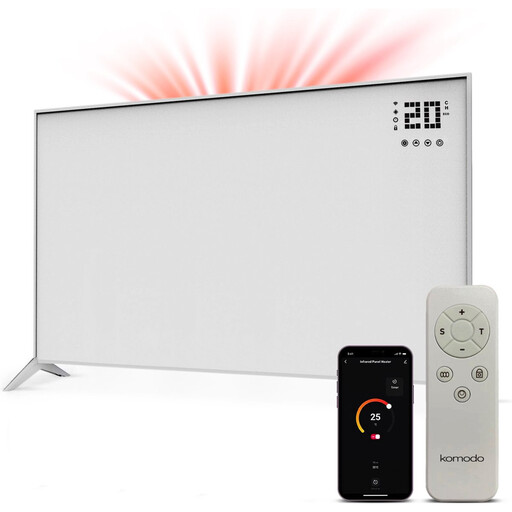
Komodo Blazi infrared heating panel, 800 W, 100 × 80 cm
If you need warmth in a spot you use regularly, this infrared model may be suitable if you can position it correctly.
The product name specifies 800 W, IP24 and suitability for rooms up to 20 m². Wall-mounted or freestanding use is specified. It’s designed for use with an earthed socket; don’t cover the panel while it’s operating, and keep it away from flammable materials.
View at Joybuy
 No image available
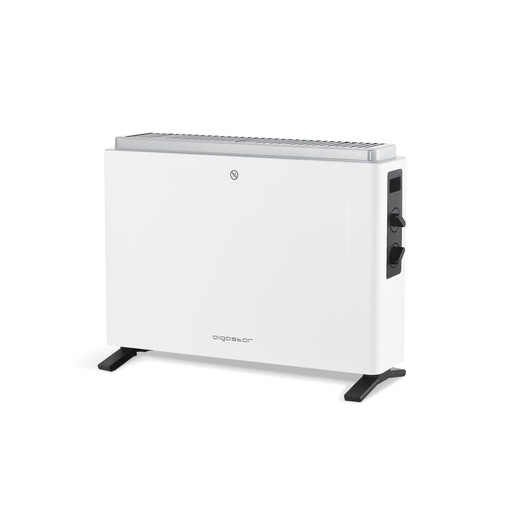
Aigostar convector heater, 2000 W
If you want to warm the air in your room and need a freestanding heater, check that its output and the space available suit your room.
Specifications include 2000 W, three heat settings and thermostat control; the product description gives a room-size range of 10–15 m². The heater should stand upright and must not be used near a bath, shower or swimming pool.
View at Joybuy
 No image available
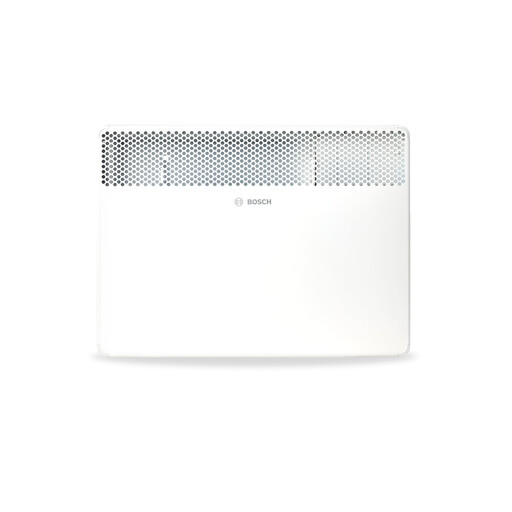
Bosch HC 4000-15 convector, 1500 W
This convector may suit a chilly room if its specified output and installation method meet your heating needs and fit the space available.
The product name specifies 1500 W and a room size of up to 15 m²; an LED display, weekly programme, Eco mode and IP24 are also listed. Wall mounting or freestanding use with feet sold separately is described.
View at Joybuy
 No image available
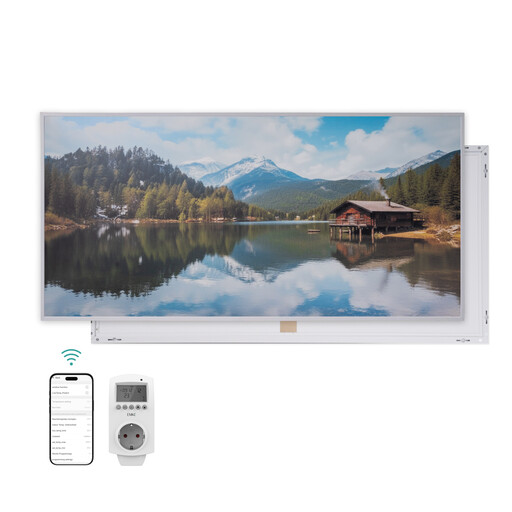
EMKE infrared wall heater, 1200 W, 1195 × 595 mm
If you want to heat a particular living or sleeping area, check that wall mounting and positioning are suitable for the spot you have in mind.
Specifications include 1200 W, a plug-in thermostat, app control and a programmable timer. According to the product description, the surface can reach 85–125 °C during use; mount the heater out of children’s reach and don’t cover it.
View at Joybuy
 No image available
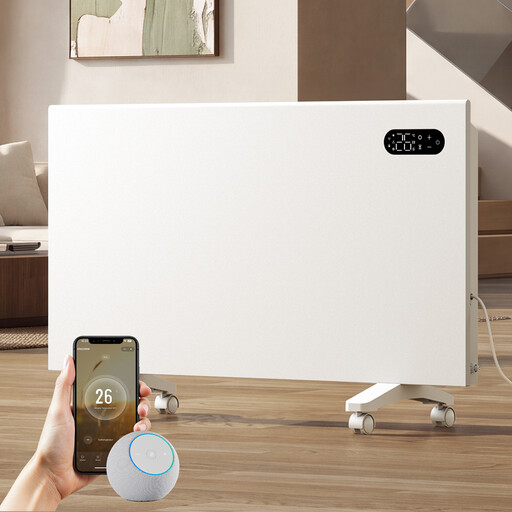
EMKE electric convector, 2000 W
If you’re looking for convector heat for a chilly room, check whether wall mounting or freestanding use suits the space you have in mind.
The product description lists 2000 W, a thermostat, timer, app control and voice control. Frost protection and Eco modes are also specified.
View at Joybuy
Frequently asked questions
How can I estimate electricity costs before buying?
For a full-power estimate, multiply the rated output in kW by the hours of use and your tariff in €/kWh. A 1-kW heater running at full power for three hours uses 3 kWh in theory; periods when the thermostat switches it off will affect actual consumption. The Verbraucherzentrale points out that infrared heaters don’t automatically qualify for a discounted heating electricity tariff.
Which is better: a convector or an infrared panel?
A convector is worth considering if you mainly want to warm the air in the room; an infrared panel may suit you if you mainly need warmth in one particular spot. The key factors are how much heat you need, how long the heater will run and where you place it. Targeted radiant heat doesn’t prove that the whole room will get warm enough.
Does an infrared panel need an additional thermostat?
It depends on the model: ETHERMA describes the basic version of the LAVA BASIC 3.0 as having external controls, while the Könighaus P Series includes models both with and without a thermostat. Check the full product listing and the instructions for the specific model before buying.
What should I bear in mind when positioning and using a heater?
Follow the installation instructions and safety clearances, don’t cover the heater with clothing, and don’t use an appliance if its cable is damaged or there are visible scorch marks. The German Fire Service Association also advises against drying damp clothes on heaters.
Which Ecodesign rules apply to electric room heaters?
For products covered by Regulation (EU) 2024/1103 that are placed on the market from 1 July 2025, its Ecodesign requirements apply; EUR-Lex lists the regulation. A wattage rating alone doesn’t prove that a specific product complies with these requirements. The relevant requirements for electrical product safety and CE marking must also be considered separately.


