
Lieferung heute & morgen

Qualitätsgarantie

Willkommens-Angebote freischalten: KOSTENLOSE Lieferung | Bis zu 80 % RABATT | Kostenlose 30-Tage-JoyPlus-Testphase
App herunterladen
Purchasing a car seat is one of the most critical decisions for your child's safety in a vehicle. A convertible car seat, designed to grow with your child, promises a long-term solution that will accompany them for many years. However, the market is overwhelming and filled with marketing promises. Choosing the wrong model can lead not only to financial loss but also to daily frustration and, in the worst-case scenario, compromised safety.
As your Joybuy Product Recommendation Officer, I'm here to help you understand the crucial criteria and avoid common pitfalls, enabling you to make an informed and lasting decision.
Before we dive into the technical details, let's highlight two common problems that often only become apparent after the purchase:
To avoid these traps, focus on objective, verifiable criteria. These three parameters are non-negotiable for a safe and practical car seat for children.
Look for certification according to the UN R129 standard, better known as i-Size. This isn't just marketing jargon; it's a modern safety standard that imposes stricter requirements than the older ECE R44 regulation.
A car seat with ISOFIX provides a rigid connection between the seat and the vehicle's chassis. The standardised anchor points significantly reduce the risk of incorrect installation compared to securing the seat with the vehicle's belt.
A convertible seat must adapt to your child's changing needs. Look for an easily adjustable headrest and a harness system that adjusts simultaneously. Models that transition from a 5-point harness or impact shield to using the vehicle's seat belt should make this process clear and simple.
Instead of making a blanket recommendation, we have selected models tailored to the specific needs of families.
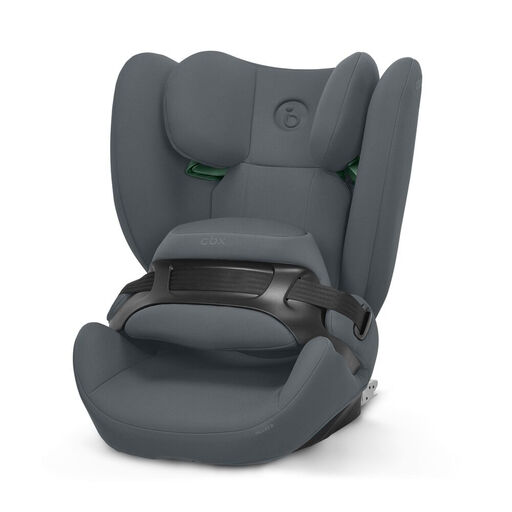
Why this model is a match: Ideal for parents seeking a durable solution starting from the toddler years. The seat covers the period from approximately 15 months to 12 years, offering over 10 years of use.
It bypasses the "one-size-fits-all" trap with its 2-in-1 system. The impact shield is specifically designed for younger children, and the seat later converts into a high-back booster. This avoids ergonomic compromises.
According to the manufacturer, the adjustable impact shield distributes frontal impact forces and can reduce the risk of neck injuries. Simple installation with ISOFIX and a Top Tether.
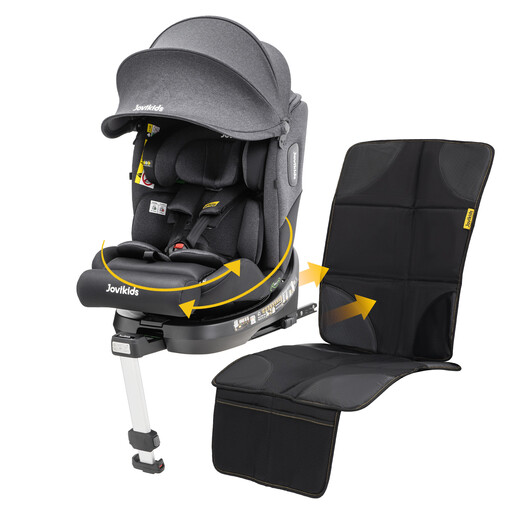
Why this model is a match: For parents who want a single, convenient solution from day one. The 360° rotation feature makes getting the child in and out of the car significantly easier and is gentler on your back.
It tackles the complexity trap with a combination of ISOFIX and a support leg. Once installed correctly, the rotation function is easy to operate with the push of a button, and switching between forward- and rear-facing modes is straightforward.
A 360-degree rotating car seat that covers the entire period of use from birth (40 cm) to 12 years (150 cm). Includes a newborn inlay and an adjustable headrest.

Why this model is a match: A premium option for parents who refuse to compromise on safety and comfort during the first four years. The focus is clearly on the needs of babies and toddlers.
This model deliberately avoids the "one-size-fits-all" trap by specialising in the age group from birth to approx. 4 years. This allows for optimised ergonomics (e.g., a flat recline position) and safety features tailored to this specific age group.
Integrated Linear Side-impact Protection (L.S.P. System) and 360° rotation. The Plus version also features mesh inserts for improved air circulation and greater comfort in warm weather.
We have compiled a complete, up-to-date list of products that fully meet these strict selection criteria and German safety regulations.
The actual lifespan depends on two factors: the model's size and weight limits (e.g., 40–150 cm) and the material's durability. Most manufacturers recommend replacing a seat after about 8 to 10 years, as the material can degrade due to UV radiation and temperature fluctuations. You can usually find the manufacturing date on a sticker on the seat.
Not necessarily. Although i-Size is designed to improve compatibility, it is essential to check the car seat manufacturer's vehicle compatibility list. Factors such as the angle of the vehicle's seats, the position of the ISOFIX anchor points, or the length of the support leg can affect the fit. These lists can be found on the manufacturer's website.
When used correctly, both systems meet high legal safety standards. They employ different approaches to distributing energy in a crash. An impact shield distributes the force of a frontal collision over a larger area of the upper body. A 5-point harness secures the body more tightly in the seat, which can be advantageous in rollovers or complex accident scenarios. The choice is often a matter of what fits the child best and personal preference in handling. Above all, a safe car seat is one that is installed correctly and is a proper fit for the child.