
Lieferung heute & morgen

Qualitätsgarantie

Willkommens-Angebote freischalten: KOSTENLOSE Lieferung | Bis zu 80 % RABATT | Kostenlose 30-Tage-JoyPlus-Testphase
App herunterladen
Choosing a child car seat is one of the most important decisions for parents and grandparents. A convertible car seat grows with your child for many years and must therefore meet the highest standards for safety and comfort, not just today but for years to come. However, given the multitude of models, standards, and features, making the right choice can be complex.
This article serves as a practical guide. We will provide you with objective criteria for your selection and present a range of models that stand out for their durability and safety-relevant features. Our goal is to provide you with an informed basis for your decision.
To find the right seat for your family, a few technical aspects and standards are important.
The latest European approval standard for child car seats is UN R129, better known as i-Size. Unlike the older ECE R44 standard, which is based on the child's weight, i-Size classifies seats by height. This simplifies the process of choosing the right model. Other key features of the i-Size standard include:
A car seat with Isofix is connected directly to the vehicle's chassis via standardized attachment points. This ensures a stable and secure connection. Many seats also use a top tether or a support leg to further minimize rotational movement in an impact. Correct installation is often confirmed by visual indicators, simplifying everyday use.
A seat that is used from 15 months to 12 years must adapt to the changing needs of a growing child. Look for the following features:
Independent organizations like ADAC regularly conduct tests. The results of an ADAC car seat test can provide additional information on safety and handling.
Here is a selection of models that meet various requirements for durability, safety, and comfort.

Why it stands out: The Chicco Mokita i-Size is designed as a purely forward-facing follow-on seat that accompanies a child from approximately 15 months until they no longer require a car seat. It complies with the latest i-Size standard (ECE R129/03) and focuses on simple, secure installation and adaptability.
Pros:
Who is it for? For families looking for a single, durable, forward-facing car seat after the infant carrier, which covers all growth stages up to school age and prioritizes straightforward usability.
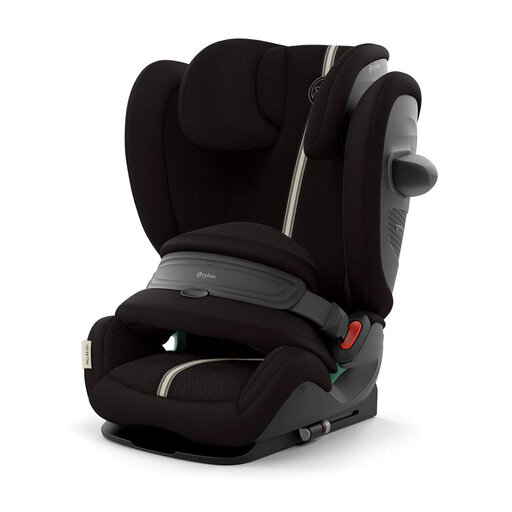
Why it stands out: The Cybex car seat Pallas G3 i-Size is a 2-in-1 seat that uses an impact shield instead of a 5-point harness in the initial stage. According to Cybex, this technology reduces the risk of neck injuries in a frontal collision. The seat later converts into a Group 2/3 booster seat.
Pros:
Who is it for? For parents who prefer the safety concept of an impact shield and are looking for a flexible solution that converts from a toddler seat to a seat for older children.

Why it stands out: The Sirona Gi i-Size is a rear-facing car seat designed for the first four years of life. Its most prominent feature is the 360-degree rotation mechanism, which makes getting your child in and out extremely easy. It also allows for extended rear-facing travel up to a weight of 20 kg.
Pros:
Who is it for? For parents looking for a single seat for the first few years, either from birth or shortly after, who place maximum value on safety (extended rear-facing) and everyday convenience (rotation feature).
This selection represents only a fraction of the available models. Each car seat has specific features that make it suitable for different vehicles, children, and family needs.
If you would like to compare more models or learn about other types of child car seats, you can find a more comprehensive selection in our Baby Car Seats category.
1. How long is a child required to use a car seat in Germany? In Germany, the car seat requirement is in effect until a child turns 12 years old or reaches a height of 150 cm, whichever comes first.
2. What is the main difference between the i-Size (R129) standard and the older ECE R44/04? The i-Size (R129) standard classifies seats based on the child's height, mandates a standardized side-impact test, and requires rear-facing travel until at least 15 months of age. The older ECE R44/04 standard classifies by weight groups and has less stringent requirements for side-impact protection.
3. Can I use a convertible car seat right from birth? That depends on the model. Some convertible seats, like the Cybex Sirona Gi i-Size, are approved for use from birth (from 40 cm) with a special newborn inlay. Other models are designed as follow-on seats and are only suitable from the toddler stage (e.g., from 76 cm or approx. 15 months). It is crucial to always check the manufacturer's specifications for approved height and age.