
Lieferung heute & morgen

Qualitätsgarantie

Willkommens-Angebote freischalten: KOSTENLOSE Lieferung | Bis zu 80 % RABATT | Kostenlose 30-Tage-JoyPlus-Testphase
App herunterladen
Purchasing a child car seat is a major decision that requires balancing safety, longevity, and budget. A convertible car seat is designed to grow with your child for several years, saving you from repeatedly buying new models. However, the market is vast, and the technical details can be overwhelming.
This article serves as your guide. We'll explain the key criteria for choosing the right seat and present a selection of models with various features to help you make an informed decision.
Your Joybuy Product Recommendation Officer
To find the perfect model for your needs, consider three core aspects: the current safety standard, the installation system, and practical everyday features.
The i-Size standard (UN R129) is the latest European safety regulation for child car seats. Compared to the older ECE R44/04 standard, it offers several key advancements:
An ISOFIX car seat features standardised connectors that lock directly onto the vehicle's built-in anchor points. This system offers two significant advantages:
In addition, an ISOFIX car seat is often secured with a support leg or a top tether to prevent rotational movement.
Beyond safety, practical features also play a crucial role. A car seat with 360-degree rotation makes it significantly easier to get your child in and out, as the seat can be turned towards the car door. Other important features include:
Based on the criteria above, we have curated a selection of models that cater to different needs.
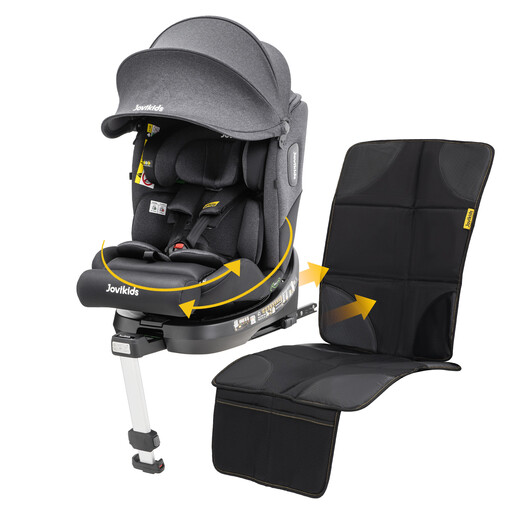
Why It Stands Out: The Jovikids RANGER 2 is designed as an all-in-one solution, covering the entire period of use from birth until a car seat is no longer required. Its 360° rotation and i-Size certification make it a practical and safety-focused choice for your child's entire car seat journey.
Benefits at a Glance:
Who Is This Model For? For parents seeking a single, long-term investment and a car seat for their child up to 12 years old that offers maximum flexibility and the latest safety standards right from the start.
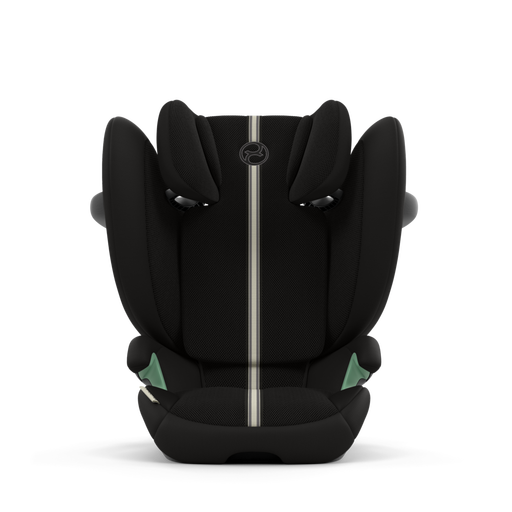
Why It Stands Out: The Cybex Solution G2 I-Fix Plus is a high-back booster seat for older children. It combines advanced safety features, like a patented reclining headrest, with superior comfort thanks to a built-in ventilation system and user-friendly design.
Benefits at a Glance:
Who Is This Model For? For parents looking for a safe and comfortable high-back booster for a preschool or school-aged child, who value trusted brand quality and thoughtful comfort features.

Why It Stands Out: The Cybex Pallas B3 i-Size is a 2-in-1 seat that starts with an impact shield for toddlers and later converts into a Group 2/3 high-back booster for older children. This system offers an alternative form of protection to traditional 5-point harnesses.
Benefits at a Glance:
Who Is This Model For? For parents who prefer the safety concept of an impact shield for the toddler stage and are looking for a durable solution that adapts as their child grows.
This selection represents just a small sample of the available models. Every family's routine and every vehicle has different requirements. If you'd like to compare more options or get a broader overview, you'll find a wider selection in our category.
Discover more models in our comprehensive Child Car Seats category and find the perfect solution for your family.
How long can a convertible car seat be used? The lifespan depends on the specific model. All-in-one seats (Group 0+/1/2/3, or 40–150 cm under i-Size) can be used from birth until a child seat is no longer legally required (12 years or 150 cm in height). Other models, like combination seats (Group 1/2/3, approx. 9-36 kg or 76–150 cm), are designed for toddlers from around one year up to 12 years. Always check the manufacturer's specific weight and height limits.
What does the i-Size (UN R129) standard mean? i-Size is part of the UN Regulation R129, the newer standard for child car seats. Its key features include classification by height instead of weight, mandatory and enhanced side-impact testing, and the requirement for children to travel rear-facing until at least 15 months old.
Impact Shield vs. 5-Point Harness: What's the difference? Both systems are designed to secure young children and function differently.