
Lieferung heute & morgen

Qualitätsgarantie

Willkommens-Angebote freischalten: KOSTENLOSE Lieferung | Bis zu 80 % RABATT | Kostenlose 30-Tage-JoyPlus-Testphase
App herunterladen
Choosing the right car seat is one of the most important decisions a parent can make. A car seat that grows with your child offers a long-term, cost-effective solution that keeps your child safe in the car for many years. However, the vast array of models, standards, and features can make the choice overwhelming. This article serves as a guide, providing objective information to help you make an informed purchasing decision. We focus on facts, technical specifications, and the suitability of various models for different needs.
To make a well-informed decision, several technical aspects and safety features are of crucial importance.
The current European approval standard for child car seats is UN R129, better known as i-Size. Unlike the older ECE R44/04 standard, i-Size classifies seats based on the child's height (e.g., 76-150 cm car seat) rather than weight. A key advantage of the i-Size standard is the mandatory side-impact test, which enhances safety. Independent organisations like the ADAC also conduct their own rigorous tests. A car seat rated as safe in ADAC tests often receives high marks in the categories of safety, handling, ergonomics, and pollutant levels. These results can be a valuable additional source of information.
A car seat with ISOFIX uses standardised anchor points that are firmly connected to the vehicle's chassis. This system minimises the risk of incorrect installation, as the seat simply clicks into the fixtures. Colour indicators usually show whether the connection has been made correctly. Many convertible seats also use a Top Tether strap or a support leg to further increase stability and reduce rotational movement in a frontal impact.
For younger children (often in Group 1, approx. 76 cm to 105 cm), there are two primary restraint systems:
Both systems must meet strict safety requirements to gain approval. The choice often depends on the fit for the child and personal preferences in handling.
Based on functionality, safety features, and durability, we have compiled a selection of models that serve as a car seat for toddlers and children over a long period.
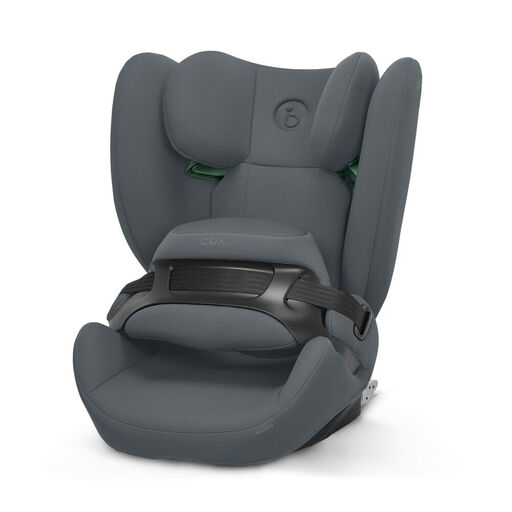
View details for the cybex Pallas B i-Size
Why it stands out: The Pallas B i-Size is designed as a 2-in-1 seat, covering a lifespan of over 10 years. It accompanies children from toddlerhood (from 76 cm) until the car seat requirement ends at age 12. Its central feature is the adjustable impact shield for the younger age group.
Pros:
Who is it for?: For parents looking for a very durable and cost-effective solution who value the protective function of an impact shield.
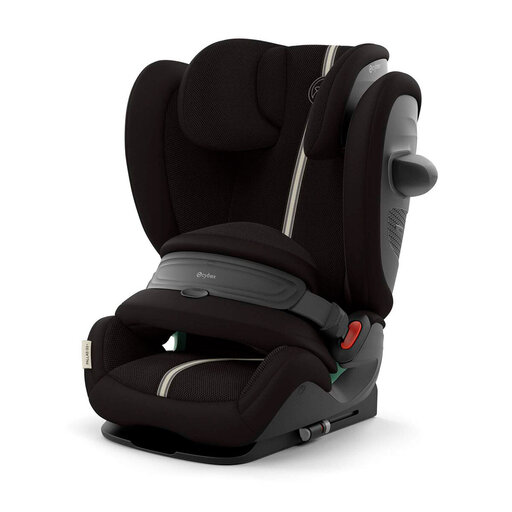
View details for the CYBEX Pallas G3 i-Size Plus
Why it stands out: The Cybex Pallas G3 i-Size Plus builds on the proven impact shield concept and enhances it with advanced comfort and safety features. The Plus version is distinguished by its particularly breathable fabrics and all-round air circulation.
Pros:
Who is it for?: For families who frequently take longer car journeys and therefore place special emphasis on comfort features like ventilation and an easily adjustable recline position.
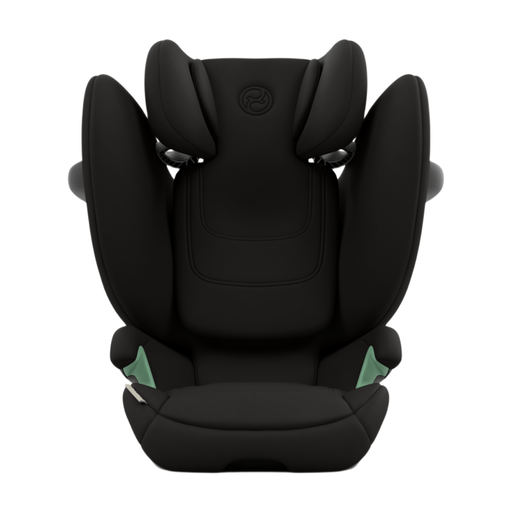
View details for the cybex Solution G2 I-Fix
Why it stands out: The Cybex Solution G2 I-Fix is a booster seat for older children (from approx. 3 years) and the successor to the Solution G i-Fix, which was well-rated by the ADAC. Its special feature is its foldable design, making it particularly flexible for urban life or travel.
Pros:
Who is it for?: For parents of children from approx. 100 cm in height who need a safe and comfortable booster seat that is easy to transport and can be stored compactly.
The choice of the right car seat depends heavily on your vehicle, your child's needs, and your daily routines. If the models presented here do not fully meet your requirements, there are many more options to discover.
Discover more models in our Car & Travel Accessories category.
A convertible car seat, often referred to as a Group 1/2/3 car seat, covers multiple age and size groups. It can be adapted to the growing child through adjustable elements like the headrest, harness system, or impact shield. This allows a single seat to be used from after the infant car seat stage until the end of the car seat requirement at 12 years of age (or 150 cm in height).
Both systems are designed to keep the child securely in the seat in the event of an accident. An impact shield distributes the impact energy over a large area of the upper body in a frontal collision. A 5-point harness secures the child at the strongest parts of their body (shoulders and pelvis) and directs the forces into the seat shell. Both systems undergo identical approval tests and offer a high level of safety when used correctly. The decision is often a matter of fit and comfort for the child.
Most convertible seats in this category are approved for children from approx. 15 months, a height of 76 cm, and a minimum weight of approx. 9 kg. They are the next step after the infant car seat (Group 0+), in which babies are transported in a rear-facing position. It is important to check the specific approval data of the respective seat model carefully.