
Lieferung heute & morgen

Qualitätsgarantie
App herunterladen
Kategorien
A convertible crib is a long-term investment for your nursery. It's designed to grow with your child, adapting to their different developmental stages—from birth through the toddler and even preschool years. Its core function is to combine multiple bed types into a single product through simple conversions. This eliminates the need to buy a new bed every few years and provides a consistent, familiar sleeping environment for your child.
Choosing the right model involves an analysis of technical specifications, safety features, and functional aspects.
The choice of material affects the bed's durability and safety. Common materials include solid wood, plywood, or MDF (medium-density fibreboard). Surfaces should be treated with non-toxic, saliva-resistant finishes.
For safety, specific European standards are key:
Look for products that explicitly state they have been manufactured and tested according to these standards.
A convertible crib is defined by its versatility. Typical conversion stages include:
The standard mattress size for convertible cribs is 70x140 cm. This size is designed to provide enough space for a child up to the age of about six or seven. Smaller models, primarily designed as bedside sleepers or bassinets, often have mattress sizes like 45x90 cm or 60x120 cm. It is critical that the mattress fits the frame perfectly to avoid any gaps where a child could become trapped.
Some models are offered as an all-in-one crib set. Such a bundle can include the crib frame as well as a mattress, bedding, a crib bumper, and a canopy. This can reduce the initial procurement effort. Alternatively, purchasing items individually allows for a more personalized configuration, such as choosing a specific type of mattress.
The following models illustrate different functional priorities and configurations.
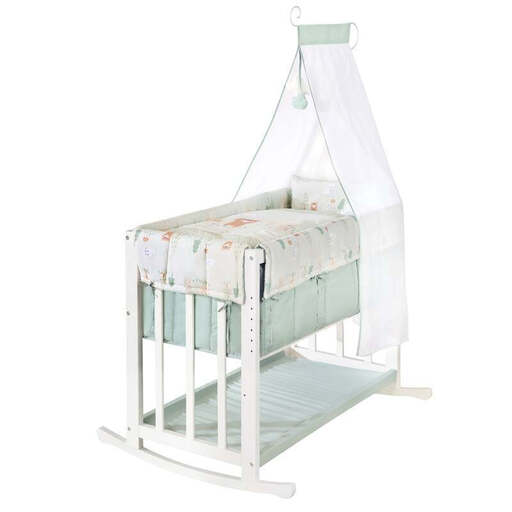
Why we recommend this product: This model is designed as a multi-functional starter set. It combines four uses (bassinet, bedside sleeper, cradle, and bench) in a compact design (45x90 cm sleeping surface) and comes as a complete bundle. According to the manufacturer, it is produced in compliance with the EN 1130:2019 safety standard.
Advantages:
Who it's for: Parents looking for a flexible, fully equipped sleeping solution for the first few months of life that can be easily moved between rooms.
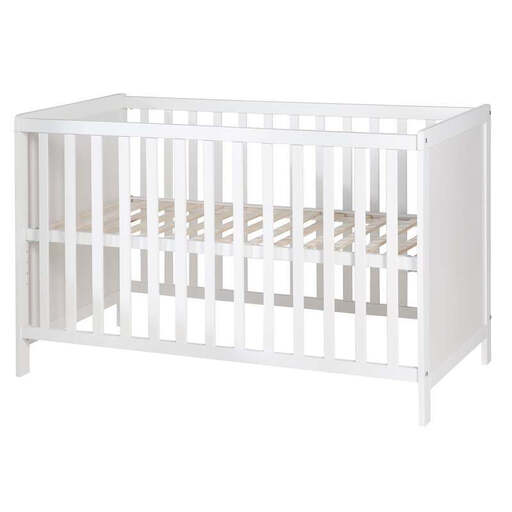
Why we recommend this product: This bed focuses on functioning as a safe bedside sleeper and crib with an extended lifespan. The 60x120 cm sleeping surface and a weight capacity of up to 50 kg allow for use up to the age of about five. According to the manufacturer, it was developed and tested in accordance with the EN 716-1:2017 + AC:2019 safety standard.
Advantages:
Who it's for: Parents who want a safe co-sleeping solution for the early stages and also a bed that serves as a crib and toddler bed beyond infancy.
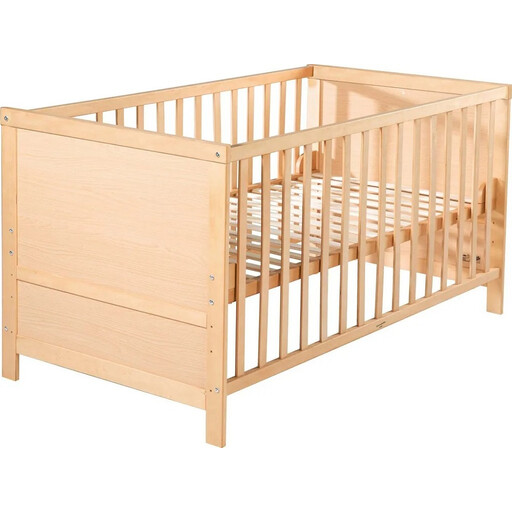
Why we recommend this product: This model represents the classic long-term investment. With its standard 70x140 cm sleeping surface and included conversion parts, it transforms directly from a baby crib into a junior bed that can be used into the school-age years.
Advantages:
Who it's for: Parents looking for a single, durable sleeping solution that will accompany their child from birth to school age and who prefer the standard 70x140 cm size.
Beyond choosing the right bed, there are many other aspects to consider for the nursery. If you're looking to furnish other areas of your home, you can find a selection of products for various living spaces in our Bar Furniture category.
1. What is the difference between a convertible crib and a standard crib? A standard crib is typically designed only for use as a crib and has a fixed construction. A convertible crib is a grow-with-me bed that can be transformed into different bed types, such as a bedside sleeper or a junior bed, through reconfigurations (e.g., removing slats, adjusting the height) to allow for extended use.
2. Up to what age can you use a 70x140 cm convertible crib? A convertible crib with a 70x140 cm sleeping surface can typically be used until a child is about six or seven years old. The exact duration of use depends on the child's height and weight, as well as the maximum weight capacity specified by the manufacturer.
3. Are removable slats on a crib safe? Yes, when used correctly. Removable slats are designed to be taken out when the child is old and mobile enough to climb out of bed independently and safely. This prevents dangerous climbing attempts over the side rails. As long as the child is still very young, all slats should remain in place to ensure safety.