
Lieferung heute & morgen

Qualitätsgarantie

Willkommens-Angebote freischalten: KOSTENLOSE Lieferung | Bis zu 80 % RABATT | Kostenlose 30-Tage-JoyPlus-Testphase
App herunterladen
Purchasing the first set of essentials for a baby is a decision many parents consider carefully. The crib plays a particularly central role, as it should be a safe and secure space for the child for years to come. A convertible crib, designed to grow with your child, is a functional and economical solution. It accompanies your child from their first days of life into their preschool years.
This guide is here to help. It explains the key features of a convertible baby crib and presents a selection of products designed for durability and functionality.
The selection is vast, but a few criteria are crucial for long-term, safe use. The following points will help you objectively compare different models.
A combination crib is distinguished by its ability to adapt to the child's developmental stages. It typically starts as a crib with slatted sides for infants and can later be converted into a toddler bed.
The child's safety is the top priority. Modern, convertible cribs have specific safety features.
The material affects not only the look but also the stability and durability of the bed.
Based on the criteria of functionality and durability, we have selected a product that meets the requirements of a convertible crib.
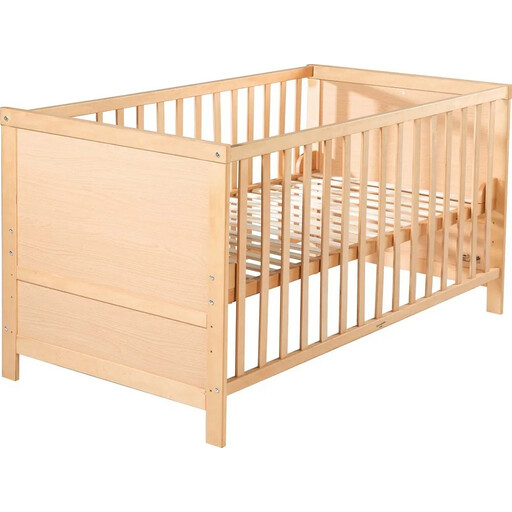
Why It Stands Out
This roba crib is designed as a long-term sleep solution. It combines the most important features parents expect from a convertible bed. The plywood construction ensures the necessary stability throughout its entire lifespan. With its 3-level height adjustment and removable slats, it flexibly adapts to the child's growth and increasing mobility.
Advantages
Who Is It For?
This bed is a suitable choice for parents looking for a cost-effective, safe, and durable first nursery essential. It offers all the necessary functions to accompany the child for many years, eliminating the need to buy a new bed.
In addition to a safe sleeping space, age-appropriate toys and aids also support your child's development. Here are two products that can be a meaningful addition to the nursery.
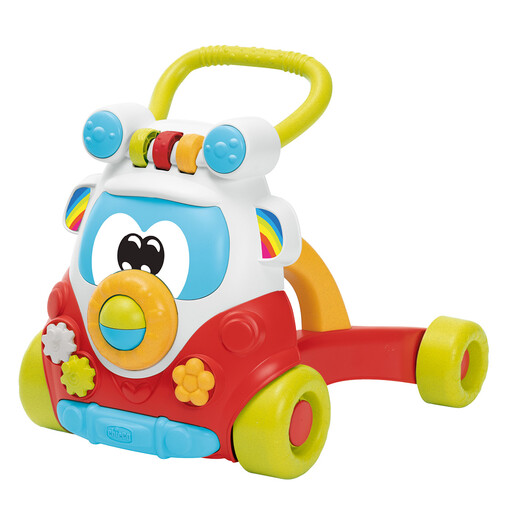
Why It Stands Out
The Chicco Happy Hippy Walker is a 2-in-1 product that serves as a baby walker and an activity centre. It offers children from around 9 months old stable support for their first steps. The four large wheels ensure balance, while the five manual activities on the front promote fine motor skills and coordination.
Advantages
Who Is It For?
For parents who want to support their child's motor development during the crawling and walking stages with a multifunctional toy.

Why It Stands Out
This learning book offers a variety of exercises on 48 reusable pages to prepare for preschool. The content includes tracing letters and numbers, mathematical games, and recognising shapes and colours. Thanks to the wipe-clean surface and the included pens, it is a sustainable and versatile learning tool.
Advantages
Who Is It For?
For parents of children aged 3 to 6 who are looking for a playful and interactive way to practice basic skills for school.
If your child enjoys the writing and drawing exercises in the learning book, you can support their creativity with additional materials. A selection of age-appropriate colouring and drawing books provides hours of engagement and promotes fine motor skills.
Discover our selection of drawing books here.
1. How long can a 70x140 cm convertible crib be used? A bed of this size can typically be used from birth until the child is about six or seven years old. The exact duration depends on the child's size and development. It goes through several stages: as a baby crib with a high mattress base, as a crib with a lowered base, and finally as an open toddler bed.
2. What does 'height-adjustable' mean for a baby crib? 'Height-adjustable' refers to the mattress base, which can be installed at different heights. The highest position is intended for newborns to make it easier for parents to place them in the crib. The middle and lowest positions are used as the child becomes more mobile to ensure their safety.
3. Are removable slats on a crib useful? Yes, removable slats are very useful for toddlers from about two years of age. They allow the child to get in and out of their bed independently and safely. This fosters autonomy and reduces the risk of the child trying to climb over the railings.