
Lieferung heute & morgen

Qualitätsgarantie

Willkommens-Angebote freischalten: KOSTENLOSE Lieferung | Bis zu 80 % RABATT | Kostenlose 30-Tage-JoyPlus-Testphase
App herunterladen
Buying a high chair marks an important milestone: your child is now an active participant at the family table. A grow-with-me high chair promises to be a faithful companion for many years, supporting them from their first purées to homework at the kitchen table. However, the market is saturated with models whose promises don't always hold up in practice. Many products turn out to be impractical, unstable, or are only genuinely useful for a short period.
As your Joybuy Product Recommendation Officer, I'm here to help you identify the critical features and avoid common purchasing traps. We'll focus on the facts so you can make an informed decision and choose a durable, safe solution.
Before we dive into the recommended features, it's crucial to understand the most common problems that only become apparent with daily use.
To avoid these pitfalls, you should base your selection on three objective core parameters. These define the quality, safety, and longevity of a high chair.
The European standard EN 14988 defines the safety requirements for children's high chairs. It is a reliable indicator of tested quality. Pay attention to the following aspects covered by the standard:
A truly convertible high chair is characterised by the flexible adjustment of its seat and foot plates. The classic stair-step high chair is often the most functional choice in this regard.
The material affects not only the aesthetics but also the durability and daily handling of the chair.
Instead of making a one-size-fits-all recommendation, we have selected models tailored to different needs and lifestyles.
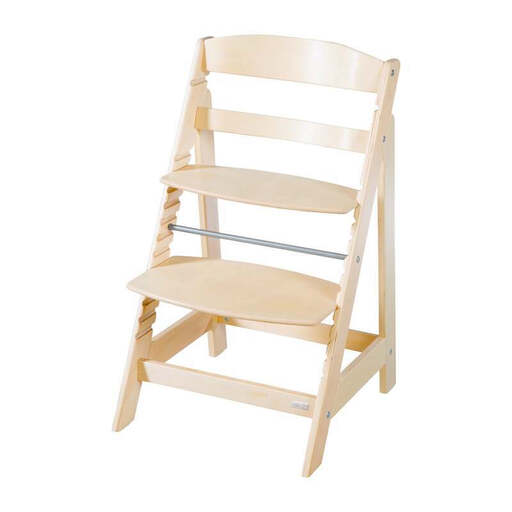
Why This Fits Their Persona: A solid and durable solution for families seeking a classic stair-step high chair that combines functionality with great value. It accompanies the child from infancy to their teenage years.
This model is a truly adjustable high chair: its seat and footrest can be adjusted in height and depth, thus avoiding the "pseudo-grow-with-me" trap. The simple wooden construction has no hidden dirt traps.
Long-term usability thanks to its conversion to a youth chair (supports up to 50 kg). Includes a safety bar and harness system for the early stages.
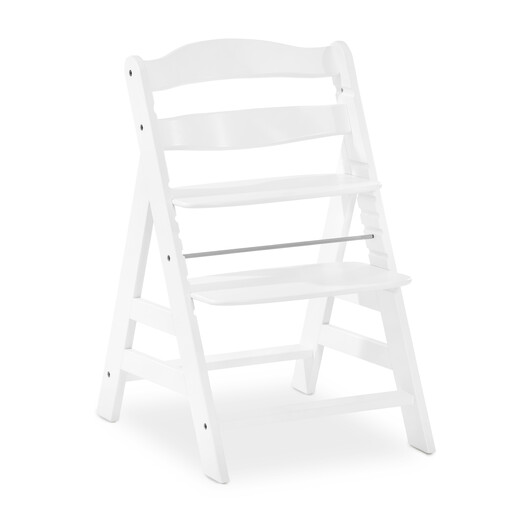
Why This Fits Their Persona: Ideal for parents who value sustainable materials and an extremely long lifespan. Thanks to its high weight capacity, this chair can even be used by adults.
The sturdy beechwood construction is designed for tip-over resistance. The weight capacity of up to 90 kg is a clear indicator that the "grow-with-me" feature is not just an empty marketing promise.
Made from European beechwood sourced from FSC-certified forests. Extremely high weight capacity of up to 90 kg ensures usability far beyond childhood.
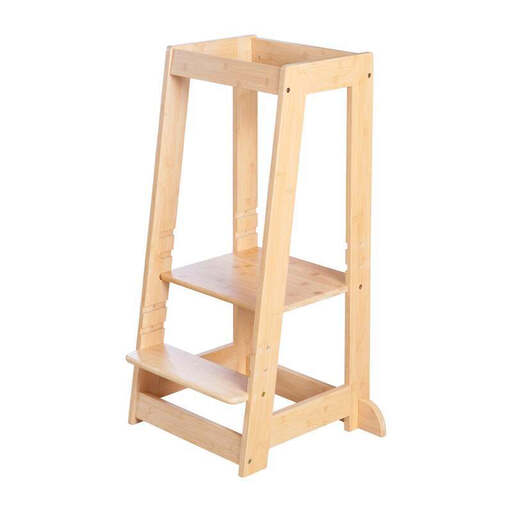
Why This Fits Their Persona: Perfect for families who want to actively involve their child in daily kitchen routines. This learning tower serves as a safe kitchen helper for kids and promotes independence.
This product is not a high chair but a specialised solution for a different purpose. It avoids the instability trap by being specifically designed for safely standing at countertops, featuring a wide, tip-proof base.
Promotes independence based on the Montessori principle. Height-adjustable platform and step made from sustainable, FSC-certified bamboo wood. Supports up to 80 kg.
We have compiled a complete, up-to-date list of products that fully meet these strict selection criteria and rigorous safety standards.
1. When is a grow-with-me high chair a good idea? A grow-with-me high chair is generally useful from the moment your child can sit upright independently and without support. This is usually the case between six and nine months of age. At this point, their core muscles are strong enough to maintain a stable sitting position.
2. How important is an adjustable footrest on a high chair? An adjustable footrest is critically important. It ensures an ergonomically correct posture where the legs do not dangle freely. This relieves pressure on the thighs, promotes circulation, and gives the child the stability needed to focus on eating or playing at the table, rather than constantly trying to maintain their balance.
3. What is the difference between a high chair and a learning tower? A high chair is primarily a seating solution that allows a child to sit at eye level at the dining table. A learning tower, also known as a kitchen helper for kids, is a standing aid. It is designed so that the child can stand safely at kitchen counter height and help with activities like cooking or baking, which promotes their independence and motor skills.