
Lieferung heute & morgen

Qualitätsgarantie

Willkommens-Angebote freischalten: KOSTENLOSE Lieferung | Bis zu 80 % RABATT | Kostenlose 30-Tage-JoyPlus-Testphase
App herunterladen
A convertible high chair is an investment that can serve a family for many years—from the first spoonful of purée to homework at the kitchen table. However, the market is overwhelming, and many products fail to deliver on their promises. Before you make a decision, it's crucial to understand the most common pitfalls that can lead to frustration and unnecessary expense.
As your Joybuy Product Recommendation Officer, I'm here to help you separate marketing claims from verifiable facts. This guide focuses on the essential criteria for making a safe, durable, and practical choice.
Many well-intentioned purchases turn out to be impractical or even unsafe in daily use. Pay special attention to these three common problems:
To avoid the problems mentioned above, you should base your decision on objective criteria. The following three points are crucial for selecting a durable and functional model.
A safe high chair isn't an option; it's a fundamental requirement. Look for compliance with the European safety standard EN 14988. This standard sets requirements for stability, materials, and construction. Key safety features include:
The material affects not only the chair's appearance but also its stability and lifespan.
A truly ergonomic children's chair adapts to the child, not the other way around. Two independently adjustable elements are critical here:
The stepless or micro-adjustment capability of the seat and footplate is the core feature of a good convertible high chair, ensuring healthy posture for years. A removable high chair with tray offers additional flexibility, as the chair can be pushed directly up to the dining table.

Why This Fits Their Persona: Ideal for families seeking a proven, safe, and durable wooden high chair without breaking the bank. A classic A-frame high chair that prioritises functionality over unnecessary extras.
The stable A-frame construction and floor gliders actively counteract the risk of tipping (Pitfall 1). The high weight capacity of up to 90 kg ensures genuine long-term use, avoiding the short-lived convertible feature trap.
Made from FSC-certified European beech wood. Supports up to 90 kg (approx. 198 lbs), allowing use into adolescence. Includes a 5-point harness and safety bar.
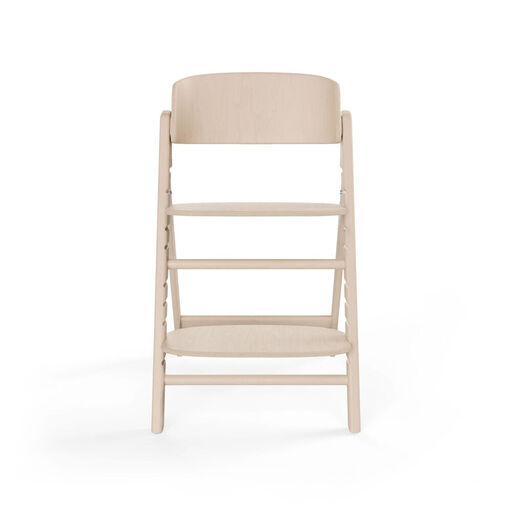
Why This Fits Their Persona: Perfect for modern homes with limited space. This chair combines a minimalist design with an innovative folding mechanism without compromising on durability.
Despite its foldability, the chair offers a stable base. The simple folding mechanism and smooth wooden surfaces bypass the pitfalls of cumbersome handling (Pitfall 2) and complicated cleaning (Pitfall 3).
One-click folding mechanism for space-saving storage. Made from FSC-certified beech wood. Grows with the child and can be used as an adult chair up to 99 kg (approx. 218 lbs).
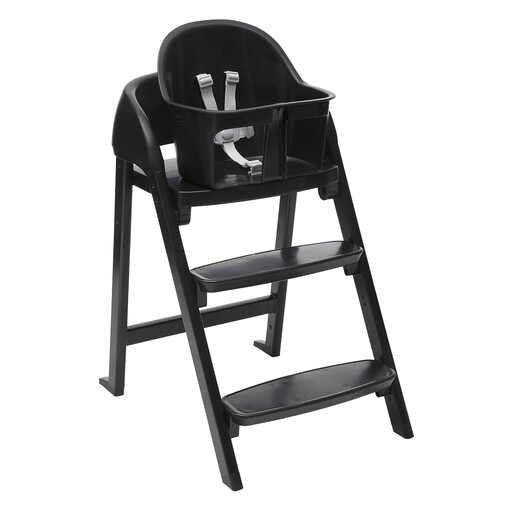
Why This Fits Their Persona: For anyone looking for a "one-chair-for-life" solution. This model transforms from a high chair to a child's chair and finally to a full-fledged adult chair, offering maximum lifespan.
This 3-in-1 system is explicitly designed for use into adulthood, thus avoiding the trap of feigned longevity (Pitfall 2). The easy-to-clean surfaces and foldable design are also practical for daily use.
Three configurations: high chair (up to 36 months), child's chair (up to 40 kg / 88 lbs), and adult chair (up to 110 kg / 242 lbs). Folds compactly for easy storage.
We have compiled a complete, up-to-date list of products that fully meet these strict selection criteria and safety regulations.
1. From what age is a convertible high chair useful? A convertible high chair is generally useful from the moment a child can sit up independently and steadily, which is usually around 6 months of age. For this initial phase, a "baby set"—consisting of a safety bar and a high backrest—as well as a 5-point harness system are essential to provide the necessary safety and support.
2. How do I properly clean a wooden high chair? A wooden high chair should be wiped down with a slightly damp cloth and, if necessary, a mild cleaning agent. It's important not to use harsh abrasive cleaners, as they can damage the finish or the wood. Always wipe the chair dry afterward to prevent the wood from swelling. Models with a detachable plastic high chair with tray make cleaning much easier, as the tray can often be washed directly in the sink or even in the dishwasher.
3. Is a wooden adjustable high chair always the right choice? The wooden adjustable high chair is a very popular and often recommended choice due to its high stability, durability, and excellent adaptability. Its design allows for precise ergonomic adjustment over many years. However, for families with very limited space or those who need to transport the chair frequently, a lighter, more compact foldable high chair made of plastic or metal might be a more practical alternative. The decision ultimately depends on individual priorities regarding longevity, space, and mobility.