
Lieferung heute & morgen

Qualitätsgarantie

Willkommens-Angebote freischalten: KOSTENLOSE Lieferung | Bis zu 80 % RABATT | Kostenlose 30-Tage-JoyPlus-Testphase
App herunterladen
A convertible high chair is an investment intended to serve a family for many years. However, the market is flooded with models whose marketing promises often fall short in practice. Certain design flaws or exaggerated features can render a chair impractical or unsafe after just a few months. This guide reveals what you need to look for to make an informed, long-lasting decision.
Many parents invest in a high chair only to discover later that it can't handle the demands of daily life. Watch out for these typical problems:
To avoid these pitfalls, you should base your selection on objective technical parameters. Three factors are non-negotiable.
A safe high chair is not an option, but a fundamental requirement. The most important seal of approval is compliance with the European standard EN 14988. This standard sets requirements for stability, materials, and construction. Look for the following features, which often accompany this certification:
A truly ergonomic high chair not only grows in height but also adapts to the child's changing proportions. The key is the separate and stepless (or micro-step) adjustment of the seat and footplate.
The choice of material affects durability, maintenance, and aesthetics.
Instead of making a one-size-fits-all recommendation, we have identified models that meet the specific needs of families and avoid the pitfalls mentioned above.
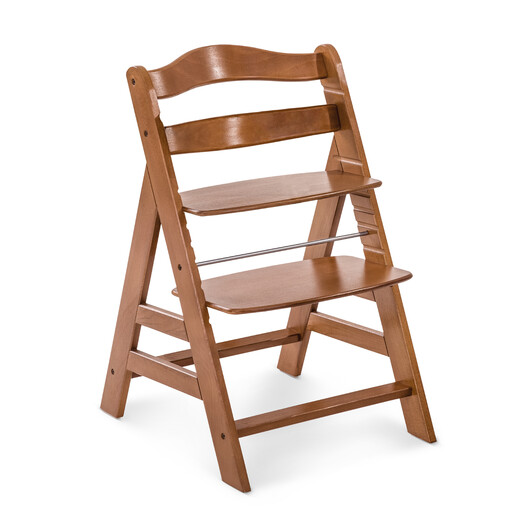
Why it fits: This model is a long-term investment. Made from European beechwood from FSC-certified forests, it satisfies the desire for sustainable products. Its high load capacity of up to 90 kg makes it genuinely usable beyond childhood.
The stable A-frame construction with floor gliders actively counteracts the tipping hazard (Pitfall 2). The smooth wooden surfaces are easy to clean, avoiding the hygiene problems of fabric covers (Pitfall 3).
Durable with a weight capacity of up to 90 kg; Made from FSC-certified wood; High anti-tip safety due to its construction.
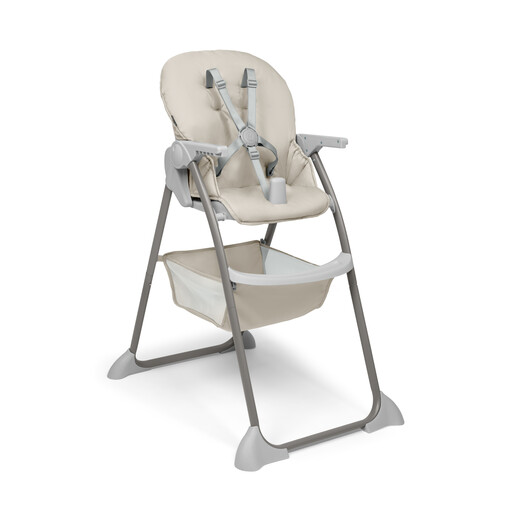
Why it fits: Ideal for smaller apartments or as a second chair at the grandparents' house. As a foldable high chair, it can be stored quickly and compactly when not in use. The large basket provides extra storage for essentials.
This model doesn't promise lifelong use (Pitfall 1), instead focusing on its core function as a practical high chair for the first few years (up to 15 kg). The cover is wipeable and machine-washable, which simplifies cleaning (Pitfall 3).
Folds flat for easy storage; Includes a large, adjustable tray; Large storage basket for accessories.
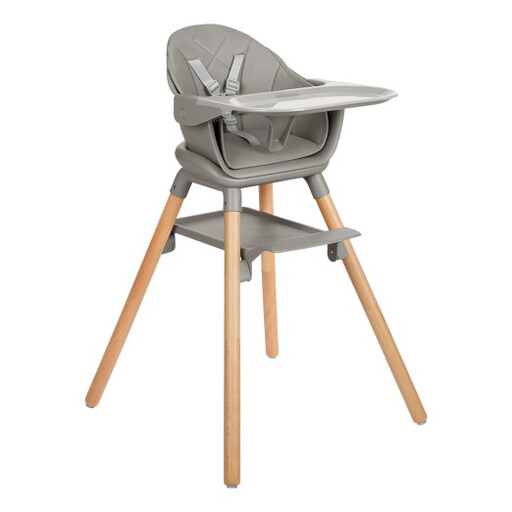
Why it fits: For families seeking maximum flexibility. This chair converts into six different modes—from a classic high chair to a small chair or stool for preschoolers. It adapts to various developmental stages and usage scenarios.
It avoids the limited long-term use trap (Pitfall 1) by offering concrete, functional conversion options for older children (up to 25 kg as a chair). The easy-to-clean leatherette cover and double tray also address the cleaning problem (Pitfall 3).
6-in-1 functionality for extended use; Double tray for easy cleaning; Anti-slip legs for a secure stance.
We have compiled a complete, up-to-date list of products that fully meet these strict selection criteria and safety regulations.
A convertible high chair is generally suitable from the moment a child can sit upright independently and stably. This is usually around six to nine months of age. Some models also offer use from birth with separately available newborn attachments.
A removable tray offers great flexibility. It allows the child to have their meals or toys on their own easy-to-clean surface. However, a chair without a tray can be pushed directly to the family table, which promotes the child's integration into shared meals. Many models offer a tray as an optional accessory, so you can decide based on your needs.
Look for compliance with the safety standard EN 14988. Other indicators include a wide, stable base to prevent tipping, the presence of a 5-point harness system, and the use of robust, non-toxic materials. Also, check that all screws and connections are tight and that there are no sharp edges or pinch points.