Joybuy Insights

Convertible i-Size Car Seat Buyer's Guide: Avoiding Mistakes

Purchasing a car seat is one of the most critical decisions for your child's safety in a vehicle. A convertible i-Size car seat promises a long-term solution that grows with your child from birth until they no longer need one. However, the market is overwhelming and filled with marketing claims that don't always deliver. As your Joybuy Product Recommendation Officer, I'm here to help you separate fact from fiction and make an informed decision.

The Most Common Pitfalls When Buying a Convertible Car Seat

Many parents invest in an expensive seat, only to find it impractical or unsuitable for their child after a short time. Watch out for these three common problems:

  1. The "One-Seat-Fits-All" Illusion: Models that promise usability from 40 cm to 150 cm (birth to 12 years) are often a compromise. For newborns, they may not offer the necessary flat and ergonomic reclining position, while for older children, they can become too narrow in the shoulder and pelvic areas. A seat that tries to do everything often masters nothing.
  2. Underestimating Handling Complexity: A 360-degree rotating car seat is convenient, but it can be complicated in daily use if the mechanism is stiff or the installation with a support leg and ISOFIX is unclear. Incorrect installation renders even the safest seat ineffective.
  3. Focusing on Outdated Safety Standards: The older ECE R44/04 standard is still in circulation, but the current ECE R129 (i-Size) standard sets significantly higher safety requirements, especially for side-impact protection. Your purchase should be based exclusively on the i-Size standard.

Crucial Parameters for Your Selection

To avoid the pitfalls mentioned above, you should check three core technical aspects before buying. These form the basis for a safe and practical choice.

1. The i-Size Standard (UN R129) as a Safety Foundation

The i-Size standard is not a marketing term but a legal standard that enhances safety. The key advantages are:

  • Classification by Height: Instead of weight, the seat is selected based on the child's height (e.g., 40-150 cm car seat). This is more precise and prevents switching to the next size seat too early.
  • Mandatory Rear-Facing Travel: i-Size mandates that children must be transported rear-facing (as a rear-facing seat) until at least 15 months of age and a height of 76 cm. This position provides significantly better protection for the sensitive neck and head area in a frontal collision.
  • Improved Side-Impact Protection: The standard includes standardised and stricter side-impact tests, which were not required in the old ECE R44 standard.

2. The Installation System: ISOFIX for Stability

Correct installation is crucial. ISOFIX is a standardised system that securely connects the car seat to the vehicle's chassis.

  • ISOFIX Connectors: Two locking arms on the car seat click into the corresponding anchor points between the car's seat cushion and backrest. Colour indicators show whether the connection is correctly locked.
  • Third Anchor Point: To prevent the seat from tipping or rotating, a third point is necessary. This is either a support leg that rests on the vehicle floor or a Top Tether (upper tether strap) that is attached over the rear seatback to an anchor point in the boot or on the back of the seat. Check which option your vehicle supports before purchasing.

3. Adjustability and Comfort Features

A seat that is truly usable for up to 12 years must offer more than just an adjustable headrest.

  • Newborn Inserts: For a car seat from birth, a well-padded and ergonomically shaped insert is essential to ensure a flat reclining position and support the small body.
  • Harness Systems: Younger children are secured with an integrated 5-point harness or in a car seat with an impact shield. Above a certain height (usually 100 or 105 cm), the internal harness is removed, and the child is secured with the vehicle's 3-point seatbelt. The seat then functions as a high-back booster seat.
  • Recline Position: A multi-level adjustable recline (car seat with a recline position) is essential for comfort on longer journeys to prevent a sleeping child's head from slumping forward.

Top Picks for Every Shopper

Based on these objective criteria, we have compiled a selection of models suitable for different needs and life stages.
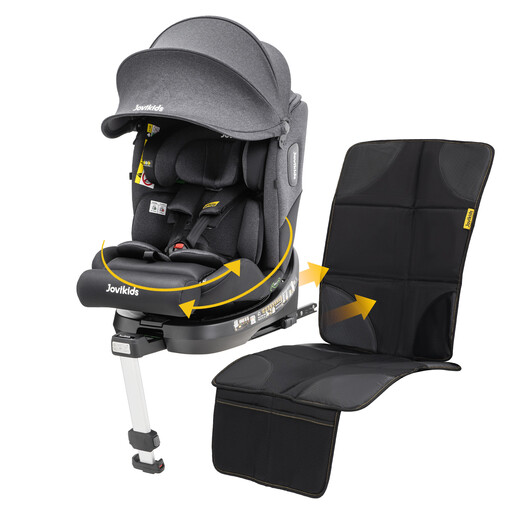
MATCH FOR: THE LONG-TERM ALL-IN-ONE SOLUTION
Jovikids RANGER 2 360° i-Size Child Car Seat

Jovikids RANGER 2 360° i-Size Car Seat, 40-150 cm

Why This Fits Their Persona: Ideal for budget-conscious parents seeking a single, long-term investment. This seat covers the entire period of use from birth to age 12, combining key comfort and safety features.

How It Avoids the Trap

It bypasses the "one-seat-fits-all" trap through a thoughtful design with removable newborn inserts and a 12-position headrest adjustment, ensuring a good fit over the years.

Key Advantage & Pros

ECE R129 (i-Size) certified for the entire 40-150 cm range. The 360° rotation feature makes getting the child in and out easier at all stages.

MATCH FOR: PREMIUM FOCUS FOR THE EARLY YEARS
cybex SIRONA Gi I-SIZE PLUS Car Seat

cybex SIRONA Gi I-SIZE PLUS Car Seat

Why This Fits Their Persona: For parents who want to make no compromises on safety and comfort for the first four years of life (40-105 cm). The 360° rotation and high-quality materials are decisive here.

How It Avoids the Trap

It specialises in the 0-4 age group, thus avoiding the compromises of a 12-year seat. The newborn insert and adjustable recline positions are optimally tailored for babies and toddlers.

Key Advantage & Pros

Offers all-round air circulation for better comfort and an integrated Linear Side-impact Protection (L.S.P. System). The easy operation of the rotation and recline functions is a clear practical advantage.
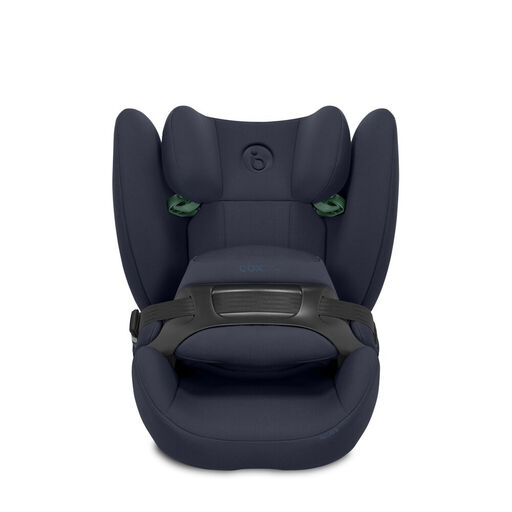
MATCH FOR: SAFETY FOR TODDLERS & OLDER CHILDREN
cybex Pallas B i-Size Child Seat

cybex Pallas B i-Size Car Seat, 76-150 cm

Why This Fits Their Persona: Perfect for the transition after an infant carrier. Parents looking for a specific safety concept for forward-facing travel will find a solution that lasts until the child no longer needs a seat.

How It Avoids the Trap

This 2-in-1 seat is specialised for the phase from approx. 15 months onwards. It avoids the compromise for newborns and instead focuses on the safety of toddlers and older children.

Key Advantage & Pros

Uses an adjustable impact shield which, according to the manufacturer, can reduce the risk of neck injuries in a frontal collision compared to 5-point harness systems. Simple installation with ISOFIX.

Looking for more options?

We have compiled a complete, up-to-date list of products that fully meet these strict selection criteria and UK/EU safety regulations.

Frequently Asked Questions (FAQ)

How long must my child travel in a rear-facing seat?

According to the i-Size standard (ECE R129), rear-facing transport is legally required up to the age of 15 months and a height of 76 cm. However, safety organisations recommend transporting children rear-facing for as long as possible, ideally up to a height of 105 cm (approx. 4 years), as this provides significantly better protection for the cervical spine in an accident.

What is the difference between an impact shield and a 5-point harness?

Both systems are used to secure the child in the seat.

  • A 5-point harness distributes the impact forces across five points: the shoulders, the hips, and the crotch. It holds the body firmly in the seat.
  • A car seat with an impact shield functions similarly to a pre-deployed airbag. In a frontal collision, the child's upper body rolls over the impact shield, which distributes the forces over a large area of the torso. According to manufacturers, this can reduce the strain on the neck. The choice between the systems depends on the fit and the child's acceptance.

Can I use a convertible i-Size car seat in any car?

Not necessarily. You must check compatibility with your vehicle. An i-Size car seat is guaranteed to fit on any vehicle seat marked as "i-Size compatible." For other vehicles with ISOFIX anchorages, you must consult the car seat manufacturer's vehicle compatibility list. This list specifies for which car models the seat is approved. Always check your vehicle's manual and the car seat's instructions.