
Lieferung heute & morgen

Qualitätsgarantie

Willkommens-Angebote freischalten: KOSTENLOSE Lieferung | Bis zu 80 % RABATT | Kostenlose 30-Tage-JoyPlus-Testphase
App herunterladen
A convertible tricycle promises to be a faithful companion for several years—from the first parent-pushed rides to the first attempts at pedalling independently. However, the market is flooded with models whose promises don't hold up in practice. Many parents quickly discover that their expensive purchase is impractical, unstable, or rejected by their child after just a few months. This guide highlights the most common pitfalls and explains the objective criteria you should focus on when making your choice.
Before diving into the benefits, it's crucial to understand the typical problems that can lead to a bad purchase. Marketing buzzwords often conceal fundamental design flaws.
To avoid these pitfalls, you should base your decision on three objective core features. These define the durability, safety, and practical utility of a model.
A good convertible tricycle is distinguished by a well-designed, ideally tool-free conversion process. Pay attention to how easily the pedals can be detached, the rear wheels can be combined into a single axle for a balance bike, or the push bar can be removed. A system that works with a push-button or quick-release clamps is far more practical for daily use. Check if the transitions between the main modes—baby trike (pushed), toddler tricycle (self-pedalling), and balance bike and trike in one—are logical and sturdily implemented.
A sturdy frame is the foundation for long-term use. Models made of steel or a high-quality aluminium alloy are superior to plastic frames in terms of stability and durability. Weight is also a factor: a lighter model is easier to transport, while a slightly heavier one often provides more stability on the ground.
There are significant differences when it comes to wheels:
For a tricycle from 1 year old, safety features are non-negotiable. A 2-point or 5-point safety harness is essential in the initial phase. The tricycle with a push bar should not only be height-adjustable but also directly connected to the front wheel's steering to allow for precise control. Look for a wide adjustment range for the saddle and handlebars to ensure an ergonomically correct posture through multiple growth stages.
Instead of making a blanket recommendation, we have selected models based on different user profiles and requirements.
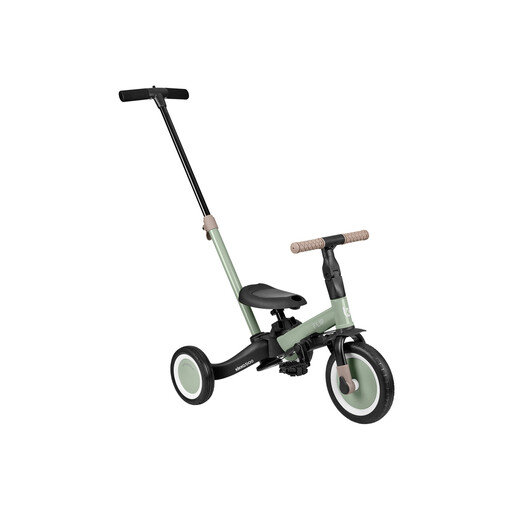
Why this model is a great fit: This model is designed for families seeking a long-term solution. It covers the entire usage period from 1 to 5 years and combines all essential modes in a well-engineered system built for durability.
The robust carbon steel frame and the combination of rubber and PU wheels directly address the weak point of material quality. The clearly defined 5 modes are practically implemented and not just empty marketing promises.
True 5-in-1 functionality with high-quality materials that make a service life of up to 5 years realistic. The 3-position adjustable push bar offers genuine comfort for parents.
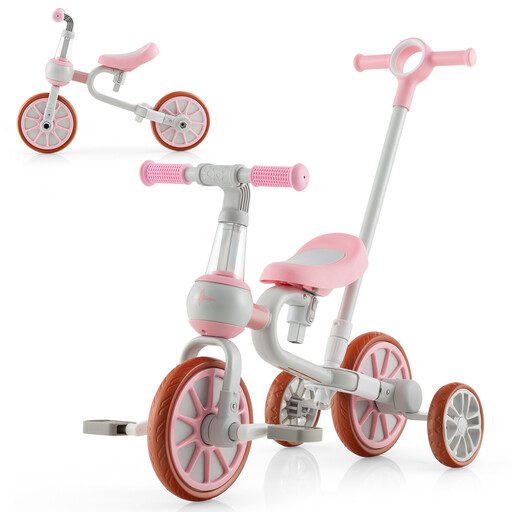
Why this model is a great fit: For families who want to use the core functions of a convertible tricycle without breaking the bank. It offers the essential stages from a parent-pushed vehicle to independent tricycle riding.
This model focuses on the 4 most important modes, thus avoiding superfluous, poorly implemented features. It provides the necessary adjustable push bar and fundamental safety features for the 2-4 age group.
A functional price-performance ratio. It delivers the crucial convertible features without inflating the price with complex but rarely used extra functions.
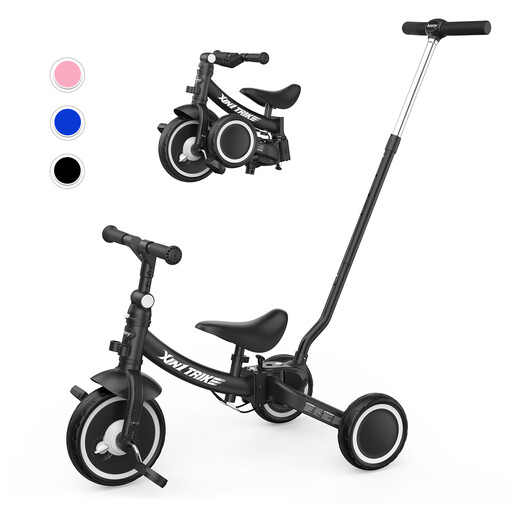
Why this model is a great fit: Ideal for families who spend a lot of time outdoors and focus on motor skill development. The combination of a tricycle and a balance bike actively promotes the child's sense of balance.
Instead of aiming for a high number of modes, this model focuses on the core transition from a pushed toddler trike to an independent balance bike. This allows for a robust and functional design suited for outdoor use.
The clear focus on the balance bike function optimally prepares the child for riding a bicycle. The design is geared towards active use and supports the development of motor skills.
We have compiled a complete, up-to-date list of products that meet these strict selection criteria and current safety requirements.
1. From what age is a convertible tricycle useful? Most models are designed for use from around 12 months of age and are initially used as a kind of stroller substitute with a push bar, safety harness, and footrests. During this phase, the child gets used to the vehicle. From about 2 years old, most children can start to pedal independently.
2. How long can a 5-in-1 tricycle really be used? The actual lifespan depends heavily on the quality and adjustment range. High-quality models with a sturdy frame and a generously sized, adjustable seat and handlebars can accompany a child up to the age of 4 or 5. It is crucial that the vehicle allows for an ergonomically correct and safe posture at every stage.
3. Do I need tools to convert between the different modes? Many modern and well-designed models feature tool-free conversion systems. With the push of a button or via quick-release clamps, you can remove pedals, adjust wheels, or detach the push bar. Look for terms like "tool-free conversion" in the product description, as this significantly increases flexibility in daily use.